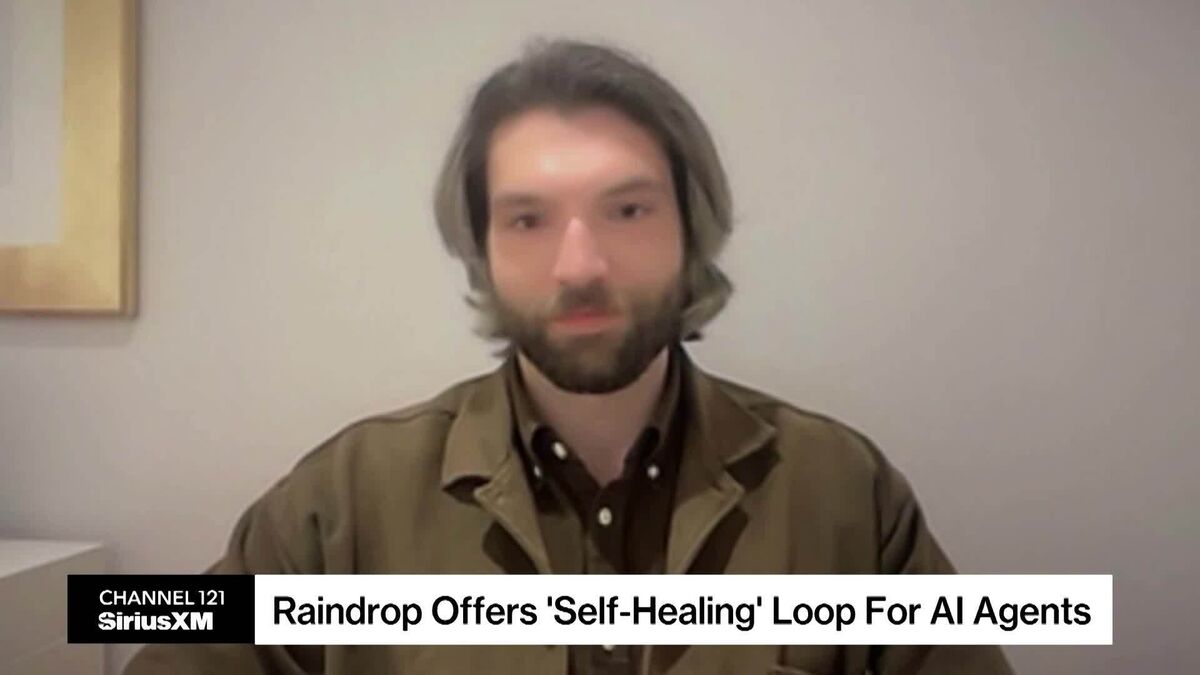
Ben Hylak and the Final Frontier of Artificial Intelligence
In the rapidly evolving world of artificial intelligence, few questions carry more weight than this one: what happens when AI gets it wrong? For Ben Hylak, founder and CTO of AI monitoring platform Raindrop, the answer to that question defines the very future of human progress. According to Hylak, the ability for AI to identify and fix its own mistakes isn't just a technical milestone — it is, in his words, the last "big problem to solve" for humanity. That's a bold claim, but coming from a former SpaceX and Apple engineer who now sits at the frontier of AI reliability, it deserves serious attention.
Who Is Ben Hylak?
Ben Hylak brings a rare combination of engineering pedigree and entrepreneurial vision to the AI space. His career spans two of the most innovative technology organizations in modern history: Apple, where consumer-grade software is held to extraordinarily high standards, and SpaceX, where engineering failures can have catastrophic consequences. That background — shaped by cultures of precision, iteration, and mission-driven ambition — has clearly informed the way Hylak thinks about artificial intelligence and its shortcomings.
Today, Hylak channels that experience into Raindrop, an AI monitoring company designed to help businesses understand and improve how AI models behave within their specific systems. Rather than promising AI perfection, Raindrop focuses on something arguably more practical: making AI reliably better over time by surfacing its failures and enabling smarter responses to them.
What Does It Mean for AI to Fix Its Own Mistakes?
The concept of AI self-correction might sound futuristic, but it is already an active area of research and product development across the industry. At its core, the idea involves building AI systems that can detect when they've produced an incorrect, incomplete, or harmful output — and then take steps to revise or flag that output without requiring direct human intervention every single time.
Hylak's framing of this capability as the "last big problem to solve" is significant. It implies that much of what we think of as AI's current limitations — hallucinations, inconsistent reasoning, errors in judgment — could be addressed if AI systems had robust mechanisms for self-evaluation and correction. In other words, it's not just about making AI smarter in the traditional sense. It's about making AI more accountable to its own outputs.
This is a challenge that sits at the intersection of machine learning research, systems engineering, and product design. Solving it would fundamentally change how businesses and individuals interact with AI tools, reducing the need for constant human oversight and making AI deployments far more reliable at scale.
Raindrop's Mission: Raising the Floor on AI Performance
While much of the AI industry conversation centers on raising the ceiling — pushing the boundaries of what models can do — Hylak's focus at Raindrop is deliberately different. He describes his company's role as helping businesses "raise the floor" of how AI models perform in real-world environments.
This is a critical distinction. Raising the ceiling means achieving impressive peak performance under ideal conditions. Raising the floor means ensuring that AI doesn't fail badly, unpredictably, or silently when conditions aren't ideal. For companies deploying AI in customer service, healthcare, finance, legal tech, or any other high-stakes domain, the floor matters enormously.
Raindrop's platform is built around the idea that AI monitoring should be continuous, contextual, and actionable. That means going beyond simple uptime checks or output logging to genuinely understanding when an AI system is underperforming relative to what a business actually needs. By surfacing those failure points clearly, Raindrop gives companies the data and insight they need to course-correct — both in real time and through longer-term model improvement strategies.
Why AI Reliability Is a Business-Critical Issue
The stakes around AI reliability have never been higher. As more organizations embed AI into their core operations — from automated decision-making to customer-facing chatbots to internal productivity tools — the consequences of AI errors compound quickly. A single miscalculation in a financial recommendation, a hallucinated fact in a legal brief, or a misread data point in a medical context can have real and serious downstream effects.
This is precisely why tools like Raindrop are gaining traction. Businesses don't just want to know that their AI is running — they want to know that it's working correctly, consistently, and in ways that align with their specific operational requirements. Monitoring solutions that help organizations understand their AI's behavior at a granular level aren't a luxury. For many enterprises, they are quickly becoming infrastructure.
- Consistency: AI models can behave differently depending on input phrasing, context, or data drift over time. Monitoring helps catch when performance degrades.
- Accountability: In regulated industries, businesses need to demonstrate that their AI systems are performing as intended — monitoring creates that audit trail.
- Continuous improvement: Identifying failure patterns is the first step toward fixing them. Without visibility, iteration is guesswork.
Hylak on SpaceX's Upcoming IPO
Beyond his work at Raindrop, Hylak also weighed in on a headline-generating topic: the anticipated SpaceX IPO. As a former SpaceX engineer, his perspective carries personal weight. He described SpaceX as one of the most "mission driven" companies he has ever been part of — a characterization that speaks to the culture of purpose and ambition that has defined SpaceX's trajectory from a scrappy startup to one of the most valuable private companies in the world.
The SpaceX IPO, when it arrives, will be one of the most closely watched market events in recent memory. Hylak's comments suggest that what makes SpaceX exceptional isn't just its technical achievements but the clarity and intensity of its organizational mission — a quality, notably, that Hylak appears to be working to replicate in his own venture with Raindrop.
The Road Ahead for AI Self-Correction
Hylak's vision of AI self-correction as humanity's final great technical challenge is both provocative and instructive. It reframes the AI conversation away from hype and capability benchmarks, toward something more grounded and consequential: reliability, accountability, and trust. As AI systems become more deeply embedded in the decisions that shape business outcomes and everyday lives, the ability for those systems to recognize and address their own errors isn't just desirable — it may be essential.
Whether Raindrop and companies like it succeed in raising that floor will say a great deal about the maturity of the AI industry as a whole. And if Ben Hylak is right, the answer to that challenge could represent not just a product breakthrough, but a genuine turning point for how humanity navigates its relationship with artificial intelligence.