
Why Engine Compression Testing Matters
Your engine is essentially a sophisticated air pump, and its ability to build and hold pressure inside each cylinder is fundamental to everything it does. Without adequate compression, fuel cannot ignite efficiently, power output drops, and internal components begin to suffer accelerated wear. Whether you're buying a used car, diagnosing a rough idle, or chasing a mysterious misfire, understanding how to evaluate your engine's compression is one of the most valuable diagnostic skills you can have.
There are two primary methods mechanics and enthusiasts use to assess engine compression: the compression test and the leak-down test. While both tools give you insight into what's happening inside your cylinders, they work in fundamentally different ways and tell you very different things. Knowing which test to use — and how to interpret the results — can save you hours of guesswork and hundreds of dollars in unnecessary repairs.
What Is a Compression Test?
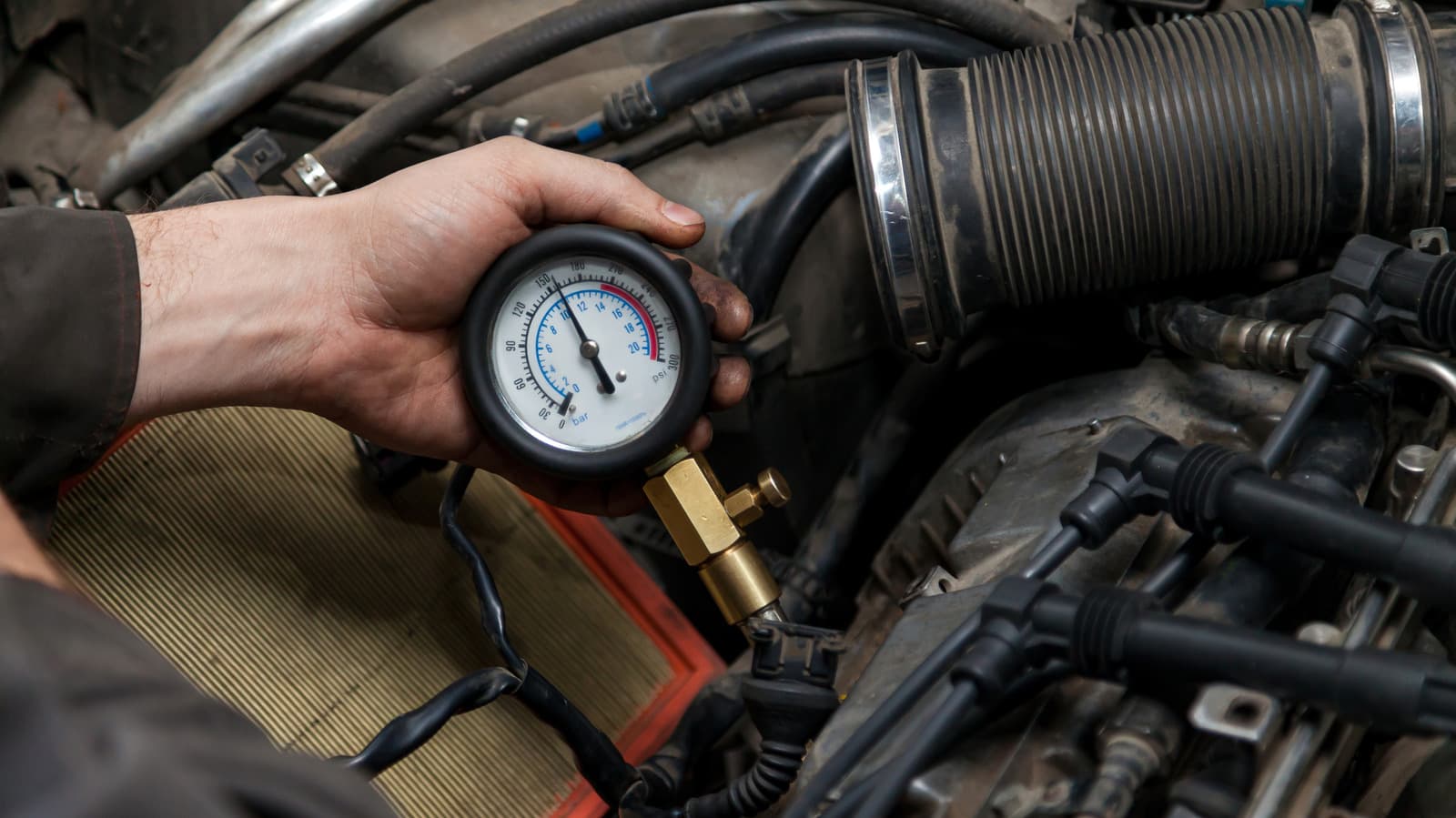
A compression test is the faster and more accessible of the two methods. The process involves removing the spark plugs from each cylinder and threading a compression gauge into the spark plug hole. You then crank the engine over — typically for about four to six revolutions — while the gauge records the peak pressure generated inside that cylinder. The resulting number, measured in PSI (pounds per square inch) or bar, tells you how much pressure the cylinder is capable of building.
Most gasoline engines should produce somewhere between 125 and 175 PSI per cylinder, though the exact specification varies widely depending on the engine's design, compression ratio, and age. The key thing you're looking for isn't just the absolute number but the consistency across all cylinders. A healthy engine will show readings that fall within about 10 percent of each other. A cylinder that comes in significantly lower than the rest is a red flag worth investigating further.
Wet vs. Dry Compression Testing
A common variation on the standard compression test is the "wet" compression test. If a cylinder shows low compression during a standard (dry) test, you squirt a small amount of motor oil into the cylinder through the spark plug hole before retesting. If the reading improves significantly with oil present, it strongly suggests that worn piston rings are the culprit, since the oil temporarily seals the gap and restores compression. If the reading stays low even with oil, the problem is more likely related to the valves or a head gasket failure rather than ring wear.
What Is a Leak-Down Test?
A leak-down test takes a more methodical approach and delivers considerably more diagnostic detail. Instead of measuring the pressure a cranking engine can build on its own, this test introduces compressed air from an external source directly into the cylinder through the spark plug hole. The engine must first be brought to top dead center (TDC) on the compression stroke for the cylinder being tested, so that both valves are fully closed and the piston is at its highest point.
Once pressurized, the leak-down tester measures what percentage of that introduced air escapes from the cylinder over time. A perfectly sealed cylinder would show zero percent leakage, though in reality anything under 5 percent is considered excellent, 5 to 10 percent is acceptable for most street engines, and anything above 20 percent signals a serious problem that needs immediate attention.
Pinpointing the Source of the Leak
The real power of the leak-down test lies in what happens next. Because you're actively pressurizing the cylinder, you can listen and feel for exactly where the air is escaping. This transforms a vague diagnosis into a specific one:
- Air escaping from the oil filler cap or dipstick tube points to worn or broken piston rings allowing air to blow past into the crankcase.
- Air hissing out of the throttle body or carburetor indicates a leaking intake valve that isn't sealing properly against its seat.
- Air coming out of the exhaust pipe suggests a burnt or damaged exhaust valve.
- Bubbles appearing in the coolant reservoir or overflow tank are a strong indicator of a blown head gasket, where combustion gases are leaking into the cooling system.
This level of specificity is something a compression test simply cannot offer on its own. With leak-down testing, you move from knowing that a cylinder has a problem to knowing precisely what that problem is.
Compression Test vs. Leak-Down Test: A Direct Comparison
Both tests serve important purposes, but they suit different situations. A compression test is quick, requires minimal equipment, and is ideal as a first-pass diagnostic when you suspect engine trouble. It's the test you run when buying a used vehicle or when a check engine light points toward a cylinder misfire. It gives you a fast snapshot of overall engine health with relatively little setup time.
A leak-down test requires more equipment, more time, and more mechanical knowledge to perform correctly — particularly the need to position each piston at TDC before testing. However, it rewards that extra effort with far more actionable information. It's the test you turn to after a compression test has already identified a problematic cylinder and you need to know why that cylinder is struggling before committing to a repair.
Which Test Should You Use?
In an ideal world, you would use both. Start with a compression test to get a broad picture of all cylinders quickly. If everything comes back within normal range, you likely don't have a major internal engine problem. If one or more cylinders read low, follow up with a leak-down test on those specific cylinders to identify the root cause with precision.
For professional mechanics and serious enthusiasts, having both tools in the toolbox is simply standard practice. Compression testers are relatively inexpensive and widely available, while leak-down testers cost a bit more but are still well within reach for most home garages. The investment in both tools is minor compared to the cost of misdiagnosing an engine problem and replacing parts that didn't need replacing.
Final Thoughts
Engine diagnostics don't have to be intimidating. Compression testing and leak-down testing are two of the most reliable, time-tested methods available for understanding what's happening inside your cylinders. A compression test tells you whether a problem exists, while a leak-down test tells you what that problem actually is. Together, they form a complete diagnostic picture that gives you the confidence to make smart, informed repair decisions — whether you're working in a professional shop or your own driveway.
Taking the time to properly test your engine's compression before diving into a rebuild or a major parts replacement can save significant money and effort. Understanding both methods, their strengths, and their limitations is a cornerstone of sound engine maintenance.