
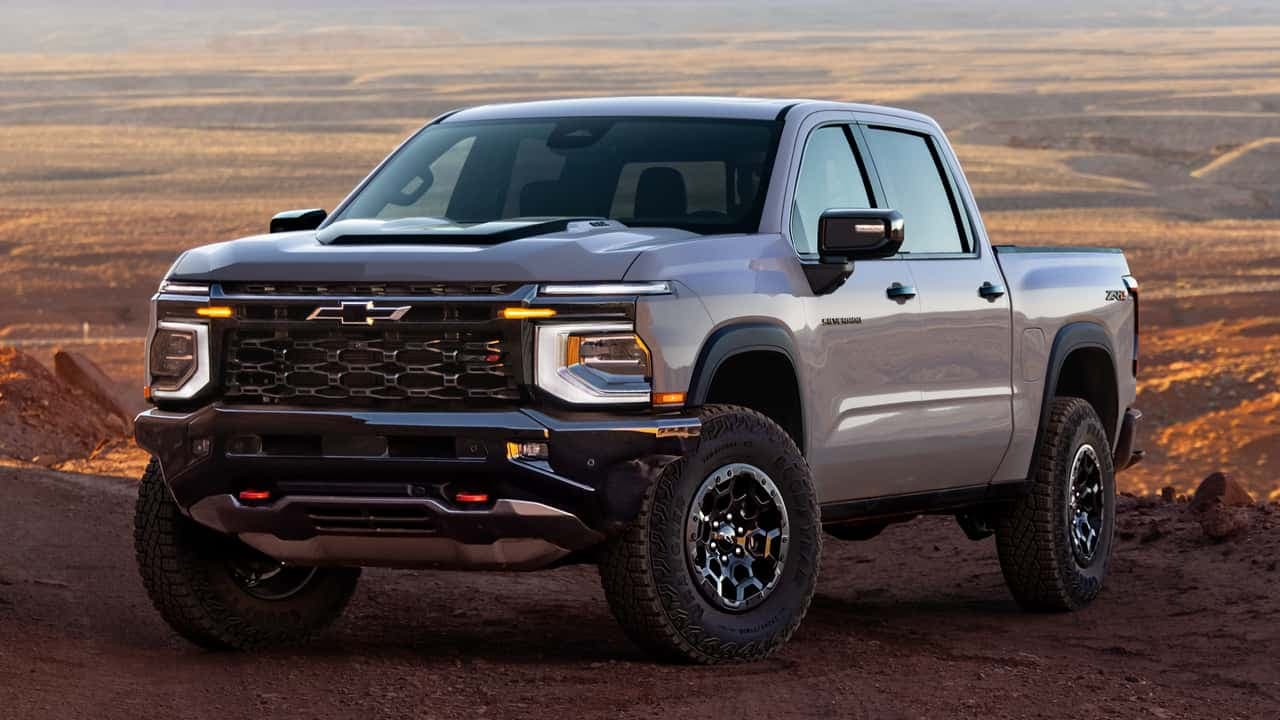
GM Admits Truck Demand Is Shrinking as Fuel Prices Climb
General Motors, one of the most dominant forces in the American truck and SUV market, is facing an uncomfortable reality: rising fuel prices are steering consumers away from the large, powerful vehicles that have long been the backbone of the company's revenue. A senior GM executive recently acknowledged that elevated gas prices are causing a noticeable contraction in demand for trucks and SUVs — and the timing couldn't be more awkward. The admission comes just as GM prepares to roll out a brand-new V8 engine, a powertrain that, by its very nature, is not known for fuel efficiency.
For decades, full-size trucks and SUVs have been the profit engines of Detroit's Big Three automakers. GM's Chevrolet Silverado and GMC Sierra have consistently ranked among the best-selling vehicles in the United States, generating enormous margins compared to smaller passenger cars. But with fuel prices remaining stubbornly high, the economics of truck ownership are shifting — and consumers are beginning to take notice.
The Impact of High Gas Prices on Truck and SUV Sales
It is no secret that fuel costs play a significant role in consumer vehicle purchasing decisions. When gas prices surge, buyers historically gravitate toward more fuel-efficient alternatives, including compact cars, hybrids, and increasingly, electric vehicles. The current environment is proving to be no different, and GM's own leadership is openly recognizing the pressure.
The executive's comments signal that the market shift is not a minor blip but a structural change in buyer behavior that the automaker must take seriously. Trucks and large SUVs, which often deliver fuel economy ratings in the low- to mid-teens per gallon in city driving, become considerably more expensive to operate when gas prices climb. For buyers who rely on these vehicles for daily commuting — not just work or hauling purposes — that running cost adds up quickly over the course of a year.
According to broader industry data, periods of elevated fuel prices consistently correlate with softening demand for large vehicles. The oil shocks of the 1970s reshaped the American auto market for a generation. The 2008 financial crisis and simultaneous fuel price spike crushed truck sales and contributed to GM's eventual bankruptcy filing. While the current situation may not be as dramatic, the underlying dynamic is familiar and historically significant.
The Irony of Launching a New V8 Engine Right Now
Here is where the story takes on a layer of genuine irony. Just as GM acknowledges that high gas prices are shrinking the appetite for fuel-hungry trucks, the automaker is preparing to introduce a new V8 engine. The V8 — a configuration synonymous with American automotive power, torque, and, notably, higher fuel consumption — is a curious product choice to champion in a market where consumers are increasingly concerned about what it costs to fill up a tank.
To be fair, GM's decision to develop and release a new V8 was almost certainly made years before the current fuel price environment took hold. Automotive product cycles typically span five to seven years from concept to production, meaning the engineering and investment decisions behind this engine were locked in long before today's pump prices became a headline concern. But from a public relations and market optics standpoint, the timing is undeniably challenging.
The new V8 is expected to power future iterations of GM's most profitable vehicles, including variants of the Silverado, Sierra, Tahoe, and Yukon. These are vehicles that command premium transaction prices and deliver strong margins for the company. GM clearly believes there remains a loyal core of truck buyers who prioritize capability and performance over fuel economy — and that segment is not going away entirely, even in a high-gas-price environment.
Who Is Still Buying Trucks Despite High Fuel Costs?
The demand contraction GM is describing does not mean truck sales will collapse. It means the market is tightening, with fewer marginal buyers — those who purchased trucks and SUVs more for lifestyle or status reasons than practical necessity — opting out. The buyers who remain tend to be those with genuine utility needs: contractors, farmers, towers, fleet operators, and outdoor enthusiasts who require the capability that only a full-size truck can provide.
This buyer segmentation actually creates a case for the new V8. The most committed truck buyers, the ones who stick around even when fuel prices are high, are often precisely the customers who care most about towing capacity, payload ratings, and raw engine performance. For them, a new, technologically advanced V8 with improved power output and potentially better efficiency than its predecessor is still an appealing proposition.
What This Means for the Broader Auto Industry
GM's candid acknowledgment is significant beyond just one company's product strategy. It reflects a broader inflection point for the American auto industry, which has leaned heavily on truck and SUV profitability to fund the expensive transition toward electric vehicles. If truck demand softens meaningfully, the financial runway automakers have counted on to develop and subsidize EV lineups could narrow.
- Automakers may accelerate investment in hybrid truck powertrains to appeal to fuel-conscious buyers who still need utility.
- Electric pickup trucks, such as GM's own Chevrolet Silverado EV, could benefit from renewed consumer interest driven by high gas prices.
- Pricing pressure on traditional internal combustion trucks may increase as inventory levels rise in response to softening demand.
- Competitors like Ford and Ram will face the same headwinds, potentially leading to increased incentive spending across the segment.
GM's Balancing Act Moving Forward
General Motors finds itself navigating a difficult balance: honoring its long-standing commitment to truck buyers with products like the new V8, while simultaneously acknowledging that the market is shifting beneath its feet. The company has invested heavily in electric vehicle infrastructure and has ambitious EV sales targets, but the transition is taking longer and proving more expensive than originally anticipated.
In the near term, GM will likely focus on marketing its new V8 to its most loyal and capable-focused truck customers while using hybrid and electric options to recapture buyers who are defecting due to fuel costs. The challenge is executing both strategies simultaneously without diluting either message or stretching resources too thin.
Ultimately, GM's public acknowledgment that truck demand is shrinking due to high gas prices is a sign of realism from a company that has seen this story before. The question is whether the automaker can adapt quickly enough — and whether a shiny new V8, however impressive, is the right headline for this particular moment in automotive history.