
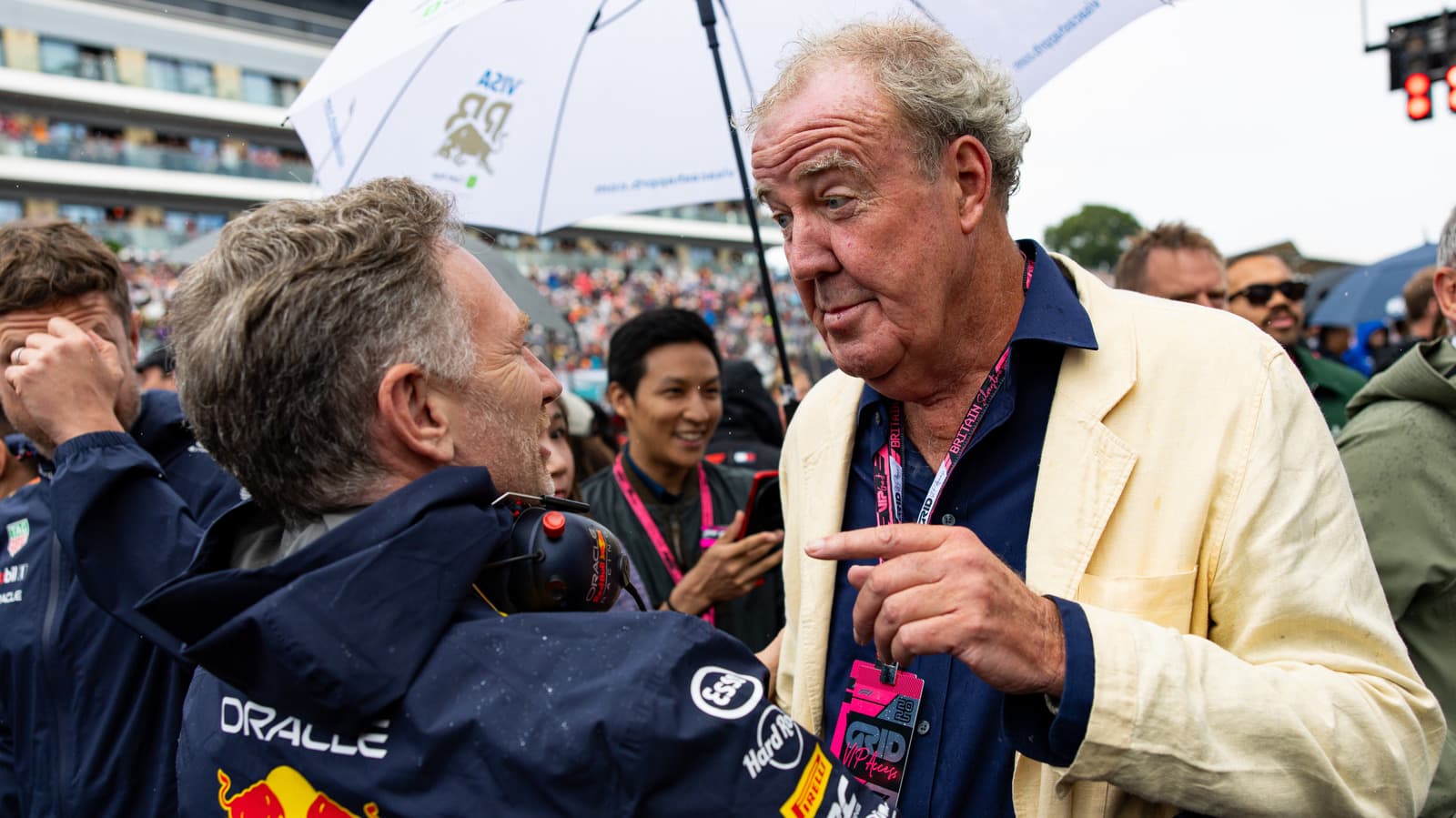
Jeremy Clarkson Diagnosed With 'Aggressive' Cancer: What We Know So Far
Jeremy Clarkson, the outspoken and larger-than-life television presenter best known for his decades-long run on the iconic motoring show Top Gear and more recently for Amazon Prime's The Grand Tour and his farming documentary series Clarkson's Farm, has publicly revealed that he is battling an aggressive form of cancer. The news sent shockwaves through his vast global fanbase and reignited a critical public conversation about the importance of not skipping routine health screenings.
Clarkson, who has never been one to shy away from controversy or candid commentary, once again demonstrated his characteristic honesty by going public with a diagnosis that many public figures might choose to keep private. His openness about the situation has been widely praised, not just for its personal courage, but for the broader awareness it generates around cancer detection and preventative healthcare.
Who Is Jeremy Clarkson?
For those who may be less familiar, Jeremy Clarkson is one of the most recognizable faces in British television history. Born in April 1960, he rose to international fame as the lead presenter of Top Gear, the BBC motoring show he helped transform from a niche car programme into one of the most-watched factual television series on the planet. His sharp wit, deliberately provocative opinions, and undeniable on-screen charisma made him a household name across more than 200 countries.
After departing from the BBC, Clarkson reunited with former co-hosts Richard Hammond and James May for Amazon Prime Video's The Grand Tour. In recent years, he also captured a whole new generation of fans with Clarkson's Farm, a surprisingly heartfelt and humorous documentary series following his attempts to run a working farm in the Cotswolds. At 64 years old, he remains one of the most prolific and followed media personalities in the United Kingdom.
The Cancer Diagnosis: What Has Been Revealed
Clarkson has described his cancer as "aggressive," a term that in oncology typically refers to tumors that grow rapidly, spread quickly, or are otherwise more difficult to treat than slower-progressing cancers. While detailed clinical specifics have not been fully disclosed publicly, the characterization alone underscores the seriousness of his condition.
What makes Clarkson's disclosure particularly important from a public health perspective is the implicit message embedded within it: even the most seemingly robust and invincible individuals are not immune to serious illness. For years, Clarkson cultivated a persona of bulletproof bluster. The revelation that he is facing a genuine health battle strips away that armor and presents a deeply human story that resonates far beyond celebrity gossip.
Why Routine Health Checks Are More Important Than Ever
Clarkson's diagnosis serves as a stark and timely reminder that routine health screenings are not optional extras — they are potentially life-saving necessities. Many aggressive cancers, when caught in their earliest stages, carry significantly better prognoses and treatment outcomes. The challenge is that early-stage cancers often present with no obvious symptoms at all, which is precisely why scheduled check-ups and screenings matter so much.
Medical professionals consistently emphasize that the following screenings should be on everyone's radar, particularly from middle age onward:
- Bowel cancer screening — recommended from age 45 to 60 depending on national guidelines, using stool tests or colonoscopy.
- Prostate-specific antigen (PSA) testing — particularly important for men over 50, or earlier for those with a family history of prostate cancer.
- Skin checks — annual dermatological reviews can catch melanoma and other skin cancers before they spread.
- Chest imaging — low-dose CT scans are increasingly recommended for long-term or former heavy smokers.
- General blood panels — routine bloodwork can flag abnormalities that warrant further investigation well before symptoms emerge.
The uncomfortable truth is that millions of people across the world regularly skip these appointments. Whether due to anxiety, a sense of invincibility, cost, or simple inconvenience, the result is that cancers are diagnosed at later, less treatable stages far more often than they need to be.
The 'Clarkson Effect': Celebrity Diagnoses and Public Health Awareness
History has shown repeatedly that when a well-known figure discloses a serious health diagnosis, public engagement with related health services increases markedly. This phenomenon — sometimes called the "celebrity effect" in public health literature — was documented following diagnoses revealed by figures such as Jade Goody, whose cervical cancer disclosure led to a measurable spike in smear test uptake in the UK, or Kylie Minogue, whose breast cancer diagnosis prompted a surge in mammogram bookings.
Clarkson's reach is enormous. His social media following alone spans tens of millions, and his ability to communicate directly and unpretentiously with a demographic of men — particularly those aged 40 to 65 who are statistically among the least likely to attend routine health appointments — gives his disclosure unusual public health currency. If even a fraction of his audience books a check-up they had been putting off, the ripple effect could be genuinely significant.
A Timely Reminder for All of Us
Whatever one's opinion of Jeremy Clarkson as a television personality or public commentator, his willingness to speak openly about an aggressive cancer diagnosis deserves genuine respect. It takes considerable courage to step into the public eye with vulnerability, particularly when one's brand has always been defined by confidence and bravado.
More than anything, his story is a reminder that health does not care about fame, wealth, or personality. Cancer does not discriminate. But early detection, driven by routine screening and a willingness to see a doctor before symptoms become impossible to ignore, genuinely saves lives every single day.
Do not put it off. Book that appointment. Get that check-up. Jeremy Clarkson's story may well be the nudge someone needed to finally make the call that changes — or saves — their life.