
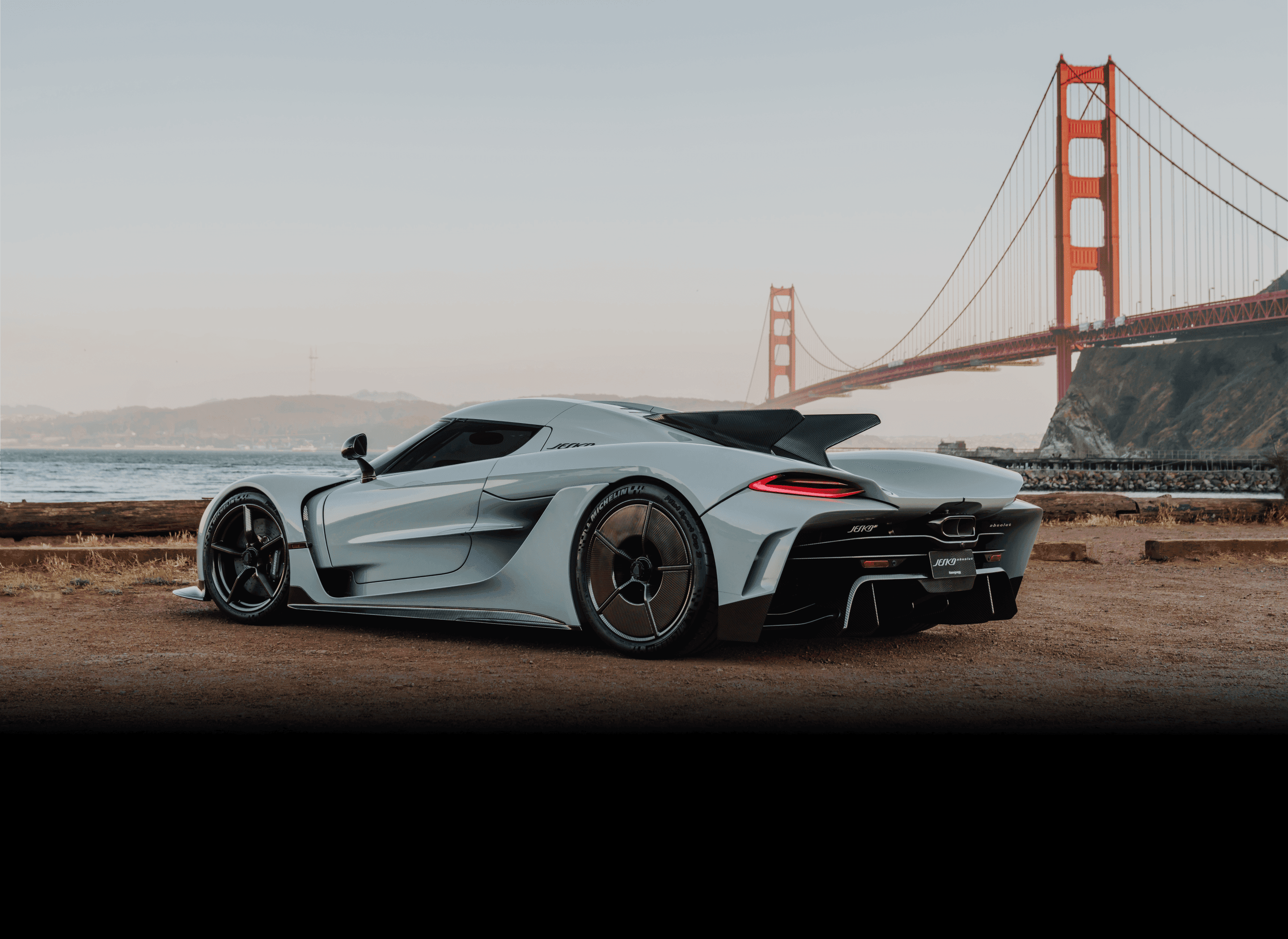
The Koenigsegg Jesko Absolut Just Rewrote the Rulebook on Production-Car Performance
There are fast cars, there are superfast cars, and then there is the Koenigsegg Jesko Absolut — a machine that appears to exist in an entirely different dimension of speed. The Swedish hypercar has just obliterated two production-car speed records, posting a jaw-dropping quarter-mile time of 8.54 seconds at 190 mph. What makes this achievement even more extraordinary is what the Jesko Absolut did not rely on: no all-wheel-drive grip advantage, no electric motor assist, and absolutely no specially prepped surface tricks. Just a rear-wheel-drive combustion-powered monster doing what it was engineered to do.
What Makes the Koenigsegg Jesko Absolut So Special?
To understand why this record matters so much to the automotive world, it helps to understand what the Jesko Absolut is at its core. It is not a hybrid. It is not an electric vehicle borrowing instant torque from a battery pack. The Jesko Absolut is a pure, uncompromising internal combustion hypercar — the kind that is rapidly becoming a rarity in an industry sprinting toward electrification.
At the heart of the Jesko Absolut sits a 5.0-liter twin-turbocharged V8 engine producing a mind-bending 1,600 horsepower when running on E85 biofuel. That power is routed through Koenigsegg's revolutionary Light Speed Transmission (LST), a nine-speed multi-clutch gearbox that can theoretically shift between any gear without sequentially passing through those in between. The result is an almost instantaneous power delivery that no conventional dual-clutch transmission can match.
Koenigsegg has long claimed the Jesko Absolut is designed to be the fastest Koenigsegg ever built, with a theoretical top speed projected to exceed 330 mph — a figure the company has calculated but, as of this record run, never officially verified on a closed course. What they have now verified is the car's ability to devour a quarter mile faster than any other production car in history.
Breaking Down the Record: 8.54 Seconds at 190 MPH
An 8.54-second quarter-mile time is a figure that deserves to be read twice, slowly. For context, a modern Dodge Challenger SRT Demon 170 — itself widely celebrated as a drag strip monster — runs the quarter mile in the high eight-second range with the benefit of an aggressive drag radial tire setup and launch control tuned specifically for straight-line acceleration. The Tesla Model S Plaid, which benefits from the signature instant-torque advantage of three electric motors and all-wheel drive, has posted quarter-mile times in the mid-nine-second range under ideal conditions.
The Jesko Absolut beat both without AWD traction assistance and without the near-instant torque delivery that electric powertrains inherently provide. Achieving a 190 mph trap speed in that distance signals that the car did not simply launch explosively and then taper off — it continued to build speed with ferocious, relentless acceleration through the entire run.
No Electric Assist, No AWD: Why That Changes Everything
In the current era of performance vehicles, all-wheel drive and electrification have become the dominant tools for achieving record-setting acceleration. AWD distributes power across all four contact patches, dramatically reducing wheelspin and allowing a car to put more power to the ground more efficiently from a standing start. Electric motors deliver maximum torque at zero RPM, eliminating the lag inherent to combustion engines building through a rev range.
The Jesko Absolut uses neither. It is rear-wheel drive, meaning every single one of those 1,600 horsepower must be managed through just two tires. The fact that Koenigsegg's engineers — and the driver behind the wheel — managed to harness that power efficiently enough to post an 8.54-second quarter mile is a testament to the sophistication of the LST gearbox, the aerodynamic downforce package, and the tire and traction management systems Koenigsegg has developed in-house.
This makes the Jesko Absolut's record arguably more impressive in a mechanical and engineering sense than records held by electrified or AWD-assisted rivals. It is brute-force performance refined to an art form.
The Records That Fell
The Jesko Absolut claimed two distinct production-car records on this occasion:
- Fastest quarter-mile time by a production car: The 8.54-second pass sets a new benchmark that pushes past previous marks held by purpose-prepped production vehicles, many of which enjoyed the advantages of electric torque or all-wheel-drive traction.
- Highest trap speed in a production-car quarter-mile run: Crossing the timing lights at 190 mph confirms that the Jesko Absolut's acceleration does not peak early. It continues to pull with exceptional force through the back half of the run, something that separates truly extraordinary powertrains from merely powerful ones.
Koenigsegg's Place in the Hypercar Hierarchy
Sweden's Koenigsegg has built its reputation over two decades on producing vehicles that exist at the absolute frontier of what is technically possible in an automobile. From the CCR that held the Guinness World Record for fastest production car in 2005 to the Agera RS that set a verified top speed of 277.87 mph in 2017, the brand has consistently delivered on promises that seem implausible until the timing lights prove otherwise.
The Jesko Absolut's quarter-mile performance cements the brand's position not merely as a boutique manufacturer of exotic cars, but as a genuine engineering powerhouse capable of outpacing rivals with far larger development budgets and far greater production volumes.
What This Means for the Future of Production-Car Performance
The Jesko Absolut's record run arrives at a fascinating moment in automotive history. The industry is pivoting rapidly toward electric and hybrid powertrains, with many legacy performance benchmarks being redefined by batteries and motors rather than pistons and crankshafts. The Jesko Absolut is, in many ways, a statement that the internal combustion engine still has extraordinary feats left to accomplish before it exits the stage.
Whether future challengers will come from electric hypercars with even more aggressive power outputs or from hybrid systems combining combustion and electric torque remains to be seen. What is not in question is that on this occasion, a 1,600-horsepower rear-wheel-drive machine from a small Swedish manufacturer stood on a strip of asphalt and reminded the entire automotive world what raw engineering ambition looks like when it is given full expression.
The Koenigsegg Jesko Absolut did not just break two records. It reset the imagination of what a production car can do.