
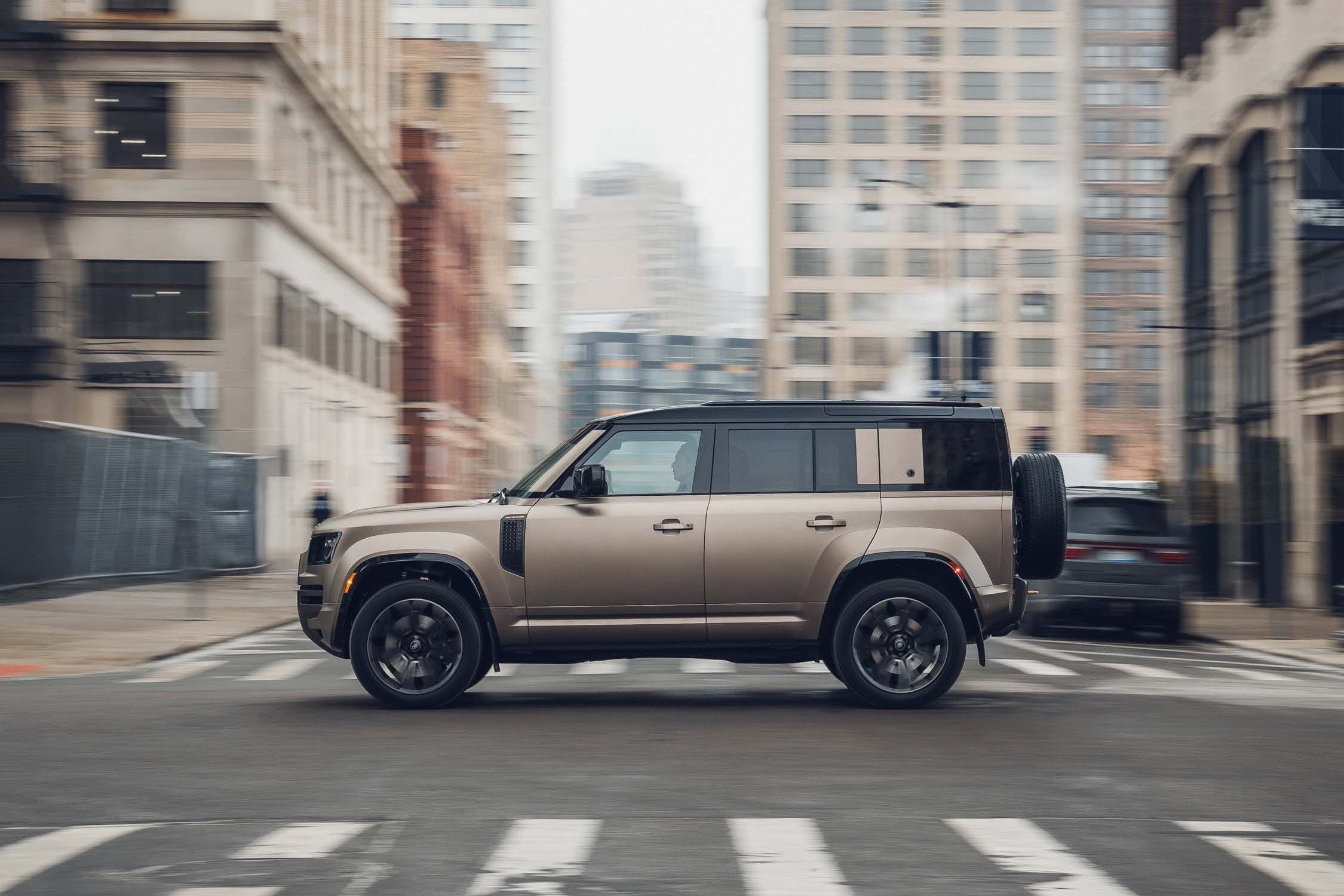
Land Rover Is Planning a Stellantis-Based Defender for the U.S. Market
In a move that is turning heads across the automotive industry, Jaguar Land Rover (JLR) has officially announced a strategic partnership with Stellantis to develop a new version of its iconic Defender specifically for the United States market. This collaboration signals a major shift in JLR's global priorities, as the British automaker steps back from its heavy reliance on the Chinese market and redirects its energy toward North America — one of the world's most competitive and lucrative automotive arenas.
Why JLR Is Pivoting Away from China
For years, China represented one of the most important markets for premium and luxury automakers. JLR was no exception, having invested significantly in building brand recognition and a sales network across the country. However, the landscape has shifted dramatically. Intensifying competition from domestic Chinese electric vehicle brands, fluctuating consumer demand, and broader geopolitical uncertainties have made it increasingly difficult for foreign automakers to maintain profitability in China.
JLR is not alone in reassessing its China strategy. Several European and American automakers have been quietly scaling back their exposure to the Chinese market, choosing instead to double down on regions where they retain a stronger competitive advantage. For JLR, the United States represents exactly that kind of opportunity — a market with a well-established appetite for premium SUVs and a deeply loyal customer base for the Land Rover and Defender nameplates.
By redirecting resources toward the U.S., JLR is making a calculated bet that long-term growth and brand strength are better served by deepening its presence in North America than by fighting an uphill battle in a rapidly evolving Chinese market.
The Stellantis Partnership: What We Know So Far
The centerpiece of JLR's American push is its newly announced partnership with Stellantis, the multinational automotive conglomerate that oversees brands including Jeep, Ram, Dodge, Chrysler, Peugeot, and Fiat, among others. Under this collaboration, a new iteration of the Land Rover Defender will be developed using Stellantis-based platforms and manufacturing resources.
While full technical details have yet to be disclosed, the strategic logic is clear. Stellantis brings substantial manufacturing infrastructure, supply chain networks, and platform engineering capabilities to the table — assets that could help JLR bring a Defender variant to the U.S. market more efficiently and cost-effectively than doing so entirely in-house.
This kind of cross-brand platform sharing has become increasingly common in the industry. Automakers are under enormous pressure to manage the rising costs of vehicle development, electrification, and regulatory compliance. Sharing platforms and components allows brands to spread those costs across higher production volumes while maintaining distinct design and brand identities at the consumer-facing level.
What This Means for the Land Rover Defender
The Defender is one of the most storied nameplates in automotive history. Originally introduced in 1948 as a utilitarian off-road workhorse, the Defender was reborn in a thoroughly modern form in 2020, blending its rugged heritage with contemporary luxury, advanced technology, and surprising on-road refinement. The result was a global sales success that rekindled enthusiasm for the Land Rover brand worldwide.
A U.S.-specific Defender built on Stellantis underpinnings could represent several things depending on how JLR and Stellantis choose to position it. It might be a more accessibly priced version designed to reach buyers who find the current Defender's premium price point out of reach. Alternatively, it could be an electrified or hybrid variant tailored to meet evolving American emissions standards and consumer preferences for cleaner powertrains.
Either way, the core appeal of the Defender — its bold styling, genuine off-road capability, and premium interior experience — would need to remain intact. American buyers have made it clear they expect authenticity from the Defender badge, and any compromise on those fundamentals would risk undermining the very brand equity JLR is counting on.
The Broader Implications for JLR's U.S. Strategy
This announcement is about more than just one vehicle. It reflects a broader strategic repositioning by JLR as it navigates an industry in transition. The shift toward electrification, the restructuring of global supply chains, and the rebalancing of geographic priorities are reshaping how every major automaker thinks about its future.
- Strengthening U.S. market presence gives JLR a more stable revenue base less exposed to geopolitical risk.
- Partnering with Stellantis reduces development costs and accelerates time to market for new models.
- A U.S.-focused Defender could serve as a halo product that lifts overall JLR brand perception in North America.
- The move positions JLR to compete more directly with rivals like Mercedes-Benz, BMW, and Jeep in the premium off-road SUV segment.
Looking Ahead
Details about the Stellantis-based Defender's timeline, powertrain options, pricing, and exact positioning remain forthcoming. However, the announcement itself is a strong signal that JLR is serious about winning in America. For Land Rover enthusiasts and automotive observers alike, the prospect of a new Defender variant engineered with the resources of one of the world's largest automotive groups is an exciting development worth watching closely.
As JLR continues to refine its global strategy, the U.S. market will clearly be at the center of its ambitions. Whether this Stellantis partnership delivers on its considerable promise remains to be seen — but the direction of travel is unmistakable. Land Rover is planting its flag firmly in American soil, and the Defender is leading the charge.