
License Plate Cameras Are Evolving—And They're Coming for Your Wearables
If you've ever driven past a police cruiser parked on the highway shoulder or noticed a camera mounted on a traffic pole, there's a good chance an Automated License Plate Recognition (ALPR) system scanned your vehicle without you ever knowing. These systems have been a staple of law enforcement and traffic management for years, quietly cataloging the movements of millions of vehicles every single day. But a new generation of ALPR technology is pushing well beyond the license plate. The next wave of surveillance cameras isn't just interested in your car—it's interested in you: your AirPods, your smartwatch, your fitness tracker, and virtually any wireless device you carry.
What Is ALPR Technology and How Has It Worked Until Now?
Automated License Plate Recognition technology uses high-speed cameras paired with optical character recognition software to capture and interpret license plate numbers in real time. Law enforcement agencies, toll authorities, and private parking operators have relied on ALPR for decades to identify stolen vehicles, catch uninsured drivers, enforce parking rules, and track the movements of suspects.
Traditional ALPR systems work in a fairly straightforward way: a camera captures an image of a passing vehicle, the software reads the plate number, and that number is cross-referenced against law enforcement databases. If there's a hit—say, the plate belongs to a stolen car—officers receive an alert. The data is often stored for extended periods, creating detailed logs of where a specific vehicle has been and when.
While privacy advocates have long raised concerns about the scope of ALPR data collection, most criticism focused on the tracking of vehicles as objects. The car was the target, and its driver was an incidental association. That distinction is about to disappear entirely.
Next-Gen ALPR: Bridging the Gap Between You and Your Car
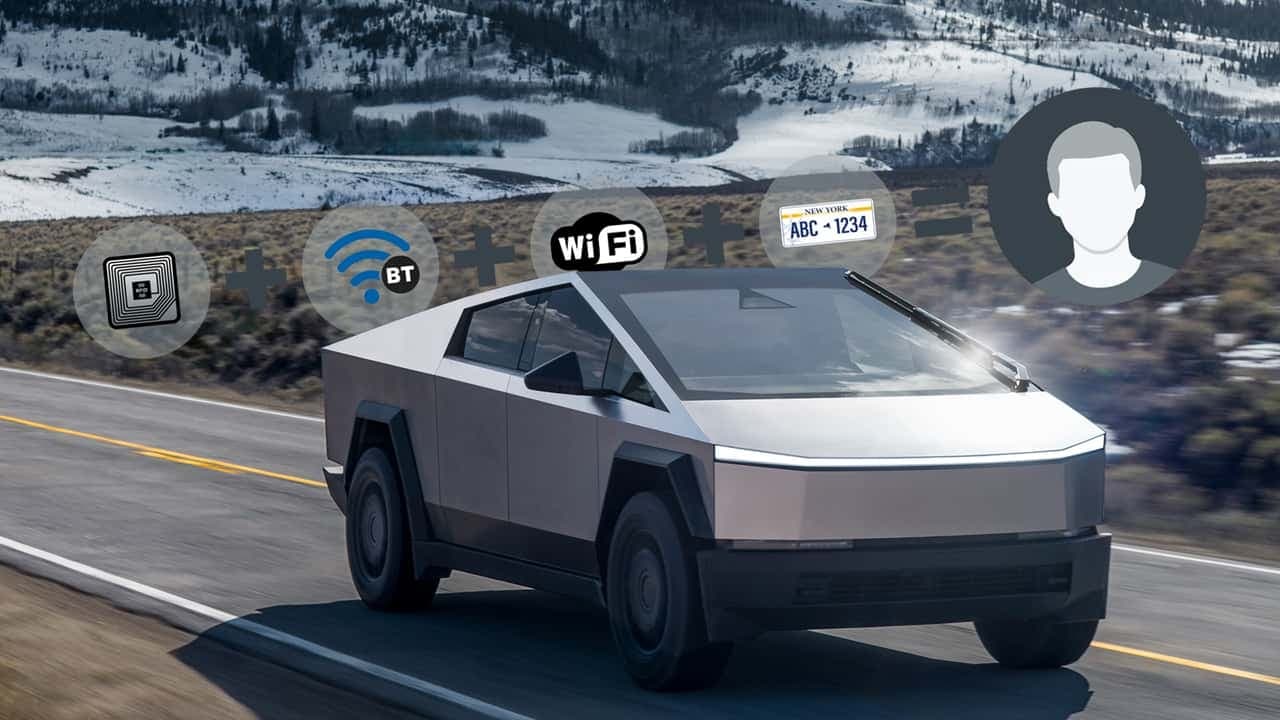
The newest generation of ALPR systems is being designed to do something far more invasive: correlate a vehicle not just with a license plate, but with the personal wireless devices inside it. By integrating Bluetooth and Wi-Fi probe request detection alongside traditional plate-reading optics, these cameras can passively capture the unique hardware identifiers broadcast by smartphones, AirPods, smartwatches, laptops, and other wireless-enabled devices.
Every time your phone or a pair of wireless earbuds searches for a known network or Bluetooth connection, it broadcasts a signal that includes a MAC address—a hardware-level identifier unique to that device. Next-gen ALPR platforms are being built to harvest these signals simultaneously as they scan a plate. The result is a data profile that links a specific license plate to a specific cluster of personal devices, and by extension, to a specific individual.
This matters enormously. A car can be sold, borrowed, rented, or stolen. A license plate alone doesn't reliably identify a person. But your iPhone, your Galaxy Watch, and your AirPods travel with you almost everywhere. When an ALPR system ties those device identifiers to your plate, it creates a far more persistent and accurate profile of your movements than either data point could offer alone.
Why This Technology Is Being Developed
Proponents of next-gen ALPR argue that the enhanced tracking capability serves legitimate public safety purposes. Law enforcement agencies contend that being able to confirm who is actually inside a vehicle—rather than just who owns it—improves the accuracy of investigations and reduces the risk of wrongful stops. In theory, if a car associated with a suspect is spotted but the device signatures inside don't match, officers have additional context before making a decision.
Commercial applications are also driving development. Fleet management companies, insurance providers, and parking operators see obvious business value in being able to confirm that a specific authorized driver is operating a specific vehicle. Insurers, for instance, could theoretically use device-vehicle correlations to verify usage-based policy terms.
The Privacy Implications Are Significant
Despite the stated benefits, the privacy implications of this technology are profound and deserve serious public scrutiny. Here are some of the core concerns:
- Passive, warrantless surveillance: Because Bluetooth and Wi-Fi probe signals are broadcast publicly, collecting them typically doesn't require a warrant under current legal frameworks in many jurisdictions. This means your device identifiers can be harvested without any judicial oversight.
- Persistent identity tracking: Unlike a license plate that can change ownership, your personal device's MAC address stays with you. Once an ALPR network links your devices to your vehicle, that association can follow you across city-wide or even national camera networks.
- Data aggregation risks: The real danger isn't a single camera reading your plate once. It's hundreds of cameras building a granular timeline of your daily life—your commute patterns, your medical appointments, your places of worship, your political rallies.
- Third-party data sharing: Much ALPR infrastructure is operated by private companies that sell aggregated data to insurers, debt collectors, and other commercial actors. Adding personal device data to that pipeline dramatically expands the commercial surveillance ecosystem.
- Chilling effects on free movement: Knowing that your personal devices are passively scanned every time you pass a camera may alter how freely people move, assemble, or associate—a deeply troubling outcome in any democratic society.
What Legal Protections Currently Exist?
Legal frameworks governing ALPR data vary widely. In the United States, some states have enacted laws limiting how long ALPR data can be retained or who can access it, but there is no comprehensive federal statute governing the technology. The addition of wireless device tracking to ALPR systems opens new legal grey areas that existing statutes weren't designed to address.
The European Union's General Data Protection Regulation (GDPR) offers somewhat stronger protections, classifying persistent location tracking as sensitive personal data subject to strict handling requirements. However, enforcement across the patchwork of national implementations remains inconsistent.
Privacy researchers and civil liberties organizations, including the Electronic Frontier Foundation (EFF), have been vocal about the need for updated legal frameworks that keep pace with evolving surveillance capabilities. The current legislative gap is one of the most urgent concerns as this technology approaches mainstream deployment.
How to Limit Your Exposure
While no solution offers complete protection against passive wireless scanning in public spaces, there are practical steps individuals can take to reduce their exposure to device-level tracking by ALPR systems.
- Enable MAC address randomization: Modern versions of iOS and Android support randomized MAC addresses for Wi-Fi connections. Ensure this feature is turned on in your device settings to make probe requests harder to link to a persistent hardware identity.
- Disable Bluetooth and Wi-Fi when not in use: Simply turning off wireless radios when you don't need them prevents your devices from broadcasting probe signals. It's a basic but effective step.
- Be aware of your digital footprint in public: Understanding that public spaces increasingly include passive wireless scanners—not just cameras—is the first step toward making informed choices about what devices you carry and when.
- Support legislative reform: Engaging with local and national representatives about the need for updated surveillance and data privacy laws is one of the most meaningful long-term responses to the expansion of this technology.
The Road Ahead
License plate cameras began as a narrow tool for identifying stolen vehicles. They have grown into one of the most extensive passive surveillance networks in existence. The integration of personal wireless device tracking marks a qualitative leap in what these systems can know about you—not just where your car has been, but where you have been, reliably and continuously.
The technology is developing faster than the laws designed to govern it. Public awareness, active legislative engagement, and pressure on both government agencies and private ALPR operators will be essential to ensuring that the next generation of surveillance infrastructure doesn't quietly become a tool for tracking every movement of everyday life. The conversation about where to draw that line needs to happen now, before the cameras are already watching.