
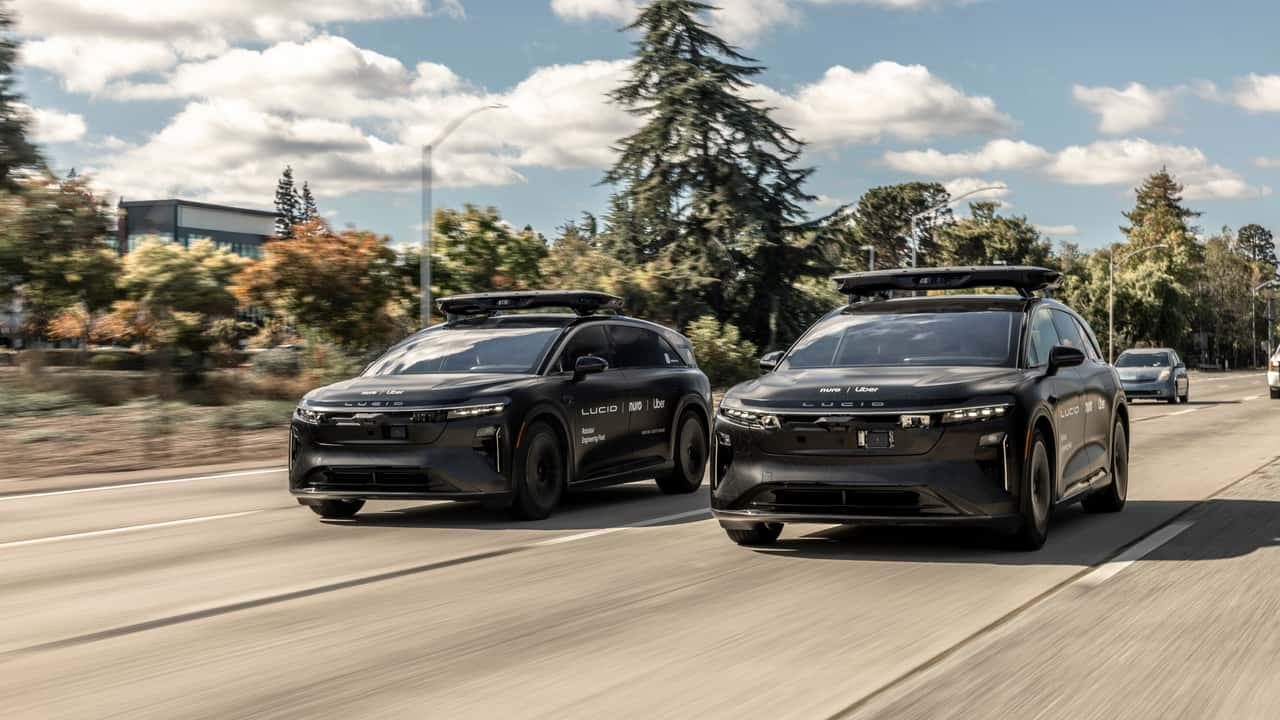
Lucid and Uber Are Taking Robotaxis to Houston — And It's a Big Deal
The autonomous vehicle revolution is no longer a distant concept confined to Silicon Valley test tracks. It is rolling out onto real city streets, and it is picking up speed. The partnership between Lucid Motors, Nuro, and Uber has already made waves in California, but the trio is not stopping there. Houston, Texas, is officially the next major city in their crosshairs, and the implications for urban transportation could be enormous.
This is not just another press release about a future that never quite arrives. The Lucid-Nuro-Uber collaboration has real hardware, real funding, and a real roadmap. If you care about the future of autonomous vehicles, electric mobility, or simply how you might get around in the next few years, this development deserves your full attention.
Understanding the Lucid, Nuro, and Uber Partnership
Before diving into what Houston means for this venture, it helps to understand what makes this three-way partnership so compelling in the first place.
Lucid Motors is best known for producing the Lucid Air, one of the most technologically advanced and longest-range electric vehicles on the market today. The company has proven that it can build high-performance EVs with exceptional efficiency — a critical foundation for any serious autonomous vehicle program that needs to operate at scale without constant recharging stops.
Nuro is the autonomous driving technology company bringing the self-driving brains to the operation. Founded by former Google engineers, Nuro has spent years developing and refining AI-driven vehicle technology, with a focus on practical, real-world deployment rather than perpetual testing phases. Their software and sensor systems are designed to handle the unpredictable nature of city streets.
Uber, meanwhile, provides the platform layer. With its massive ride-hailing network already embedded in the daily routines of millions of Americans, Uber offers something Lucid and Nuro cannot easily replicate on their own — instant access to an enormous user base and a proven logistics infrastructure for on-demand transportation.
Together, these three companies represent a full-stack approach to the robotaxi problem: a premium electric vehicle platform, cutting-edge autonomous driving software, and a distribution network with global reach.
Why Houston? The Strategic Case for Texas
California was a natural starting point for many autonomous vehicle programs given its relatively permissive regulatory environment and its cultural association with tech innovation. But Houston represents something different — and arguably more important.
Houston is the fourth-largest city in the United States by population. It is a sprawling, car-dependent metropolis with one of the highest vehicle miles traveled per capita in the country. Unlike San Francisco or Los Angeles, Houston was largely built around the automobile, with wide roads, extensive highway systems, and limited public transit infrastructure. If a robotaxi service can thrive in Houston, it can thrive almost anywhere in America.
Texas also presents a favorable regulatory climate for autonomous vehicle deployment. The state has historically taken a lighter-touch approach to AV regulation compared to some other jurisdictions, which reduces the bureaucratic hurdles that have slowed rollouts elsewhere. Combined with Houston's scale and its status as a major economic and cultural hub, the city is a genuinely high-stakes proving ground for this technology.
There is also a demographic argument. Houston has a large and diverse population, including significant numbers of residents who rely heavily on ride-hailing services either because they do not own vehicles or prefer not to drive in heavy traffic. A reliable, affordable, and autonomous Uber option could meaningfully improve mobility options for a wide range of Houstonians.
What to Expect From the Robotaxi Rollout
Based on how these programs typically work, the Houston expansion is likely to begin with a defined geographic zone — perhaps a specific set of neighborhoods or a corridor connecting key destinations like downtown, the Texas Medical Center, or the Galleria area. Early riders will probably be Uber users who opt in through the app, similar to how Waymo One operates in Phoenix and San Francisco.
The vehicles themselves will almost certainly be based on Lucid's electric platform, integrated with Nuro's autonomous driving stack. Expect a high level of sensor redundancy — lidar, radar, cameras, and ultrasonic sensors working in concert — along with robust over-the-air software update capabilities that allow the system to improve continuously with real-world data.
Safety drivers or remote human monitors may be present during the initial phases of the Houston deployment, a common practice that allows operators to intervene when the system encounters edge cases it has not yet learned to handle. Over time, as confidence in the technology grows and regulatory approvals expand, those human oversight layers tend to be reduced or removed entirely.
The Bigger Picture: A National Robotaxi Network in the Making
The move from California to Texas signals something more than incremental growth. It suggests that the Lucid-Nuro-Uber partnership is thinking in terms of a national footprint, not just a regional proof of concept. Houston is a gateway to the broader Sun Belt market, a region that includes some of the fastest-growing cities in the country — Dallas, Austin, Phoenix, Nashville, and Atlanta among them.
If this partnership executes well in Houston, it will have the data, the operational experience, and the investor confidence needed to accelerate expansion to additional markets. The competitive pressure from Waymo, Tesla's planned robotaxi service, and other autonomous vehicle players will only intensify in the coming months, which means speed of deployment matters enormously.
What It Means for the Future of Urban Mobility
Robotaxis are not just a novelty. They represent a potential restructuring of how cities function. Reduced need for personal vehicle ownership, lower transportation costs for underserved communities, decreased urban parking demand, and a significant reduction in accidents caused by human error are all downstream possibilities of a successful autonomous ride-hailing ecosystem.
Houston, with its size, its car culture, and its growth trajectory, is one of the most consequential places this technology could be tested. The Lucid, Nuro, and Uber partnership arriving there is a meaningful signal that the robotaxi era is not coming someday — it is arriving now, one city at a time.
Keep your eyes on Houston. What happens there could define the trajectory of autonomous transportation across the entire United States for years to come.