
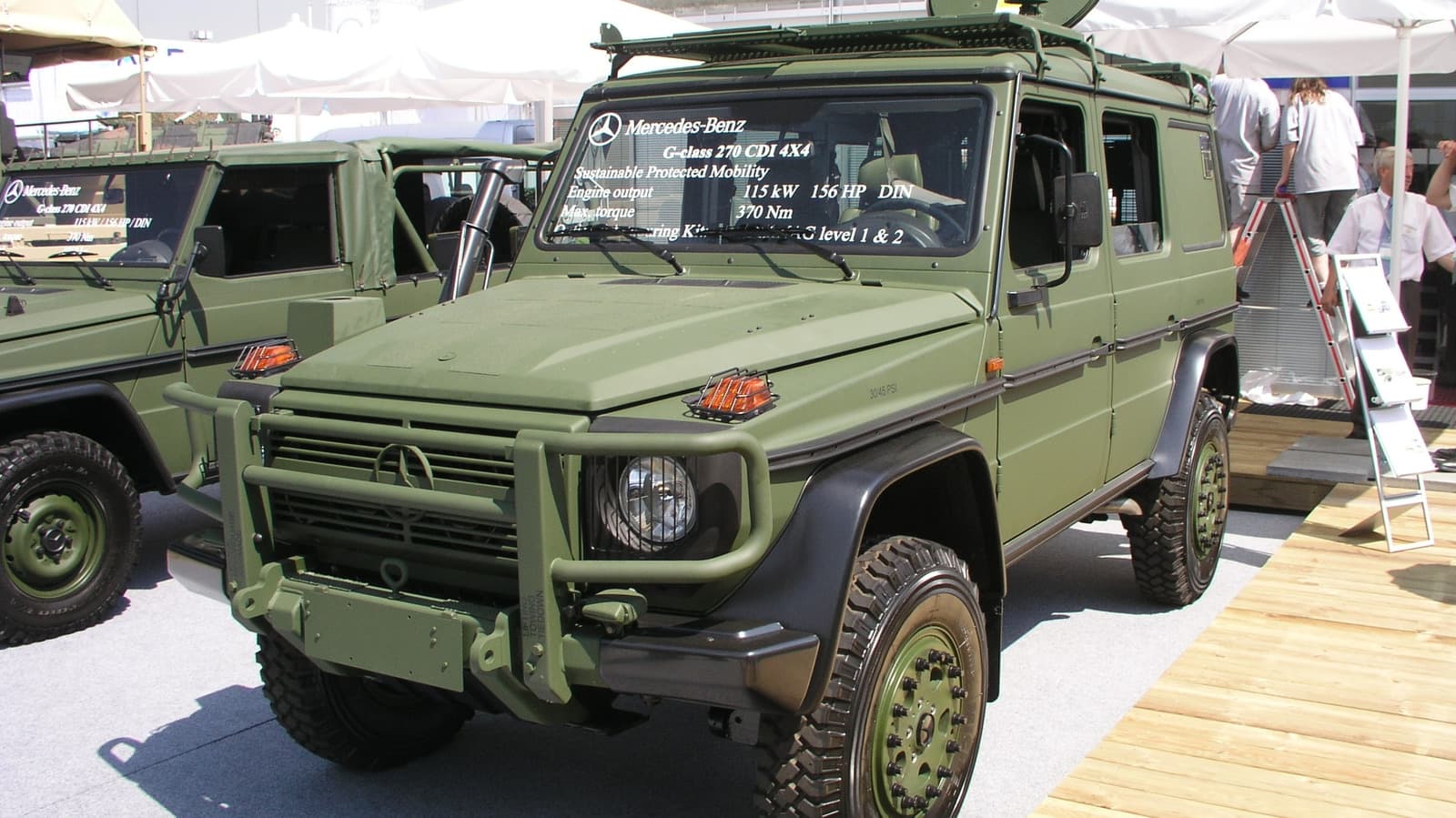
Mercedes-Benz Is Now Building Anti-Drone Vehicles — And It's Not Alone
When you think of Mercedes-Benz, sleek sedans, luxury SUVs, and cutting-edge electric vehicles probably come to mind. Anti-drone combat platforms? Perhaps not. But that is exactly the direction the legendary German automaker is now heading, as it joins a growing number of European car brands making a decisive pivot toward defense technology. The move raises a provocative question that the industry is increasingly forced to confront: is there more money in war than in production cars?
Mercedes is not simply dipping a toe into military waters. The company is developing purpose-built anti-drone vehicles designed to detect, track, and neutralize unmanned aerial systems — a capability that has become one of the most urgent priorities for modern militaries around the world. The shift reflects a broader, structural transformation taking place across Europe's automotive landscape, one driven by geopolitical pressure, surging defense budgets, and a recognition that the skills required to build complex vehicles translate remarkably well to the battlefield.
Why Anti-Drone Technology Has Become So Critical
The wars of the 21st century have been reshaped by drones. From reconnaissance missions to precision strikes and swarming attacks, unmanned aerial vehicles have proven to be low-cost, highly effective tools that traditional military hardware struggles to counter efficiently. The conflict in Ukraine in particular has demonstrated just how vulnerable ground forces, supply lines, and armored vehicles are to drone threats — even relatively inexpensive commercial drones modified for military use.
This battlefield reality has sent defense procurement offices across NATO member states scrambling to acquire effective counter-drone solutions. Ground-based anti-drone vehicles — mobile platforms equipped with jamming systems, radar, directed energy weapons, or kinetic interceptors — are now considered essential components of modern force protection. The demand is enormous, the contracts are lucrative, and the technology requirements align closely with what automotive manufacturers already do extremely well.
The European Automotive Industry's Broader Defense Turn
Mercedes is not pioneering this pivot on its own. Several European automakers have already moved aggressively into the defense space, recognizing both the financial opportunity and the strategic alignment of interests.
- Rheinmetall and Volkswagen Group: German defense giant Rheinmetall has been expanding its partnerships with automotive suppliers, and discussions around defense-oriented vehicle production have increasingly drawn traditional car industry players into the conversation.
- Renault and the French defense ecosystem: French automakers have longstanding ties to the country's defense industrial base, and those ties are being strengthened as France increases its military spending commitments under NATO obligations.
- Land Rover and Jaguar in the UK: British brands have supplied military variants of their platforms for decades, and renewed investment in that capability is underway as the UK ramps up defense expenditure post-Brexit.
The common thread across these moves is simple: European governments are spending more on defense than they have in a generation, and automotive manufacturers — with their expertise in vehicle engineering, supply chains, systems integration, and large-scale manufacturing — are uniquely positioned to capture a share of that spending.
What Mercedes Brings to the Anti-Drone Fight
Mercedes-Benz has deep roots in military vehicle production that many consumers may not be aware of. The company has supplied the German armed forces, the Bundeswehr, with a range of light and medium military vehicles for decades. The Unimog, one of the most capable off-road utility vehicles ever built, has served in military roles across dozens of countries. So while the anti-drone announcement may seem surprising on the surface, it builds on a foundation that has existed for a long time.
What makes the current moment different is the technological sophistication required. Anti-drone vehicles are not simply trucks with guns mounted on the back. They require advanced sensor fusion systems, electronic warfare capabilities, real-time data processing, and seamless communication with other platforms in a networked battlefield environment. These are areas where Mercedes's investment in software-defined vehicles, electrical architecture, and advanced driver assistance systems — developed for the consumer market — provide a meaningful competitive advantage.
The integration of civilian-derived technology into military platforms is increasingly seen as a strength rather than a compromise. Commercial automotive development cycles move faster than traditional defense procurement, and the components are often battle-tested through millions of units of real-world deployment before they ever see a military application.
The Business Case: Defense Contracts vs. Consumer Market Pressures
European automakers are under enormous pressure on their core business. The transition to electric vehicles has required hundreds of billions in investment across the industry. Chinese competitors, led by brands like BYD, are rapidly gaining ground in markets that European manufacturers once dominated. Margins on passenger cars are being squeezed from multiple directions simultaneously.
Defense contracts offer a compelling alternative revenue stream. Military procurement is less sensitive to consumer sentiment, less exposed to Chinese competition, and typically involves higher margins than mass-market vehicle production. Contracts tend to be long-term, providing revenue visibility that consumer markets rarely offer. And with European defense budgets expected to grow significantly through the end of this decade, the timing for automotive companies to establish themselves as credible defense suppliers is arguably ideal.
Challenges and Ethical Considerations
The pivot is not without its complications. Defense manufacturing carries reputational considerations that consumer-facing brands must manage carefully. Shareholders, employees, and customers do not always share a unified view on whether an automotive company should be building weapons systems or platforms designed for combat environments. Transparent communication and clear corporate governance around defense activities will be essential for brands like Mercedes as they deepen their involvement in this space.
There are also technical and regulatory hurdles. Defense contracts require compliance with export control laws, classified procurement processes, and security frameworks that are entirely different from the commercial automotive world. Building the organizational capability to operate effectively in that environment takes time and investment.
The Road Ahead for Mercedes and Europe's Auto-Defense Convergence
The entry of Mercedes-Benz into the anti-drone vehicle market is a signal, not just a business decision. It signals that Europe's automotive industry is no longer content to sit on the sidelines of the continent's defense transformation. As governments continue to increase military budgets and modernize their armed forces, the line between the automotive sector and the defense industrial base will continue to blur.
For Mercedes, the move could ultimately prove to be one of the most strategically significant decisions of this decade — a recognition that the company's future growth may owe as much to protecting soldiers from drone threats as it does to selling luxury cars on city streets. Whether that represents a welcome diversification or a fundamental shift in corporate identity remains to be seen. What is clear is that in 2024 and beyond, the road to profitability for Europe's automakers may increasingly run through the battlefield.