
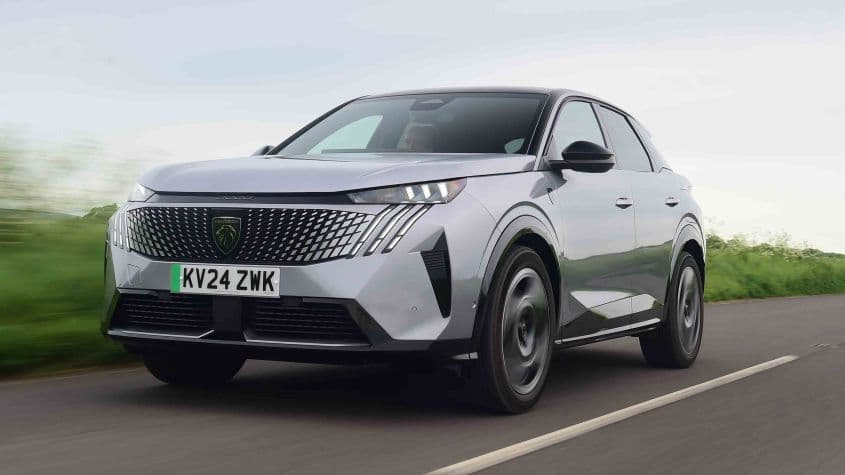
Peugeot 3008 Review: Striking Looks, Real-World Compromises
The Peugeot 3008 has always been one of the most visually arresting SUVs in its class, and the latest generation takes that design philosophy further than ever before. With its angular bodywork, signature LED lighting strips, and a cabin that genuinely feels like stepping into a concept car, the 3008 knows how to make an entrance. But as any savvy car buyer knows, looking great and living with a car every day are two very different things. After spending meaningful time with the Peugeot 3008 across its powertrain range — including the all-electric variant — it's clear that style and substance don't always go hand in hand here.
Design and First Impressions
Let's start where the 3008 is undeniably strongest: its appearance. Peugeot has long positioned itself as the design-led alternative in the mainstream SUV segment, and the 3008 is the clearest expression of that ambition yet. The exterior is bold without being brash, featuring a wide front fascia, flush door handles, and a sleek roofline that tapers elegantly toward the rear. It's a car that genuinely draws attention in a car park full of anonymous crossovers.
Step inside, and the theatre continues. The panoramic i-Cockpit dashboard is a real talking point, combining a compact steering wheel, a floating central touchscreen, and a head-up display into a layered, futuristic arrangement. Premium materials are used liberally, and the quality of the soft-touch surfaces and ambient lighting rivals cars costing significantly more. If you want to feel like you're driving something special without spending Audi or BMW money, the 3008's interior makes a compelling case.
Powertrain Options: Petrol, Hybrid, and Electric
The 3008 is available with a range of powertrains designed to suit different buyers and budgets. Entry-level models use a turbocharged petrol engine that delivers adequate performance for everyday driving, though it's hardly exciting. Plug-in hybrid (PHEV) variants add electric assistance to improve efficiency and give a more responsive feel around town, and for many buyers, these will represent the sweet spot in the range.
Then there's the full electric version — the variant that has generated the most attention, and arguably the most debate.
Peugeot 3008 Electric: Promise vs. Reality
On paper, the Peugeot 3008 Electric looks like a strong proposition. It offers a competitive official range figure, a refined and near-silent driving experience, and the practicality of a family SUV in an increasingly eco-conscious package. In practice, however, the EV version comes with a set of compromises that are difficult to overlook.
Real-world range falls noticeably short of the official figures, particularly during motorway driving or in colder weather conditions — a criticism that applies to many EVs, but feels especially pointed given how prominently Peugeot markets the electric 3008's efficiency credentials. Charging speeds are adequate rather than class-leading, meaning longer stops at public chargers than some rivals require. For drivers who regularly undertake longer journeys, this could prove genuinely inconvenient.
Performance is smooth and immediate in the way all EVs tend to be, and around town the 3008 Electric is genuinely pleasant to drive. But the EV-specific version also adds considerable weight to the car, which blunts some of the dynamic sharpness that makes the petrol and hybrid models feel more agile. The steering, while precise, lacks the feedback that more driver-focused SUVs in this segment can offer.
The Technology Problem Affecting Every 3008
Here's where the Peugeot 3008 loses ground regardless of which version you choose: the technology. Across the entire range, the infotainment and driver assistance systems are a source of persistent frustration for owners and reviewers alike.
The central touchscreen — while visually impressive — relies too heavily on touch inputs for functions that would be safer and more intuitive as physical controls. Adjusting the temperature, changing the fan speed, or toggling between drive modes all require navigating menus while on the move, which is both distracting and unnecessarily complex. Many rivals have recognised that ditching physical buttons entirely is a step too far, and have returned to hybrid solutions that blend screens with tactile controls. Peugeot hasn't fully made that transition yet.
The i-Cockpit layout, with its small steering wheel positioned below the instrument cluster rather than in front of it, also divides opinion sharply. Fans argue it creates a more open, sporty feel. Critics — particularly taller drivers — find that it obscures part of the instrument display depending on seating position, which is a real usability concern rather than a minor gripe.
- Voice recognition can be slow to respond and occasionally misinterprets commands
- Wireless smartphone integration works inconsistently depending on device
- Over-the-air software updates have not resolved all known interface bugs
- Parking sensors and camera displays are slow to load on initial startup
Practicality and Everyday Usability
Away from the tech frustrations, the 3008 performs well as a family car. Boot space is generous, rear passenger room is comfortable for adults on longer journeys, and the ride quality is well-judged — firm enough to feel composed at speed, but supple enough to smooth out urban potholes without unsettling occupants. It's also reasonably quiet on the motorway, with good wind and road noise suppression.
Driver assistance features such as lane-keeping, adaptive cruise control, and automatic emergency braking are all present, and when they work correctly, they work well. The issue is consistency — the systems can occasionally feel overly intrusive or, conversely, less attentive than they should be.
Is the Peugeot 3008 Worth Buying?
The Peugeot 3008 is a genuinely difficult car to give a simple verdict on. Its design is among the best in the family SUV class, its interior quality punches above its price point, and the driving experience — particularly in hybrid form — is composed and confident. These are real strengths that shouldn't be dismissed.
But the EV version's real-world limitations and the tech frustrations that run through every variant in the range are not minor niggles — they're issues that will affect daily life with this car. Buyers who prioritise style and brand feel will find much to love. Those who prioritise seamless usability and technology that simply works may find the competition more satisfying to live with long-term.
In short: the Peugeot 3008 is one of the most beautiful SUVs you can buy today. Just make sure you test drive it thoroughly — touchscreen and all — before you sign on the dotted line.