
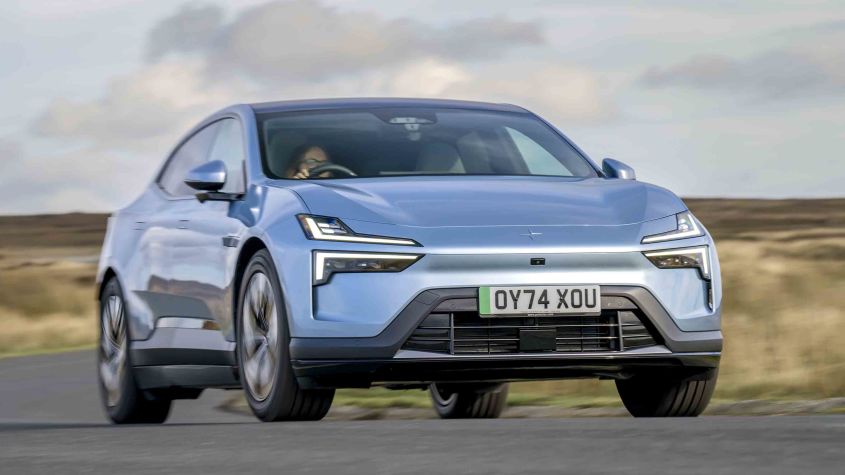
Polestar Forced Out of the US Market: What Happened and Why It Matters
In a significant development for the global electric vehicle (EV) industry, Swedish automaker Polestar has been denied the right to sell its cars in the United States. The reason? The brand's deep-rooted ties to China. This decision marks a turning point not only for Polestar as a company but also for the broader conversation around Chinese-linked automotive brands operating in Western markets. As geopolitical tensions between the US and China continue to shape trade policy, Polestar has become one of the most high-profile casualties of this growing divide.
Understanding Polestar's Relationship with China
Polestar was originally established as a performance division of Volvo Cars before being spun off as an independent electric vehicle brand in 2017. While the company markets itself as a Swedish manufacturer and prides itself on Scandinavian design and engineering, its corporate structure tells a more complicated story.
Polestar is majority-owned by Geely Holding Group, the Chinese automotive conglomerate that also controls Volvo Cars. Geely has been aggressively expanding its global footprint, acquiring several European marques over the past decade. However, as Western governments have grown increasingly wary of Chinese influence in critical industries — particularly in the automotive and technology sectors — Polestar's ownership structure has become a significant liability in the American market.
Several Polestar models are also manufactured in China, which compounds the issue further. Under growing US legislation targeting vehicles with Chinese components or manufactured by Chinese-linked entities, Polestar's eligibility to operate in America has been called into serious question.
The US Regulatory Environment: Why Polestar Lost Access
The United States has been tightening its regulations around Chinese-linked electric vehicles for some time. A combination of executive orders, tariff expansions, and legislation such as the Inflation Reduction Act (IRA) have progressively restricted which EV brands qualify for federal tax incentives and, in some cases, which are permitted to sell in the US market altogether.
The IRA, in particular, introduced strict requirements around the sourcing of battery components and critical minerals, disqualifying any EV with significant ties to a "foreign entity of concern" — a designation that explicitly includes Chinese companies. Since Polestar vehicles are partly manufactured in China and the company is linked to Geely, it found itself unable to meet these requirements.
Beyond tax credit eligibility, escalating tariffs on Chinese-made vehicles — which have climbed sharply under recent US trade policy — made it economically unviable for Polestar to continue operating in the American market. The combination of regulatory exclusion and punitive tariffs effectively forced Polestar's hand.
What This Means for Polestar as a Brand
Losing access to the United States is a significant blow for any automaker. The US remains one of the largest and fastest-growing EV markets in the world, with millions of consumers actively transitioning away from combustion engine vehicles. For Polestar, which has been working to establish itself as a premium, design-forward EV alternative to Tesla, losing that platform is a serious setback to its global ambitions.
Financially, Polestar has been navigating challenging waters. The company has faced pressure from investors and has been working to improve its profitability and sales volumes. The loss of the US market removes a critical revenue stream at a time when the brand can ill afford further setbacks.
There are also reputational considerations. Being publicly excluded from a major Western market due to Chinese ties risks undermining Polestar's carefully cultivated image as a European-born, sustainability-focused brand. The association with Chinese manufacturing and ownership — however commercially practical it may be — now carries a political and reputational weight that is difficult to shake in the current climate.
Polestar's Pivot: Doubling Down on Europe
In response to its exclusion from the US, Polestar has announced plans to refocus its efforts on the European market. Europe represents a significant opportunity for EV growth, driven by ambitious emissions targets, government incentives for electric vehicles, and a consumer base that is increasingly prioritising sustainability when making purchasing decisions.
Polestar's European strategy is likely to centre on several key pillars:
- Expanding its model lineup with vehicles tailored to European consumer preferences, including more affordable entry-level options to compete with a rapidly expanding field of rivals.
- Strengthening its dealer and service network across major European markets including Germany, France, the UK, and the Nordic countries where EV adoption rates are among the highest in the world.
- Leveraging its Scandinavian identity more aggressively in marketing, emphasising its Swedish design heritage and Volvo-linked safety credentials to differentiate itself from Chinese EV newcomers flooding the European market.
- Exploring manufacturing shifts to reduce its dependence on Chinese production, which could also help it regain access to markets with strict local-content requirements in the longer term.
The Bigger Picture: Chinese EV Brands and Western Markets
Polestar's situation is not unique. Across the board, EV brands with Chinese links are facing mounting regulatory headwinds in both the United States and Europe. The European Union has launched its own investigation into Chinese EV subsidies and has introduced additional tariffs on Chinese-made electric vehicles, signalling that the geopolitical scrutiny is not limited to America.
This creates a challenging paradox for brands like Polestar that exist at the intersection of Eastern investment and Western consumer appeal. They benefit from the scale and manufacturing efficiency that Chinese partnerships provide, yet those same partnerships increasingly lock them out of the Western markets they are trying to serve.
Looking Ahead: Can Polestar Survive and Adapt?
The road ahead for Polestar is undeniably difficult, but not without possibility. The European EV market is expanding rapidly, and there remains genuine appetite for premium, design-led electric vehicles that offer a credible alternative to Tesla's dominance. If Polestar can successfully reposition itself and navigate the complex political landscape surrounding its Chinese ownership, it may yet find a stable and profitable footing in Europe.
However, the pressure to restructure its supply chain, reduce its reliance on Chinese manufacturing, and potentially renegotiate its ownership arrangements with Geely will be immense. Investors, consumers, and regulators will all be watching closely to see whether Polestar can transform this setback into a strategic opportunity — or whether its ties to China will continue to close doors in the world's most important markets.
For now, Polestar's story serves as a stark reminder of just how deeply geopolitics has embedded itself into the future of the global automotive industry. In the race to electrify the world's roads, where a car is made — and who owns the company making it — may matter just as much as the vehicle itself.