
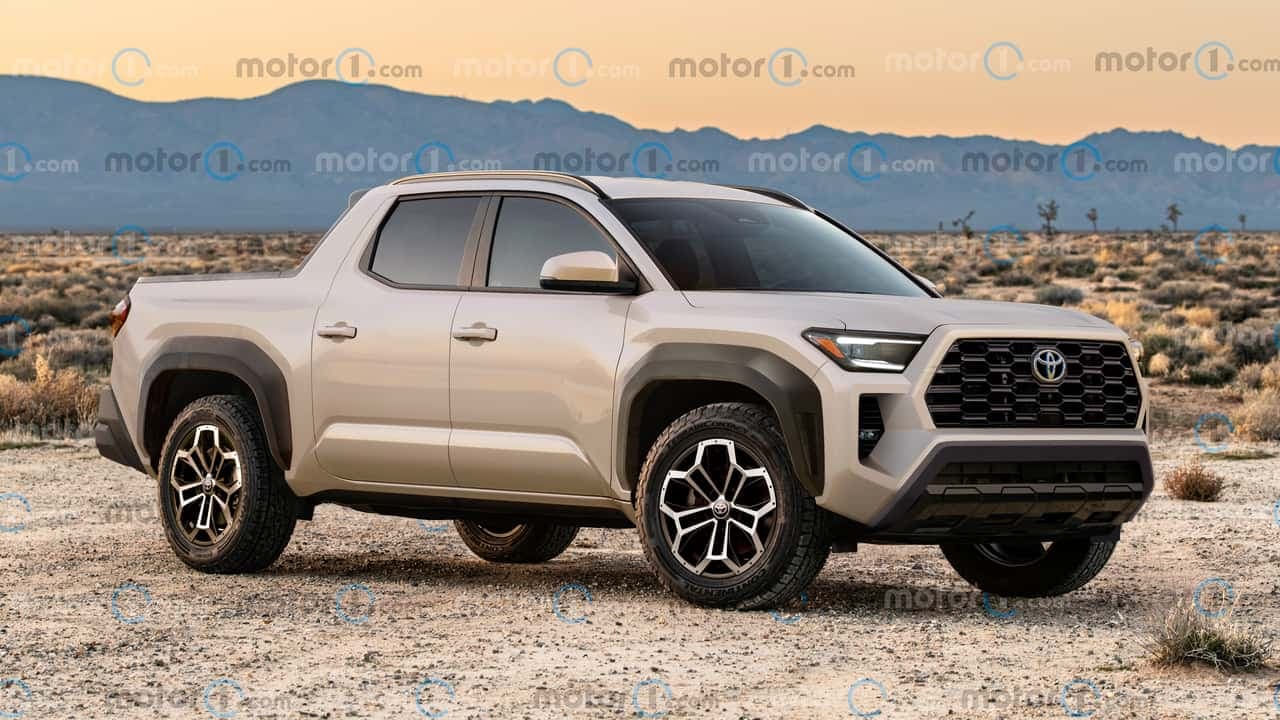
Toyota Admits a Maverick-Style Pickup Is "Quite Appealing" — But Don't Hold Your Breath
In the ever-competitive world of pickup trucks, Ford made a bold move when it launched the Maverick — an affordable, fuel-efficient, compact unibody pickup that instantly resonated with buyers who had been priced out of the full-size truck market. The Maverick's success sent ripples through the industry, and now Toyota, one of the world's most dominant truck manufacturers, has quietly admitted that a similar vehicle is, in its own words, "quite appealing." So does that mean a Toyota Maverick rival is on the way? Not exactly — but the conversation itself is worth unpacking.
What Toyota Actually Said
Toyota executives have openly acknowledged that the concept of a smaller, more affordable pickup truck in the vein of the Ford Maverick holds genuine market appeal. The admission is significant coming from a company that has traditionally relied on the Toyota Tacoma to anchor its midsize truck lineup and the Tundra to compete in the full-size segment. When a brand as calculated and deliberate as Toyota uses language like "quite appealing," the automotive world tends to pay attention.
However, the company was equally clear that no such vehicle is currently in development or on the near-term product roadmap. Toyota's stance, at least for now, is that while the idea is interesting and the market opportunity is visible, the brand is not ready to commit resources toward making it a reality. That combination — an honest acknowledgment of appeal paired with a firm "not right now" — leaves the door open without making any promises.
Why the Ford Maverick Changed the Game
To understand why Toyota's comments matter, it helps to appreciate just how disruptive the Ford Maverick has been since its debut. Ford positioned the Maverick as a sub-$25,000 starting price pickup (at launch), offered a standard hybrid powertrain, and built it on a car-based platform rather than a traditional body-on-frame setup. The result was a truck that got remarkable fuel economy, was easy to maneuver in urban environments, and made truck ownership accessible to a new demographic of buyers.
Demand for the Maverick consistently outpaced supply in its early years, and Ford was forced to make the hybrid powertrain standard on base trims due to overwhelming customer preference. The lesson was clear: there is a large, underserved segment of consumers who want a practical truck without full-size pricing or full-size complexity. That is the gap Toyota is now eyeing.
Does Toyota Have the Platform for It?
One of the biggest practical questions surrounding a potential Toyota compact pickup is whether the company has a suitable platform to build it on. Unlike Ford, which leveraged its existing car-based architecture from the Bronco Sport and Escape for the Maverick, Toyota's current truck lineup relies heavily on traditional body-on-frame engineering.
Toyota does have access to the TNGA platform architecture, which underpins many of its passenger cars and crossovers globally. A unibody truck based on a variant of this platform is theoretically feasible, and there is historical precedent — the original Toyota Hilux Surf and various compact trucks from Toyota's past show the brand has built smaller trucks before. However, adapting an existing platform for North American truck buyers, who have specific expectations around towing, payload, and durability, would require meaningful investment.
The Business Case: Is There Room for a Toyota Maverick Rival?
From a market perspective, the business case for a Toyota compact pickup is compelling. Consider the following dynamics currently shaping the truck segment:
- Affordability pressure: The average transaction price of a new vehicle in the United States has climbed steadily, pushing budget-conscious buyers toward used cars or entry-level options. A sub-$30,000 truck with good fuel economy could attract tens of thousands of buyers annually.
- Urban truck demand: Not every truck buyer needs to haul heavy loads or tow trailers. A growing population of urban and suburban buyers wants a truck for light utility tasks — hauling furniture, camping gear, or weekend projects — without the bulk of a Tacoma or Tundra.
- Hybrid and electrification trends: A compact unibody truck is an ideal candidate for a hybrid powertrain, which aligns with Toyota's well-established hybrid expertise through its decades of Prius and hybrid Camry development.
- Brand loyalty: Toyota's reputation for reliability gives it a natural advantage in convincing buyers to consider a new segment entry. A Toyota badge on a compact, affordable truck would carry enormous credibility.
What Stands in the Way
Despite the clear opportunity, several real obstacles explain why Toyota has hesitated. First, the company would need to be careful not to cannibalize Tacoma sales, which remain strong and represent a core profit center. A cheaper, smaller truck sitting below the Tacoma in the lineup would need to be positioned carefully to attract conquest buyers rather than pull customers away from the more profitable midsize model.
Second, development timelines in the automotive industry are long. Even if Toyota greenlit a compact truck project today, it would likely be four to six years before the vehicle reached dealerships. The market landscape — including the competitive set, fuel prices, and buyer preferences — could look very different by then.
Third, supply chain complexity and the ongoing transition toward electrification consume enormous engineering and financial resources. Toyota, like every major automaker, is navigating those pressures simultaneously, which naturally limits bandwidth for new segment exploration.
The Bigger Picture: Toyota's Truck Strategy
Toyota's candid comments about a Maverick-style truck fit into a broader pattern of the company staying agile and market-aware without overcommitting. Toyota has consistently been one of the more measured automakers when it comes to product announcements, preferring to launch products that are market-ready rather than chase headlines with concept promises.
The fact that leadership is willing to publicly discuss the appeal of a compact affordable pickup — rather than dismissing the idea outright — suggests internal conversations are happening. Whether those conversations ever translate into a production vehicle depends on how the Maverick continues to perform, how the overall truck market evolves, and whether Toyota finds a path to profitability that justifies the investment.
What Truck Buyers Should Watch For
If you are a truck buyer hoping to see a Toyota Maverick competitor emerge, the honest answer is that patience is required. Toyota has not committed to anything, and the company's track record suggests it will not announce a vehicle until it is confident in the product and the timing. That said, this kind of public acknowledgment from a major manufacturer rarely comes from nowhere. It often signals that the wheels — however slowly — are beginning to turn.
In the meantime, the Tacoma remains Toyota's entry point into the truck segment for most buyers, and it continues to be one of the best-selling midsize trucks in America. But for those who want something smaller, cheaper, and more fuel-efficient, the Toyota compact pickup dream is alive — just not yet scheduled for production.
Final Thoughts
Toyota calling a Maverick-style pickup "quite appealing" is not a product announcement, but it is far from nothing. It is a rare moment of transparency from a brand that plays its cards close to the chest, and it validates what many truck enthusiasts and budget-minded buyers have been saying for years: there is real, lasting demand for an affordable compact truck in America. Whether Toyota ultimately fills that gap or cedes the ground to Ford and potential future competitors remains to be seen. But for now, the conversation has officially started — and in the automotive world, that is often how the most exciting products begin.