
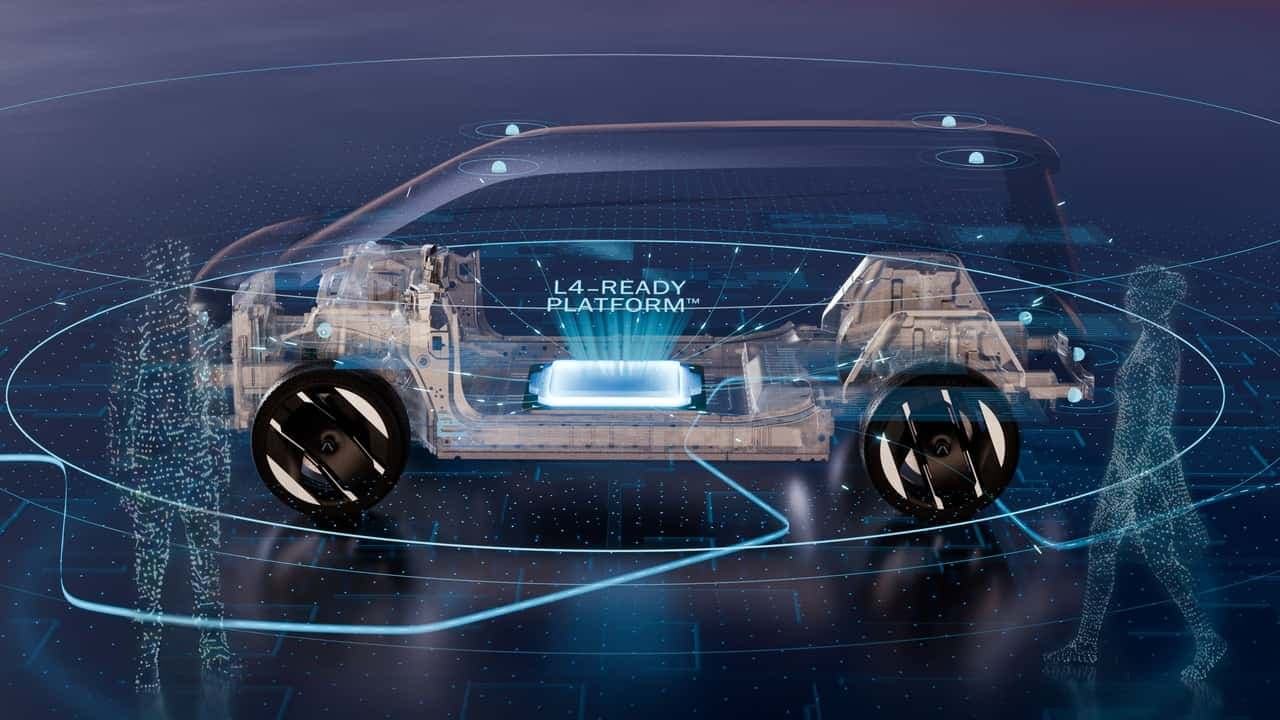
Uber, Stellantis, and Wayve Are Building a Global Robotaxi Network
The autonomous vehicle industry is entering a bold new chapter. Uber, one of the world's largest ride-hailing platforms, has been systematically aligning itself with nearly every major player in the robotaxi space — and now Stellantis, the multinational automotive giant behind brands like Jeep, Chrysler, Peugeot, and Fiat, has officially joined that growing list. Alongside AI-driven autonomous driving company Wayve, these three powerhouses are setting their sights on something extraordinarily ambitious: blanketing the world in self-driving taxis.
This partnership isn't just another corporate handshake. It represents a convergence of mobility infrastructure, vehicle manufacturing scale, and cutting-edge artificial intelligence — three ingredients that, combined, could fundamentally reshape how people move through cities in the coming decade.
Who Are the Players and What Do They Bring to the Table?
Uber: The Distribution Powerhouse
Uber's role in this alliance is perhaps the easiest to understand. After selling its own autonomous vehicle division, Uber ATG, to Aurora back in 2020, the company made a strategic pivot: rather than develop the technology itself, it would become the world's premier distribution platform for whoever gets autonomous driving right. Since then, Uber has inked partnerships with Waymo, WeRide, Cruise (before its high-profile stumble), and several other AV startups around the globe.
The logic is straightforward. Uber already has tens of millions of riders and a mature app ecosystem in hundreds of cities worldwide. Plugging a robotaxi fleet into that existing network gives any autonomous vehicle company instant access to demand — without having to build their own consumer-facing platform from scratch. For Uber, every robotaxi mile driven through its app is revenue without driver payout costs eating into margins.
Stellantis: The Manufacturing Muscle
Stellantis brings something that software companies consistently struggle to scale: the ability to actually build vehicles at mass-market volumes. As one of the world's largest automakers, Stellantis has production facilities spanning multiple continents and the supply chain relationships needed to manufacture purpose-built autonomous vehicles affordably. For a robotaxi network to truly blanket the globe, you need millions of vehicles — and that's exactly the kind of industrial capacity Stellantis can provide.
Stellantis has also been actively exploring its role in the mobility-as-a-service sector, meaning this collaboration fits naturally into a broader corporate strategy aimed at the evolving transportation landscape. Their involvement signals that legacy automakers are no longer content to sit on the sidelines while tech companies redefine personal transportation.
Wayve: The AI Brain
Perhaps the most technically fascinating partner in this trio is Wayve, a London-based autonomous driving company that has taken a distinctly different approach to the self-driving problem. While competitors like Waymo rely on highly detailed, pre-mapped environments, Wayve has built its technology around embodied AI — a method that allows vehicles to learn how to drive more like humans do, adapting to new environments without requiring exhaustive prior mapping.
This approach has enormous implications for global scalability. A robotaxi network that can only operate in cities it has already meticulously mapped is inherently limited. Wayve's AI-first methodology theoretically allows for much faster geographic expansion, which aligns perfectly with the trio's stated ambition of worldwide deployment.
Why This Alliance Could Be a Turning Point for Autonomous Mobility
The robotaxi industry has seen its share of promises and pitfalls. High-profile setbacks at companies like Cruise — which suspended operations after a serious safety incident in 2023 — reminded the public and regulators alike that autonomous vehicles are still a work in progress. Yet despite the turbulence, investment has continued to flow, and the technology has continued to mature.
What makes the Uber-Stellantis-Wayve alliance particularly noteworthy is that it addresses three of the most persistent bottlenecks in robotaxi deployment simultaneously:
- Demand and distribution: Uber's platform solves the cold-start problem of attracting riders to a new, unfamiliar service.
- Vehicle supply: Stellantis ensures that fleet scaling doesn't become a manufacturing chokepoint as demand grows.
- Technology adaptability: Wayve's AI approach means the system can potentially expand to new cities and regions faster than map-dependent competitors.
Together, these three pillars form a more complete robotaxi value chain than most single-company efforts have managed to construct on their own.
What This Means for Consumers and Cities
For everyday riders, the most immediate implication of this alliance is the possibility of affordable, widely available autonomous rides appearing in their city sooner than expected. One of the chief criticisms of robotaxi services today is that they are largely confined to specific geofenced zones in a handful of American cities. A partnership with genuine global ambitions and the manufacturing muscle to back it up could change that reality meaningfully within the next five years.
For city planners and regulators, the prospect of large-scale robotaxi deployment raises important questions about traffic management, liability frameworks, and urban infrastructure design. Regulators in Europe and Asia, where Stellantis and Wayve both have significant footprints, will be watching this alliance closely.
The Competitive Landscape Just Got More Interesting
Waymo continues to lead the commercial robotaxi race in the United States, with thousands of fully driverless rides completed in cities like San Francisco, Phoenix, and Los Angeles. Tesla has its own highly anticipated robotaxi ambitions tethered to its Full Self-Driving software. Chinese players like Baidu's Apollo Go and WeRide are expanding aggressively in Asia.
Into this crowded and competitive field steps the Uber-Stellantis-Wayve combination — a trio that is less focused on winning any single market and more intent on building the global infrastructure layer that underpins autonomous mobility everywhere. Whether that vision translates into real-world dominance will depend on regulatory progress, technology reliability, and consumer trust. But the ambition alone marks a significant escalation in the race toward a driverless future.
The Road Ahead
Uber's strategy of embedding itself into every credible robotaxi effort on the planet is starting to look less like opportunism and more like a masterclass in platform-building. By partnering with Stellantis's manufacturing scale and Wayve's adaptive AI technology, Uber is positioning itself as the indispensable marketplace through which the autonomous vehicle revolution is delivered to the public. If this alliance executes on even a fraction of its stated ambitions, the way we hail a ride — and the vehicle that shows up — could look very different within a decade.
The robotaxi era isn't arriving all at once. It's being assembled, partnership by partnership, city by city — and Uber, Stellantis, and Wayve just made a very loud argument that they intend to be the ones who put it all together.