
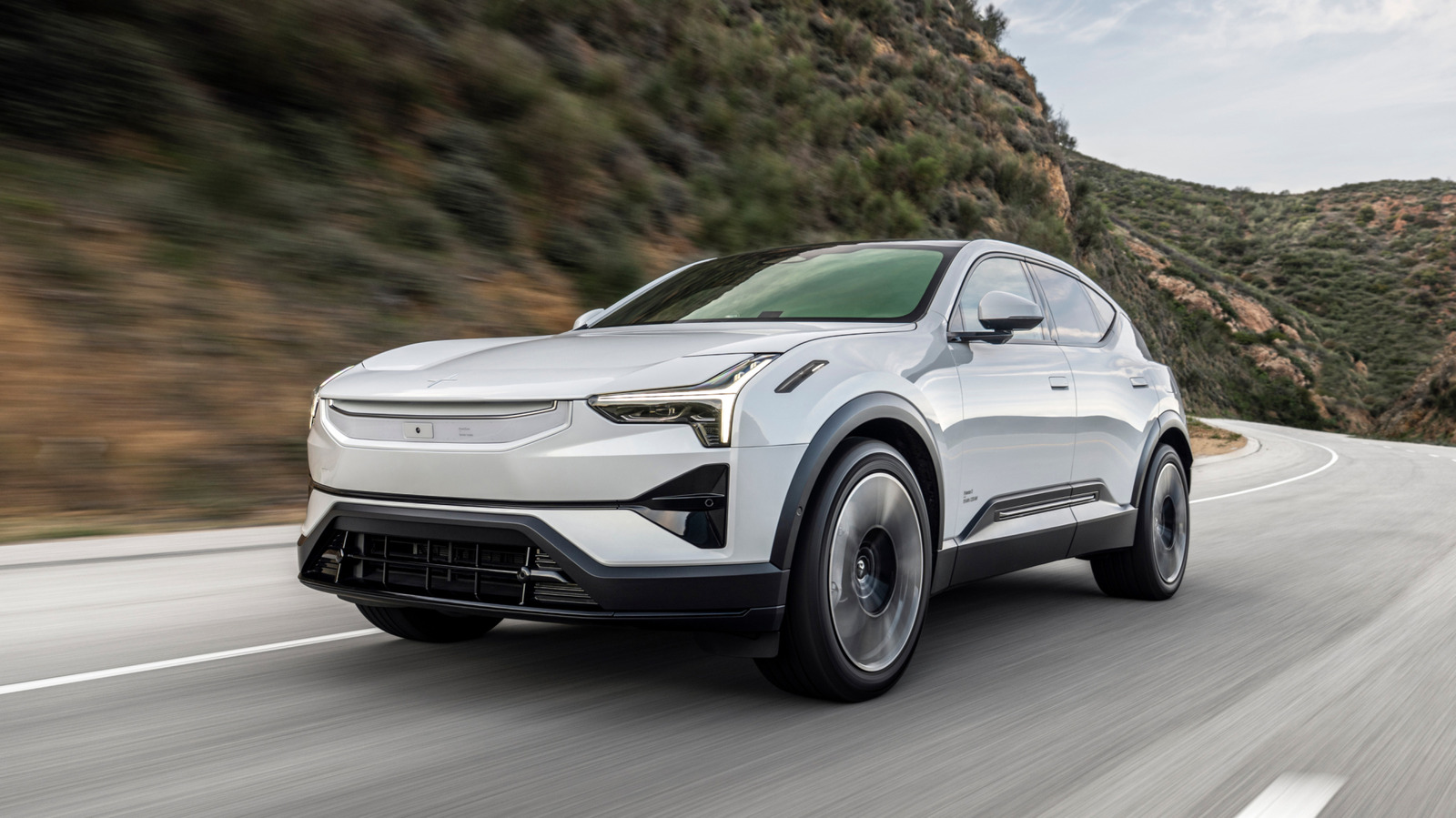
U.S. Bans Polestar From Selling Cars — A New Front in the Chinese EV War
The United States government has officially banned Polestar from selling vehicles on American soil, citing the automaker's ties to China under the Biden-era Connected Vehicle Rule — a regulation now being enforced with renewed vigor under the Trump administration. What makes this story particularly striking is that Volvo, a brand sharing nearly identical corporate ownership ties to China, received explicit approval to continue U.S. sales. The contrast between these two outcomes has sent shockwaves through the automotive and trade policy communities, raising serious questions about how the U.S. government is defining the term "Chinese EV" — and whether that definition is being applied consistently.
What Is the Connected Vehicle Rule?
The Connected Vehicle Rule is a federal regulation designed to address national security concerns tied to internet-connected automobiles. Modern vehicles are essentially rolling computers, collecting vast amounts of data — from GPS location and driving behavior to voice commands and smartphone connectivity. The rule specifically targets vehicles with hardware or software sourced from entities linked to countries of concern, most notably China and Russia.
The core concern from U.S. regulators is straightforward: if a Chinese-linked company has access to the software or hardware stack of a connected vehicle operating in the United States, it could theoretically harvest sensitive location and behavioral data from American drivers — or worse, enable remote interference with vehicle systems. For national security hawks, the risk is real and pressing enough to justify broad trade restrictions.
Under the rule, automakers must demonstrate that their vehicles' connected systems are sufficiently free from the influence of foreign adversaries. Approval to continue selling in the U.S. is not automatic — it requires a formal review and green light from the relevant federal agencies, including the Department of Commerce.
Why Was Polestar Banned?
Polestar is a Swedish-branded electric vehicle manufacturer, but its corporate structure tells a more complex story. The company is majority-owned by Geely, the Chinese automotive conglomerate that also controls Volvo Cars. Polestar vehicles are manufactured in China, and the brand's software and connected systems have deep ties to Chinese supply chains. Under the Connected Vehicle Rule, this combination of Chinese manufacturing, Chinese ownership, and Chinese-sourced technology placed Polestar squarely in the crosshairs of U.S. regulators.
The Trump administration determined that Polestar did not meet the threshold required for continued U.S. sales. The ban effectively freezes the brand out of the American market, halting new vehicle sales and placing existing inventory in a legally ambiguous position. For a brand that had been making genuine inroads with American EV buyers — particularly with its well-regarded Polestar 2 sedan — the ruling is a potentially crippling blow.
Polestar had been working to shift some production outside of China, including a manufacturing partnership in South Carolina, but those efforts were not sufficient to satisfy regulators under the current framework.
So Why Did Volvo Get Approved?
This is where the policy gets complicated — and controversial. Volvo Cars is also majority-owned by Geely and shares significant corporate infrastructure with Polestar. Yet the Trump administration approved Volvo to continue selling vehicles in the United States, drawing immediate scrutiny from industry observers and trade policy analysts alike.
The rationale appears to center on Volvo's deeper American manufacturing footprint and its longer-established presence in the U.S. market. Volvo has an assembly plant in Berkeley County, South Carolina, where it produces the S60 sedan and XC90 SUV for American consumers. This domestic production, combined with Volvo's Swedish heritage and its ability to demonstrate greater independence of its connected vehicle systems from Chinese-controlled infrastructure, appears to have tipped the scales in its favor.
Critics, however, argue that the distinction is paper-thin. If the underlying concern is Chinese corporate ownership and potential data access, Volvo and Polestar present essentially the same risk profile. The divergent outcomes have fueled accusations that the rule is being applied selectively, possibly influenced by factors beyond pure national security calculus.
Broader Implications for the EV Market
The Polestar ban is unlikely to be an isolated incident. As the Connected Vehicle Rule is more aggressively enforced, a growing number of automakers with any Chinese ownership stake or supply chain exposure could find themselves facing similar scrutiny. This has significant implications not just for Chinese-branded EVs, but for any global automaker — European, Korean, or Japanese — that relies on Chinese components, software platforms, or joint venture structures.
- Brands like Lotus (also Geely-owned) may face similar review processes before they can expand or maintain U.S. sales.
- Legacy automakers with joint ventures in China, including General Motors and Volkswagen, could face questions about the provenance of connected vehicle software used in their U.S.-market models.
- Chinese-origin EV startups such as NIO, BYD, and Xpeng, which had been exploring U.S. market entry, are now facing an even more formidable regulatory wall.
The rule also puts a spotlight on the difficulty of disentangling global automotive supply chains. The modern car is built from thousands of components sourced from dozens of countries, and software ecosystems are no different. Drawing a clean national security line through that complexity is far easier said than done.
What Happens to Current Polestar Owners and Dealers?
For American consumers who already own a Polestar vehicle, the immediate practical impact is limited. Existing owners can continue to drive their cars, and warranty obligations are expected to be honored. However, the long-term picture is murkier. Software updates, connected services, and over-the-air features that depend on Polestar's backend infrastructure could become complicated if the company's U.S. operations are severely curtailed.
For Polestar dealers, the situation is more immediately dire. With no new vehicles to sell, dealerships face inventory shortfalls and uncertain futures. Some dealers had invested heavily in Polestar-specific facilities and training, making the abrupt ban a significant financial setback.
The Bigger Picture: Redefining What Counts as a Chinese EV
The Polestar case is a bellwether moment for how the U.S. government approaches the intersection of trade policy, national security, and the global automotive industry. By stretching the definition of "Chinese EV" to include brands that carry European names but bear Chinese corporate DNA, U.S. regulators are signaling that origin of ownership and supply chain matter as much — if not more — than the flag on the badge.
Whether that standard is applied rigorously and fairly, or selectively and politically, will define the credibility of the Connected Vehicle Rule for years to come. For now, Polestar's American dream is on pause — and the entire EV industry is watching closely to see who might be next.