The U.S. Is Smuggling Oil Past Iran: What's Really Happening in the Persian Gulf
In a striking reversal of roles, the United States has found itself employing tactics that look remarkably similar to the methods rogue nations have long used to circumvent American sanctions. Reports have emerged that the U.S. is facilitating covert oil transfers in the Persian Gulf region, using ship-to-ship transshipment techniques to move crude oil past Iran's sphere of influence. The maneuver — long associated with sanctions-busting fleets operated by countries like Russia, Venezuela, and Iran itself — is now being deployed in the name of energy security and geopolitical strategy.
What Is Ship-to-Ship Oil Transfer and Why Does It Matter?
Ship-to-ship (STS) oil transfer is the process of moving crude oil or refined petroleum products from one vessel to another while both ships are at sea, typically in international waters. This method has been used for decades for entirely legitimate logistical reasons — it allows supertankers too large to enter shallow ports to offload cargo to smaller vessels. However, it has also become the cornerstone technique of what analysts call the "shadow fleet" — a network of aging, often anonymously owned tankers that move oil for sanctioned regimes around the world.
The mechanics are straightforward but effective. A large cargo of oil is loaded onto a vessel at its origin point. Before reaching its declared or intended destination, it pulls alongside another vessel in open water, often outside the range of easy surveillance, and pumps its cargo across. The receiving vessel then proceeds to a different port, sometimes under a different flag, making the oil's origin extremely difficult to trace. Automatic Identification System (AIS) transponders — the GPS-like beacons all large ships are required to broadcast — are frequently turned off during these operations, creating what maritime security experts call "dark voyages."
How Iran Has Used This Playbook for Years
Iran has been one of the most prolific users of shadow fleet tactics since crippling U.S. sanctions were reimposed following the collapse of the 2015 nuclear deal. Faced with an embargo that cut it off from major international buyers, Tehran developed a sophisticated evasion infrastructure. Iranian oil has regularly been relabeled as originating from Iraq, Malaysia, or other nations. STS transfers in the Gulf of Oman, the Strait of Malacca, and even off the coast of West Africa have been documented by satellite imagery analysts and think tanks like Windward and United Against Nuclear Iran (UANI).
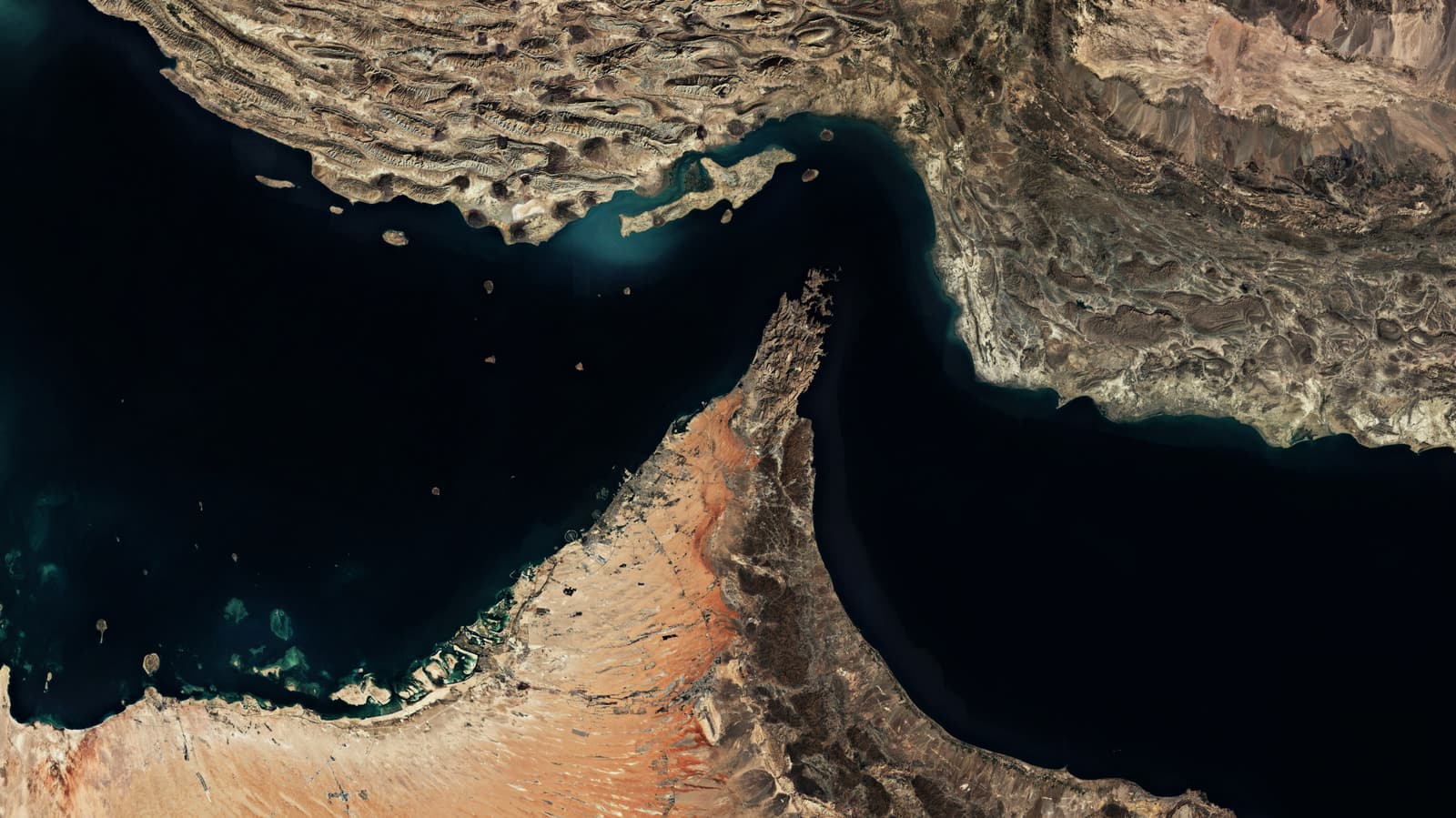
Iran's Revolutionary Guard Corps has also used threats to shipping lanes — including the Strait of Hormuz, through which roughly 20% of the world's traded oil passes — as leverage in broader geopolitical negotiations. The threat of interdiction, seizure, or harassment of tankers has long been one of Tehran's most powerful bargaining chips.
The Irony: America Adopting the Sanctioned Nation Playbook
What makes the current situation so geopolitically significant is the role reversal it implies. The United States, which has spent decades building and enforcing a global sanctions architecture, now appears to be using the very techniques it was designed to punish. By orchestrating or enabling covert oil transfers that move petroleum products past Iranian naval reach, American operatives and allied actors are engaging in blockade-running — a practice with deep historical roots that predates modern sanctions regimes by centuries.
This isn't simply hypocrisy; it's a reflection of how energy security pressures, combined with the persistent threat Iran poses to regional shipping, have forced a pragmatic recalibration. The global oil market is tight, allies depend on stable supply chains, and any disruption in Persian Gulf throughput sends shockwaves through commodity markets worldwide. In that environment, unconventional methods become attractive regardless of their ideological awkwardness.
The Broader Implications for Global Energy Markets
The normalization of shadow fleet tactics — regardless of who employs them — has serious long-term consequences for the global energy market and maritime security.
- Insurance and liability gaps: Vessels operating without proper AIS signals or carrying undeclared cargo often lack standard maritime insurance, creating enormous liability risks in the event of spills or accidents.
- Sanctions enforcement credibility: When the world's leading sanctions enforcer uses evasion tactics itself, it undermines the moral authority and practical deterrence value of the entire sanctions regime.
- Market price opacity: Shadow oil transfers make it harder for analysts, traders, and regulators to accurately assess global supply levels, contributing to price volatility.
- Environmental risk: Many vessels in the shadow fleet are older and poorly maintained. The more widely STS transfers are practiced in sensitive maritime zones, the greater the risk of catastrophic oil spills.
What Comes Next: Escalation or Détente?
The key question for energy analysts and foreign policy observers is whether this development represents a temporary operational workaround or a longer-term structural shift in how major powers manage oil supply chains under geopolitical pressure. If the U.S. continues to rely on shadow-fleet-style logistics, it will face increasing scrutiny from international bodies, trading partners, and domestic critics who argue that consistency in rule-of-law enforcement is foundational to American global leadership.
At the same time, Iran's continued stranglehold threat over the Strait of Hormuz means that creative supply chain solutions will remain necessary. The Persian Gulf has always been a theater where energy economics and military posturing intersect — and the emergence of U.S.-facilitated oil smuggling is simply the latest chapter in that long, complex story.
Conclusion: When Sanctions Hunters Become Sanctions Runners
The revelation that the U.S. is employing ship-to-ship oil transfer tactics to move petroleum past Iran's reach is a remarkable inflection point in the geopolitics of energy. It illustrates how powerful the gravitational pull of oil supply security truly is — strong enough to push even the architects of the global sanctions system toward the very methods they were built to combat. As the shadow fleet grows larger and its techniques become more widespread, the line between sanctions enforcement and sanctions evasion is becoming blurrier than ever before. For markets, regulators, and policymakers, that ambiguity carries consequences that will play out for years to come.