
Do You Know Where Your New Car Was Actually Made?
When you walk into a supermarket and pick up a pack of strawberries, the label tells you exactly where they were grown. When you buy a pair of trainers, the box will typically state the country of manufacture. Yet when you walk into a car dealership and spend £30,000, £50,000, or even £100,000 on a brand-new vehicle, there's a good chance nobody tells you — and you probably never thought to ask — exactly where that car was built. That, argues motoring commentator Mike Rutherford, is a problem worth fixing.
The Case for Car Country-of-Origin Labelling
Rutherford's argument is straightforward: car buyers deserve the same level of transparency that consumers expect in every other major retail sector. Supermarkets have long been required to display country-of-origin information on fresh produce, and many shoppers actively use that information to make purchasing decisions — choosing local produce to support domestic farmers, or avoiding goods from countries they have ethical concerns about.
Why should cars be any different? A vehicle is typically the second most expensive purchase a household makes, after property. The idea that buyers are handed the keys without a clear, standardised declaration of where that car was assembled — and where its major components were manufactured — seems increasingly difficult to justify in an era of consumer empowerment and supply chain awareness.
Where Are Cars Actually Built? It's More Complicated Than You Think
Part of the reason country-of-origin labelling for cars is so rarely discussed is that the answer is genuinely complicated — and that complexity is precisely why clear labelling matters.
Modern car manufacturing is a deeply globalised industry. A vehicle wearing a prestigious German badge might be assembled in Mexico. A car sold under an American brand might be built in South Korea. A model marketed as quintessentially British could have its engine manufactured in Germany, its gearbox sourced from Japan, and its body assembled in a plant in Slovakia. The badge on the bonnet tells you remarkably little about where the car was actually made.
Consider some real-world examples that frequently surprise consumers:
- Many BMW X-series models are manufactured in the United States, at the company's Spartanburg plant in South Carolina.
- Several Volvo models sold in Europe are assembled in China, following Geely's acquisition of the brand.
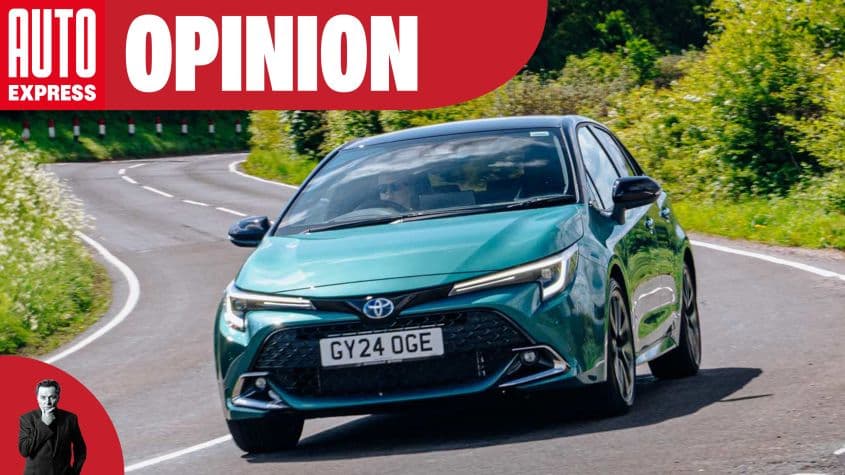
- The Toyota Corolla sold in the UK is built domestically at the Burnaston plant in Derbyshire — yet many buyers assume it is imported from Japan.
- Numerous models from so-called European luxury brands are produced in plants across Eastern Europe, including Slovakia, Hungary, and the Czech Republic.
None of this is inherently problematic — global manufacturing has driven efficiencies and kept car prices competitive. But buyers have a right to know where their money is ultimately going and where the vehicle they're purchasing was produced.
Why It Matters: Economics, Ethics, and Informed Buying
Country-of-origin information isn't just about national pride or nostalgia. It has real, practical implications for car buyers and for the broader economy.
Supporting Domestic Industry
Consumers who want to support jobs in their own country need accurate information to do so. A buyer who specifically wants to purchase a car built in the UK cannot make that choice reliably without clear labelling. Transparency would allow genuinely patriotic purchasing decisions rather than purchases based on assumption and brand heritage that may no longer reflect manufacturing reality.
Tariffs, Trade, and Total Cost of Ownership
In a world of shifting trade policies and import tariffs, the country in which a car is assembled can affect its price, its warranty terms, and the cost of spare parts. With trade tensions — particularly between the United States and major car-producing nations — playing an increasingly prominent role in global economics, knowing where a car was built has never been more financially relevant to the end buyer.
Ethical and Environmental Considerations
Some consumers have strong feelings about purchasing goods manufactured in countries with lower environmental standards or poorer labour protections. Without country-of-origin information, it is impossible to factor these concerns into a purchasing decision. Just as ethically minded shoppers scrutinise food labels, car buyers should have the information they need to make choices aligned with their values.
What Would Car Country-of-Origin Labelling Look Like?
Rutherford's proposal draws on the supermarket model: a simple, standardised label clearly displayed in showrooms and online listings, stating where the vehicle was assembled and, ideally, where its primary components — engine, transmission, body — were manufactured. This wouldn't need to be complex. A short, standardised disclosure, perhaps modelled on the American Automobile Labeling Act which already requires domestic content disclosures for vehicles sold in the US, could be adopted more widely.
The technology and data to support this already exists within manufacturers' own supply chains. The information isn't secret — it simply isn't being communicated to the people who arguably have the strongest interest in knowing it: the buyers.
The Responsibility Lies with Manufacturers — and Regulators
Car manufacturers have historically been reluctant to foreground manufacturing location, particularly when a prestigious brand might be disadvantaged by the revelation that its vehicles are assembled far from its historic home. But consumer expectations are changing. Transparency is increasingly seen not as a threat to a brand's image, but as a mark of confidence and honesty.
Regulators, too, have a role to play. Just as food labelling standards were tightened progressively over decades in response to consumer demand, it is reasonable to expect that automotive regulators could mandate clear country-of-origin disclosures as a baseline standard for vehicle sales.
The Bottom Line: You're Spending a Fortune — You Deserve to Know
The next time you sit in a gleaming showroom, admiring a new car, ask the salesperson where it was built. You may be surprised by the answer — or by the fact that they have to look it up. That moment of uncertainty is exactly the problem Mike Rutherford is pointing to. Buying a car is one of the most significant financial decisions most people make. Supermarket shoppers know where their food comes from. Car buyers should know exactly the same about one of the biggest purchases of their lives.