
The Color That Stops Traffic Before Drivers Even Read the Sign
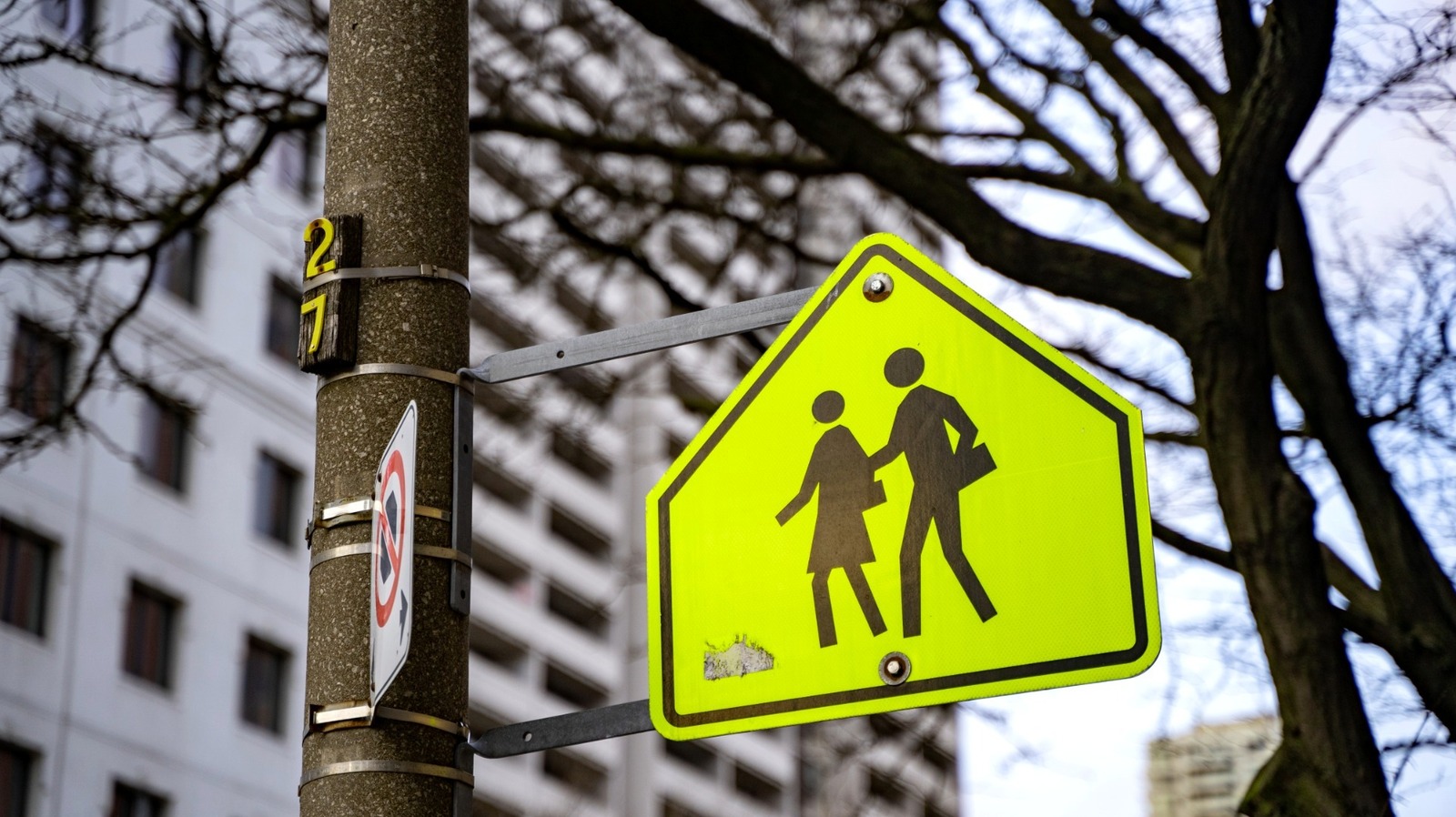
You've seen it thousands of times — that almost offensively bright, almost neon, almost glowing yellow-green color plastered on school zone signs across the country. It's the kind of hue that your eyes lock onto before your brain consciously decides to look. That's not an accident, a trend, or a cost-cutting measure. It is a deliberate, science-backed, federally standardized design decision, and the story behind it runs deeper than most drivers ever stop to consider.
So why that color specifically? Why not a clean, bright red? Why not a crisp white or a bold orange? The answer lies in the intersection of human visual biology, traffic engineering research, and the standards set by the Manual on Uniform Traffic Control Devices — better known as the MUTCD — the federal bible that governs virtually every sign, signal, and marking on American roads.
What Is the MUTCD and Why Does It Control Sign Colors?
The Manual on Uniform Traffic Control Devices is published by the Federal Highway Administration and sets the national standard for all traffic control devices used on public roads in the United States. When you see a stop sign, a speed limit marker, a pedestrian crossing signal, or a school zone warning, its shape, size, reflectivity, and color are all dictated by the MUTCD. The goal is uniformity — so that a driver from California instantly understands a sign in Maine without any learning curve.
Color is one of the most powerful communication tools in the MUTCD's playbook. Each color carries an established meaning: red means prohibition or danger, green means permitted movement or direction, orange is used for construction and work zones, and yellow traditionally signals a general warning. School zone signs evolved within that yellow warning family — but standard yellow was eventually deemed not enough.
The Science Behind Fluorescent Yellow-Green
Standard yellow signs have been a fixture of American roads for decades, but research began to show a significant problem — they were easy to miss, especially in low-light conditions, at dusk, at dawn, and during overcast days. For most warning signs, this is an acceptable limitation. For signs protecting children walking to school, it is not.
Fluorescent yellow-green, technically designated as "yellow-green" in the MUTCD, sits at a wavelength range of approximately 555 nanometers — almost exactly the peak sensitivity of the human eye under daylight conditions. The human eye contains photoreceptor cells called cones, which are most responsive to light in the yellow-green portion of the visible spectrum. Choosing a color that aligns with that peak sensitivity means drivers detect the sign faster and at greater distances than they would with a conventional yellow or any other standard traffic color.
The "fluorescent" component takes this even further. Fluorescent materials absorb ultraviolet light — which is present even on cloudy days — and re-emit it as visible light. This means a fluorescent yellow-green sign doesn't just reflect ambient light the way a standard painted sign does; it actually appears to glow, generating more luminance than the surrounding environment. The practical result is a sign that stands out dramatically against virtually any natural backdrop, whether it's a tree-lined suburban street, a gray winter sky, or the flat glare of a sunny afternoon.
When Did Fluorescent Yellow-Green Become the Standard?
The MUTCD officially recognized fluorescent yellow-green as a valid color for pedestrian and school warning signs in its 2000 edition. Before that, agencies in various states had been experimenting with the color on their own, driven by local traffic safety studies showing measurable improvements in driver response times and sign detection distances. The federal standardization in 2000 locked in the color for school zone signs specifically, and subsequent research has continued to validate the decision.
Studies conducted after widespread adoption found that fluorescent yellow-green signs were detected by drivers significantly sooner than their standard yellow counterparts — in some cases, the detection distance improved by 50 feet or more. In a school zone where children may step off a curb at any moment, those extra feet translate directly into reaction time, braking distance, and potentially saved lives.
Why Other Warning Signs Don't Use the Same Color
If fluorescent yellow-green is so effective, why isn't it used everywhere? The answer comes back to the importance of distinction. Traffic sign design relies on drivers being able to categorize signs instantly. If every warning sign glowed with the same aggressive fluorescence, the visual hierarchy would collapse. The special color works precisely because it is reserved for the most vulnerable road users — children — making it an immediate, unmistakable signal that extra caution is required.
Using the color selectively also preserves its psychological impact. Drivers have learned, whether consciously or not, that fluorescent yellow-green means school zone. Expanding its use would dilute that learned association and reduce its effectiveness over time.
Reflectivity Standards and Night Visibility
Visibility during daylight is only part of the challenge. School zones are also active in early morning hours and late afternoons during winter months, when natural light is limited. The MUTCD sets strict retroreflectivity requirements for all traffic signs, meaning they must reflect headlight beams back toward a driver effectively. Fluorescent materials, combined with high-grade retroreflective sheeting, ensure that school zone signs remain conspicuous after dark as well — though it's worth noting that fluorescence itself is less effective without UV light, making the retroreflective properties especially critical at night.
The Bigger Picture: Design That Saves Lives
It's easy to drive past a school zone sign without giving it a second thought. But behind that jarring, almost garish color is decades of traffic engineering research, federal regulatory work, and a genuine commitment to protecting children. The fluorescent yellow-green hue is not an aesthetic choice made by committee. It is a precisely engineered visual tool, tuned to the biology of human vision and validated by real-world safety data.
Next time you slow down in a school zone, take a half-second to notice how quickly your eye found that sign. That immediate, almost involuntary attention snap is exactly what traffic engineers were aiming for — and it's proof that sometimes, the loudest color in the room is the one doing the most important job.