
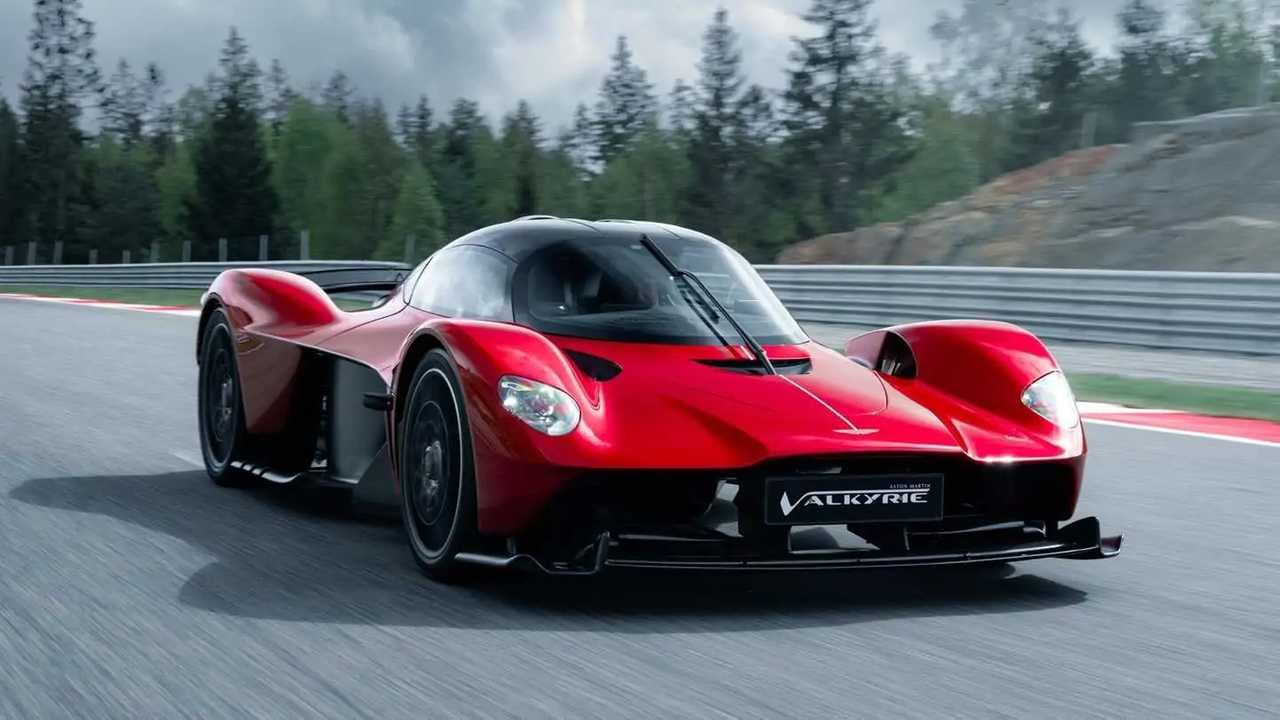
The Aston Martin Valkyrie Recall: A Brake Problem Unlike Any Other
In the world of automotive recalls, most issues follow a familiar pattern — a faulty sensor, a software glitch, a component that fails under normal operating conditions. But every once in a while, a recall comes along that makes even seasoned automotive engineers do a double take. The Aston Martin Valkyrie has earned that distinction in spectacular fashion, with a brake defect so narrowly specific in how it manifests that it stands as one of the most unusual safety notices the industry has ever seen.
The Valkyrie is not a normal car. It was never meant to be. Developed in close partnership with Red Bull Advanced Technologies and engineered by legendary Formula 1 designer Adrian Newey, the Valkyrie is essentially a road-legal racing machine with a naturally aspirated 6.5-liter V12 engine that screams to over 11,000 RPM. With a combined hybrid output approaching 1,160 horsepower and a dry weight designed to match that figure nearly pound for pound, it is one of the most extreme road cars ever built. So perhaps it should come as no surprise that even its recall is extraordinary.
What Exactly Is the Brake Issue?
At the heart of this recall is a braking defect that does not present itself under everyday driving circumstances. Unlike a brake fluid leak or a caliper failure that could occur during routine use, the Valkyrie's problem is triggered only when the car is driven in a very specific way. This kind of conditional fault is extraordinarily rare in the recall world, where safety authorities like the National Highway Traffic Safety Administration (NHTSA) typically deal with issues that affect vehicles broadly and predictably.
The highly conditional nature of the fault makes it simultaneously fascinating and challenging to address. On one hand, the narrow window in which the issue occurs means that the vast majority of drivers — if the car even sees regular road use — may never encounter it at all. On the other hand, when you are dealing with a hypercar capable of blistering acceleration and speeds well beyond what most roads could ever legally accommodate, any braking abnormality carries serious implications for driver safety.
The recall underscores a broader reality about extreme performance vehicles: engineering systems to their absolute limits means that edge cases, those rare but real scenarios at the boundary of the car's operational envelope, can expose vulnerabilities that would never surface in a conventional automobile.
Why Hypercars Face Unique Engineering Challenges
To understand why a recall like this can happen, it helps to appreciate just how differently a car like the Valkyrie is engineered compared to a standard road vehicle. Traditional cars are built with enormous margins of safety and redundancy. Systems are over-engineered deliberately so that even under unusual or stressful conditions, they continue to perform reliably.
Hypercars, by contrast, are often engineered to eliminate every gram of unnecessary weight and every component that does not directly contribute to performance. This pursuit of the absolute ideal — the lightest possible structure, the most efficient possible aerodynamics, the most responsive possible braking — means that tolerances become incredibly tight. There is less room for error, and the gap between optimal performance and system failure can be narrower.
The Valkyrie's braking system is a marvel of engineering in its own right. Developed with motorsport-grade components and tuned to deliver the kind of stopping power demanded by a car with this level of performance, it was built to work seamlessly at the extremes. But as this recall demonstrates, even the most sophisticated systems can harbor conditions under which they behave unexpectedly.
How Many Vehicles Are Affected?
Part of what makes this recall so unusual is also the sheer rarity of the vehicle involved. The Aston Martin Valkyrie was produced in extremely limited numbers, with the road car variant capped at just 150 units globally. Additional track-focused variants — the AMR Pro and the track-only version — were produced in even smaller quantities. This means the total number of vehicles subject to this recall is minuscule compared to the hundreds of thousands or even millions of cars typically caught up in major recall actions.
Nevertheless, regulatory bodies do not make exceptions based on production volume. Whether a recall affects three million family sedans or a handful of the world's rarest hypercars, the process is the same: the manufacturer must notify owners, develop a remedy, and ensure the vehicles are brought into compliance with safety standards.
What Aston Martin Is Doing About It
Aston Martin has acknowledged the issue and is working to address it through the official recall process. Given the bespoke nature of the Valkyrie and the complexity of its systems, resolving the defect is not a simple matter of replacing a common part. Each car will likely require careful, hands-on attention from highly trained technicians familiar with the vehicle's unique architecture.
Owners of the Valkyrie — a group that includes some of the world's most discerning and technically knowledgeable automotive collectors — will be contacted as part of the recall process. Given the exclusivity of the car and the close relationship Aston Martin typically maintains with Valkyrie customers, the company is well-positioned to manage this on an individualized basis.
What This Recall Tells Us About the Future of Hypercars
The Valkyrie brake recall is more than just an unusual footnote in automotive history. It is a reminder that as cars push further into the realm of what was once considered impossible — more power, less weight, greater aerodynamic downforce, higher cornering loads — the engineering challenges multiply in ways that are not always predictable. The same qualities that make a hypercar extraordinary are the qualities that make it uniquely difficult to perfect.
For manufacturers continuing to pursue the outer limits of road car performance, this serves as a compelling case study. Rigorous real-world testing across the full spectrum of possible driving scenarios is not just important — it is essential. And when issues do arise, transparency and swift action remain the gold standard.
The Aston Martin Valkyrie may be getting recalled, but in a strange way, this episode only adds to its legend. It is a car so extreme that even its problems are extraordinary.