
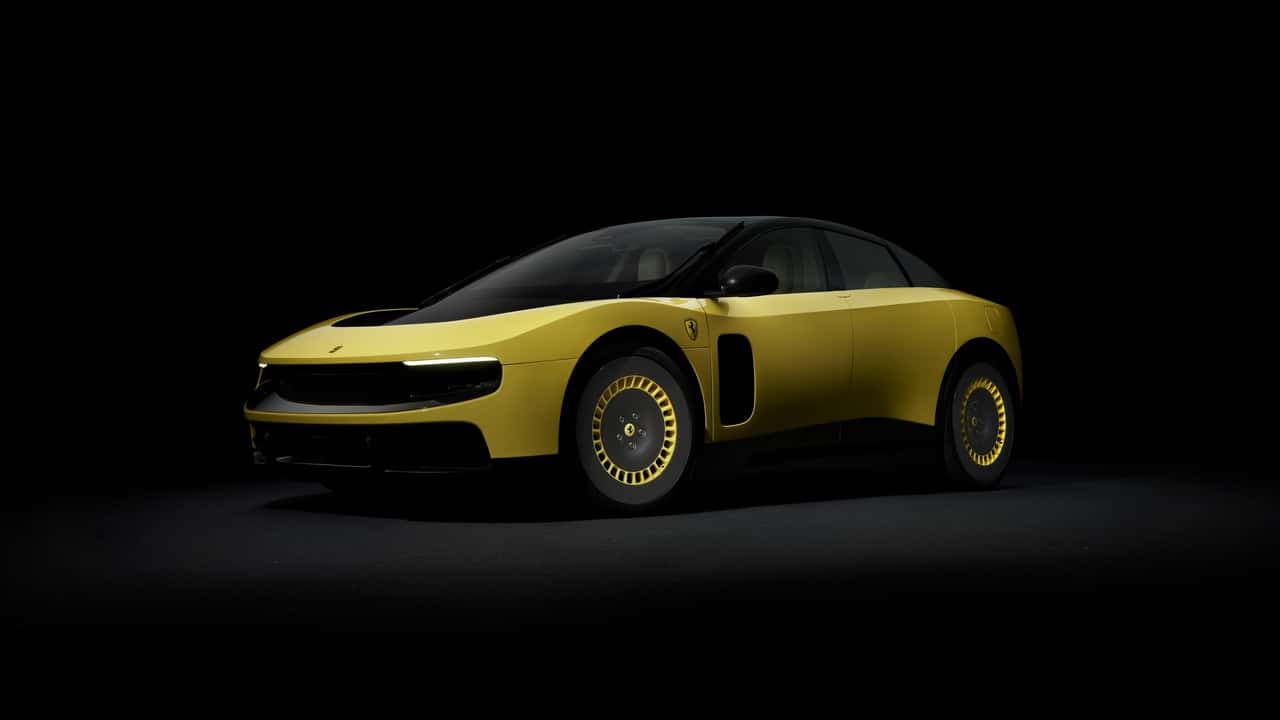
Ferrari's Electric Era Has Arrived — And Collectors Are Already Playing a Dangerous Game
Ferrari has always been more than a car manufacturer. It is a gatekeeper. For decades, the Maranello brand has carefully curated which customers receive access to its most coveted models, rewarding loyalty, purchase history, and brand engagement above almost everything else. Now, with the arrival of the Ferrari Luce — the brand's first fully electric vehicle — that gatekeeping dynamic is entering an entirely new chapter. And collectors who think they can quietly sit this one out may find themselves locked out of the very cars they have spent years working toward.
What Is the Ferrari Luce?
The Ferrari Luce represents a seismic shift for one of the most emotionally driven automotive brands on the planet. As Ferrari's first fully battery-electric production car, the Luce carries enormous symbolic weight. Its name — Italian for "light" — signals Ferrari's intention to frame electrification not as a compromise, but as an evolution. The car is expected to combine the brand's signature design language and performance pedigree with zero-emission drivetrain technology, positioning Ferrari at the forefront of a luxury EV market that is rapidly maturing.
Yet among Ferrari's traditional collector base, the Luce has generated considerable skepticism. For purists who prize the scream of a naturally aspirated V12 or the drama of a mid-mounted flat-plane V8, an electric Ferrari feels, to many, like a contradiction in terms. No exhaust note. No gear shifts. No theater. For these collectors, the Luce is simply not the Ferrari they want — and they have been vocal about it.
The Allocation System: How Ferrari Rewards Its Most Loyal Clients
To understand why skipping the Luce is such a consequential decision, you first need to understand how Ferrari allocates its most desirable cars. Ferrari does not sell its exclusive, limited-production models on the open market. Models like the SF90 Stradale, the Roma Spider, the Daytona SP3, and the ultra-rare Icona series are offered privately to a select group of customers — those who have demonstrated long-term commitment to the brand.
Ferrari's internal client scoring system takes multiple factors into account. Purchase history matters enormously. The number of cars bought, the tier of those vehicles, the frequency of purchases, and the consistency of engagement with the brand all feed into a collector's standing. Dealers also play a critical role, advocating for their top clients when limited allocation slots become available. The relationship between buyer and dealer is not merely transactional — it is a long-term partnership built on trust and demonstrated loyalty.
What this means in practice is simple: when a new Ferrari model is released and a collector declines to participate, it registers as a gap in their profile. One refusal is rarely catastrophic. But a pattern of selective buying — particularly when it involves skipping a model that Ferrari itself has invested heavily in promoting — can subtly shift the perception of that collector's loyalty and alignment with the brand's direction.
Why Saying No to the Luce Could Be More Costly Than It Appears
Ferrari is not merely launching an electric car. The company is making a strategic statement about where it is heading, and it expects its most important clients to come along for the journey. The Luce is not a peripheral product — it is arguably the most significant launch in the company's recent history, representing Ferrari's answer to an industrywide transformation that cannot be ignored.
Collectors who openly decline the Luce risk being viewed as passengers rather than partners in that journey. Ferrari's allocation process has always favored those who embrace the brand holistically, not those who cherry-pick only the models that conform to their personal preferences. When genuinely limited cars — think a new Icona, a special series limited to a few hundred units globally, or a bespoke one-off commission — become available, Ferrari will look first to the clients who have demonstrated faith in the brand's vision across the board.
There is also a commercial reality at play. Ferrari needs the Luce to succeed. Its transition to electrification is a long-term business strategy, and early adoption by its loyal collector base sends a powerful market signal. Collectors who support that transition will almost certainly find themselves rewarded when the next truly extraordinary car comes along. Those who do not may find the door slightly more difficult to open.
The Bigger Picture for Serious Ferrari Collectors
For collectors who have spent years nurturing their relationship with Ferrari — attending factory visits, engaging with Corse Clienti racing programs, commissioning bespoke projects through Atelier — the decision around the Luce should not be made lightly. It is worth asking not just whether you want this car, but what message refusing it sends to the brand you have invested so much in.
- Your purchase history is a cumulative record, and gaps in that record are noticed.
- Dealer relationships depend on dealers being able to show that their clients support the brand across model lines.
- Ferrari's most limited future offerings will go to collectors who are seen as true ambassadors of where the brand is heading, not just where it has been.
- The EV segment in the ultra-luxury space is growing in prestige, and early adopters often benefit from first-mover status in allocation queues.
Separating Personal Taste from Strategic Thinking
None of this means every collector must love the Luce. Personal taste is a legitimate and deeply held thing, especially in the world of exotic cars. But there is a meaningful difference between private preference and public positioning within a brand's ecosystem. A collector can acquire the Luce as a strategic investment in their long-term relationship with Ferrari while continuing to prioritize combustion-engined models in their personal collection. Many of the most well-connected Ferrari clients around the world are already thinking in exactly these terms.
The collectors who navigate the Luce question most successfully will be those who understand that owning a Ferrari is never purely about any single car. It is about belonging to a community, sustaining a relationship, and being seen as a partner in the brand's ongoing story. Right now, that story has a new and electric chapter — and the collectors who show up for it are far more likely to be invited to read what comes next.
The Bottom Line
The Ferrari Luce may not be the car many traditional collectors dreamed of. But in the intricate, reputation-driven world of Ferrari allocations, skipping it without careful consideration could turn out to be one of the most expensive decisions a collector makes — not in terms of the car itself, but in terms of everything else that comes after it. In Ferrari's world, loyalty is the ultimate currency, and right now, the Luce is the latest test of who is truly willing to spend it.