
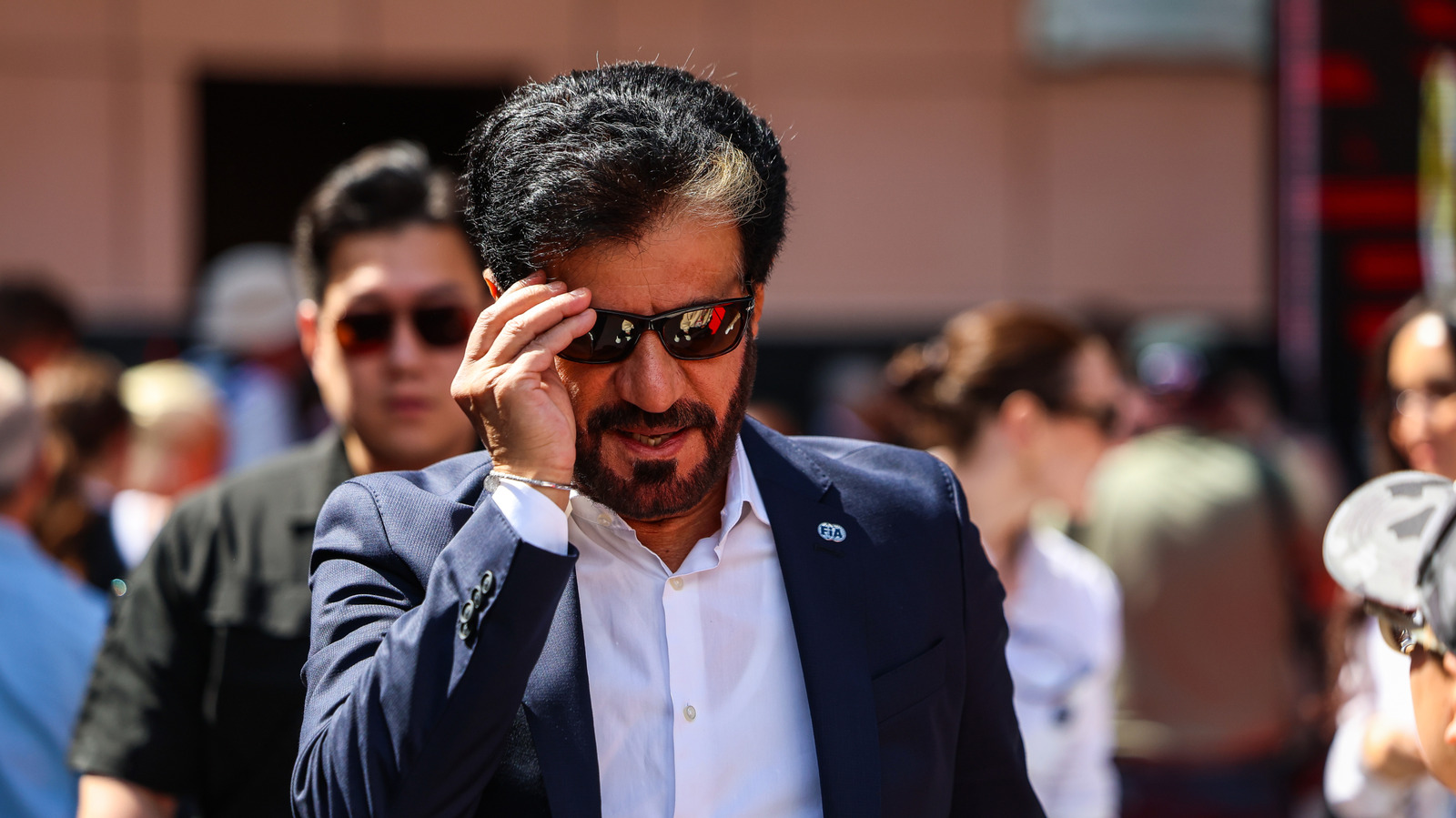
FIA Abolishes Presidential Term Limits in a Move That Raises Eyebrows Across Motorsport
In a development that has sent shockwaves through the global motorsport community, the Fédération Internationale de l'Automobile (FIA) has officially removed presidential term limits from its statutes. The decision, which has been met with confusion, criticism, and considerable skepticism, effectively opens the door for current FIA President Mohammed Ben Sulayem to remain at the helm of the world's most powerful motorsport governing body for as long as he wishes — or as long as he can win elections.
What makes the move particularly troubling for many observers is the FIA's apparent inability to offer a clear, compelling justification for the change. In an era when global institutions are under increasing scrutiny for transparency and democratic accountability, abolishing term limits without a convincing rationale sends a deeply troubling signal about the direction of motorsport governance.
What Are Term Limits and Why Do They Matter?
Term limits are a fundamental component of democratic governance in many organizations, both public and private. They exist to prevent the consolidation of power in a single individual, encourage fresh leadership and new ideas, and protect institutional integrity over time. When a leader knows they can only serve for a fixed number of terms, it generally promotes accountability and reduces the risk of authoritarian drift.
In the context of the FIA — which oversees Formula 1, the World Rally Championship, Formula E, and dozens of other global motorsport series — the presidency is an enormously powerful position. The FIA president influences regulations, commercial negotiations, relationships with teams and promoters, and the very structure of racing around the world. Keeping such a role in check through term limits has historically been seen as a safeguard, not a bureaucratic inconvenience.
Removing those limits, then, is not a minor administrative tweak. It is a structural change with potentially far-reaching consequences for how motorsport is governed for decades to come.
Mohammed Ben Sulayem: A Controversial Tenure So Far
Mohammed Ben Sulayem took over the FIA presidency in December 2021, succeeding Jean Todt. A former rally driver and long-time FIA official, Ben Sulayem came into office promising reform and a more transparent governing body. However, his tenure has been marked by controversy, internal disputes, and friction with key stakeholders in the Formula 1 world.
His relationship with Formula 1 commercial rights holder Liberty Media has been notably tense at times, with disagreements surfacing over prize money valuations, regulatory authority, and the broader commercial direction of the sport. Several high-profile personnel departures from the FIA have also occurred under his watch, fueling speculation about the internal culture of the organization.
Against this backdrop, the abolition of term limits reads to many as a power consolidation move rather than a genuine governance reform. Whether or not that interpretation is fair, the FIA has done little to dispel it by failing to articulate a clear and reasonable rationale for the change.
What the FIA Has — and Has Not — Said
One of the most striking aspects of this story is the institutional silence surrounding the decision. Good governance demands that significant structural changes be accompanied by transparent reasoning. Stakeholders — from racing teams and drivers to national automobile clubs and fans — deserve to understand why the rules governing their sport are being rewritten in such a fundamental way.
Instead, the FIA has offered little in the way of explanation. This absence of transparency is itself a red flag. When an organization cannot or will not explain a rule change that directly benefits its sitting president, it invites the reasonable conclusion that the change was made for personal rather than institutional reasons.
The Broader Implications for Motorsport Governance
The ramifications of this decision extend well beyond Ben Sulayem himself. Consider the following concerns that many within the motorsport world are now grappling with:
- Precedent-setting: By removing term limits now, the FIA establishes a precedent that future presidents could exploit, regardless of their intentions or competence.
- Reduced accountability: Without the natural transition point that term limits provide, there is less structural pressure on a sitting president to remain responsive to the membership and stakeholders.
- Chilling effect on internal dissent: When a leader has no mandatory exit date, those within the organization may become less willing to challenge decisions or advocate for change, fearing long-term professional consequences.
- Damage to institutional credibility: The FIA's credibility as a fair and impartial regulator depends on its perceived independence and integrity. Moves like this erode that perception, even if the intent is benign.
Comparisons to Other Governing Bodies
The FIA is not the first sports governing body to face criticism over leadership entrenchment. FIFA endured years of scandal partly attributable to unchecked executive power, and the International Olympic Committee has long wrestled with questions about term limits and the concentration of influence among a small leadership class. In each case, the lack of meaningful structural constraints on leadership contributed to institutional dysfunction over time.
The FIA now risks joining that conversation in the most unflattering way possible — not because of any proven wrongdoing, but because the optics of abolishing term limits without explanation are simply indefensible in the current climate of sports governance reform.
What Should Happen Next?
The FIA membership, which ultimately voted on this change, bears shared responsibility for the outcome. Going forward, there are several steps that could help restore confidence in the organization's governance framework. The FIA should publish a detailed, public explanation of why term limits were removed and what safeguards replace them. Independent oversight mechanisms should be strengthened to compensate for the reduced structural accountability. And the broader motorsport community — teams, drivers, sponsors, and fans — should make clear that transparency and democratic governance are non-negotiable expectations, not optional extras.
Whether Ben Sulayem intends to serve indefinitely or not, the removal of term limits is a governance failure that deserves serious scrutiny. Motorsport is a global sport with a global audience, and the institution that governs it must be held to the highest possible standards of accountability and openness.
Conclusion: A Sport Deserves Better Governance
The FIA's decision to abolish presidential term limits is troubling not simply because of what it allows, but because of what it signals: that the institution is willing to make sweeping structural changes in the interest of those currently in power, without offering meaningful justification to the people it serves. Motorsport deserves a governing body that leads by example — one that champions fairness, transparency, and democratic principles both on and off the track. Until the FIA can explain its reasoning in clear and convincing terms, the shadow over this decision will only grow longer.