
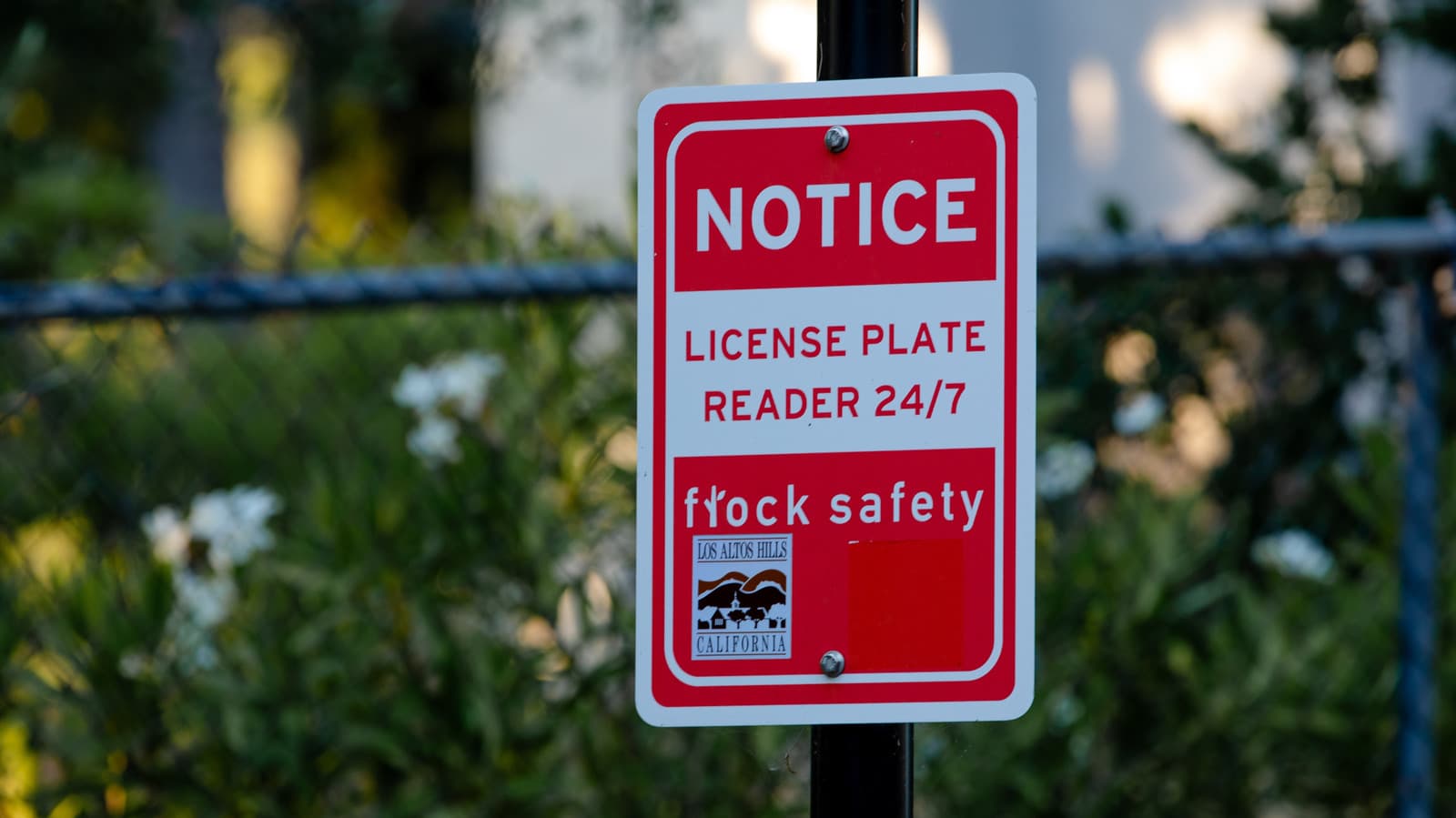
Flock Safety's AI Surveillance Network Is Bigger Than You Think
If you've driven through an American suburb recently, there's a reasonable chance a camera watched you do it. Not a traffic camera. Not a red-light camera. A Flock Safety camera — part of a sprawling, AI-powered surveillance network that has quietly grown to more than 80,000 units deployed across the United States. And the latest development in this technology raises serious questions: these cameras can now identify and track your vehicle even if it has no license plate at all.
Flock Safety markets itself as a public safety company, selling its automated license plate reader (ALPR) cameras primarily to law enforcement agencies, homeowners associations, and private communities. The pitch is straightforward — help police solve crimes faster by building a dense, interconnected web of vehicle-tracking hardware. But as the network has grown and the AI behind it has become more sophisticated, the implications for everyday Americans are becoming harder to ignore.
How Flock Safety's AI Camera Technology Works
At its core, Flock Safety's system captures images of passing vehicles and runs them through an AI model trained to extract identifying characteristics. The most obvious identifier is the license plate, which the system reads automatically and logs alongside a timestamp and GPS location. That data is then stored and made searchable by law enforcement partners through Flock's cloud-based platform.
But here's where things get significantly more interesting — and more concerning. The AI doesn't stop at the license plate. It also analyzes what Flock calls "vehicle fingerprinting," cataloging physical attributes of the car itself. These include:
- Make, model, and approximate year of the vehicle
- Body style and color, including multi-tone paint jobs
- Roof racks, bumper stickers, and other distinguishing accessories
- Damage or distinctive markings on the vehicle's exterior
- Presence or absence of a trailer hitch
This means that even if a vehicle has a covered, missing, or obscured license plate, Flock's system can still build a profile around it and flag it for law enforcement review based on these physical descriptors alone. The system essentially renders the license plate optional as an identifier — a remarkable and troubling capability for a piece of technology that operates with little to no meaningful public oversight in most jurisdictions.
The Scale of the Flock Safety Surveillance Network
The 80,000-camera figure alone is staggering, but what makes it truly significant is the density and coverage those cameras represent. Flock Safety has placed its hardware in thousands of cities and towns, working with over 5,000 law enforcement agencies and tens of thousands of private clients. The company estimates its network captures more than five billion license plates annually.
That volume of data creates what privacy advocates describe as a de facto mass surveillance infrastructure — one built not by a government agency subject to constitutional oversight, but by a private company operating under relatively permissive commercial data agreements. When a law enforcement agency queries the Flock platform, they can pull up a vehicle's movement history across every camera in the network that logged it, potentially reconstructing days or weeks of travel patterns.
This type of historical location data is extraordinarily sensitive. It can reveal where someone works, where they worship, who they visit, whether they attend political rallies or medical appointments. Courts have increasingly recognized that aggregated location data deserves strong privacy protections — yet the legal framework governing private ALPR networks like Flock's remains fragmented and inconsistent across states.
Privacy Concerns and the Risk of Misuse
Flock Safety isn't shy about the power of its platform, but critics argue the company and its law enforcement partners have been far less transparent about the risks. Cases of misuse are already surfacing. Domestic abusers have been flagged as a potential threat vector — if a law enforcement officer with access to Flock's system uses it to track a former partner's vehicle, that's an abuse of surveillance infrastructure that's difficult to detect and even harder to prosecute.
There are also documented concerns about errors. Like all AI-powered identification systems, Flock's technology is not infallible. A misread plate or an incorrect vehicle match can put an innocent driver in the crosshairs of a police investigation. These false positives aren't hypothetical — there have already been high-profile incidents across the country where ALPR errors contributed to wrong-person stops at gunpoint.
Civil liberties organizations including the ACLU have pushed for comprehensive state-level legislation to govern how ALPR data is collected, stored, accessed, and retained. Some states have enacted partial protections, but a patchwork of local rules is no substitute for a coherent national standard — particularly given how freely vehicle movement crosses state lines.
What This Means for Everyday Drivers
For the average person driving to work, picking up children from school, or simply running errands, the existence of a network this large and this capable raises a fundamental question: what expectation of privacy do we have in public spaces, and who gets to define it?
Traditionally, the argument has been that driving on public roads means accepting a degree of visibility. But there's a meaningful difference between being seen by a neighbor and having your movements permanently logged, timestamped, cross-referenced, and made searchable by thousands of agencies and their employees. The first is a feature of community life. The second is something closer to continuous monitoring.
As Flock Safety continues to expand its network and refine its AI capabilities, these questions will only become more urgent. The technology has clear and legitimate uses in solving serious crimes — but without robust legal guardrails, transparent data governance, and genuine accountability mechanisms, the line between public safety tool and surveillance apparatus grows thinner by the day.
The Bottom Line
Flock Safety's 80,000-camera AI network represents one of the most significant expansions of vehicle surveillance infrastructure in American history. Its ability to track cars without license plates using AI-driven vehicle fingerprinting pushes well beyond traditional ALPR capabilities. Whether that power is used responsibly will depend less on the technology itself and far more on the legal frameworks, institutional cultures, and public pressure that govern how it gets used — or misused.