
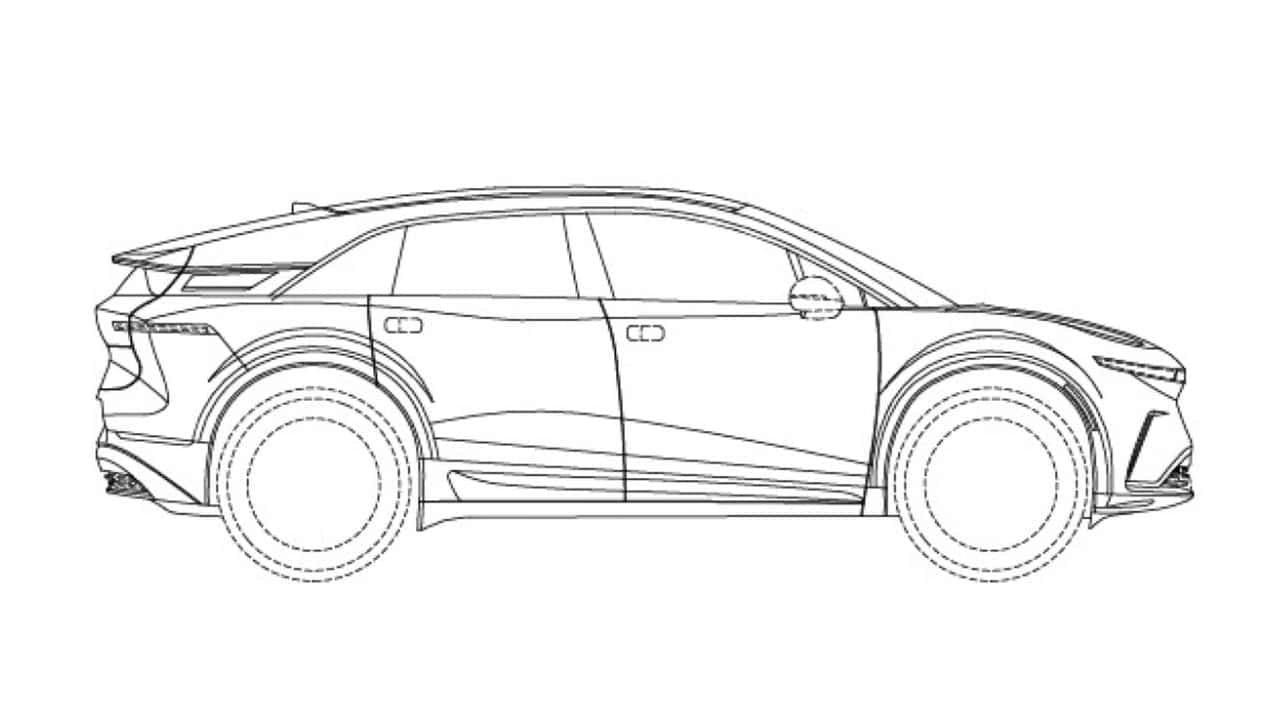
Lucid Cosmos Officially Revealed in Patent Images: A Mass-Market EV to Challenge Tesla and Rivian
The electric vehicle market is about to get a lot more competitive. Lucid Motors, best known for its ultra-luxury Air sedan that commands six-figure price tags, is preparing to enter the mass-market EV segment with an all-new model called the Lucid Cosmos. Patent images have now surfaced, giving the world its first look at what could be one of the most anticipated new EVs of the year. Priced at roughly $50,000 and expected to go on sale before the end of 2025, the Cosmos is positioned directly against segment giants like the Tesla Model Y and the upcoming Rivian R2.
What Are the Lucid Cosmos Patent Images Telling Us?
Patent filings are often the first real glimpse into a manufacturer's design intentions, and the Lucid Cosmos patents are no exception. The images reveal a sleek, modern crossover silhouette that blends Lucid's signature aesthetic refinement with a more accessible, everyday form factor. The design appears to carry over several styling cues from the Lucid Air and the larger Lucid Gravity SUV, including a smooth, aerodynamically optimized body, flush door handles, and a distinctive front fascia that sets it apart from the competition.
While patent images rarely tell the full engineering story, they confirm that Lucid is serious about bringing a polished, premium-feeling product to a price point that has historically been dominated by Tesla. The Cosmos looks purpose-built for the mainstream buyer — someone who wants a well-designed, technologically advanced EV without spending north of $70,000 or $80,000 to get it.
How Does the Lucid Cosmos Compare to the Tesla Model Y?
The Tesla Model Y has long been the benchmark in the mid-size electric SUV and crossover segment. It is consistently one of the best-selling vehicles — not just EVs, but all vehicles — in the world. So for Lucid to aim squarely at it is a bold strategic move that signals just how much confidence the company has in the Cosmos.
At approximately $50,000, the Lucid Cosmos will likely compete with mid-to-upper trims of the Model Y, which currently starts in the low-to-mid $40,000 range but climbs quickly with added options and performance upgrades. Where Lucid can genuinely differentiate itself is in areas where it has already proven its capabilities: battery efficiency, range, and interior quality. The Lucid Air holds multiple range records in its class, and if even a fraction of that engineering excellence trickles into the Cosmos platform, range anxiety could become a complete non-issue for prospective buyers.
Lucid also has a well-earned reputation for producing cabins that feel far more luxurious than their price suggests. If the Cosmos interior lives up to the standard set by the Air and Gravity, it could make the Model Y's cabin — functional as it is — feel comparatively spartan.
The Rivian R2 Factor: A Different Kind of Rival
While the Tesla Model Y is the obvious comparison, the Rivian R2 represents a different but equally important competitive threat — and opportunity. Rivian unveiled the R2 to enormous excitement, promising a smaller, more affordable alternative to its R1T and R1S lineup at a starting price around $45,000. Like the Cosmos, it targets buyers who love the idea of an EV from a brand with strong identity and engineering credentials but cannot stretch to flagship pricing.
The Rivian R2 carries the adventure-ready, rugged branding that has made Rivian a cult favorite. The Lucid Cosmos, on the other hand, leans into elegance, efficiency, and technology. These are two genuinely distinct takes on the same price bracket, which means both vehicles could succeed without directly cannibalizing each other's audience. Buyers who want rugged versatility may lean toward the R2, while those prioritizing range, refinement, and a more sophisticated driving experience may find the Cosmos more compelling.
Why the Lucid Cosmos Matters for the Broader EV Market
The significance of the Lucid Cosmos extends well beyond a single model launch. It represents a broader maturation of the EV industry — a phase where premium EV brands are no longer content to serve only the top of the market and are instead racing to capture the far larger volume segments in the middle.
- It validates the $50,000 EV sweet spot as the battleground where the next generation of volume EV sales will be won and lost.
- It challenges the assumption that only Tesla can deliver a polished, high-range EV at a mass-market price.
- It pushes competitors like Tesla and Rivian to continue refining their own offerings to stay ahead of a rapidly evolving market.
- It signals investor and consumer confidence in Lucid's long-term viability as a full-spectrum EV brand, not just a niche luxury player.
Lucid's Path to Mass-Market Success
Launching a mass-market vehicle is an entirely different challenge from building a halo product like the Lucid Air. It requires scaling production, managing supply chains at volume, and delivering consistent quality at a price point where margins are thin. Lucid has the backing of Saudi Arabia's Public Investment Fund, which provides a significant financial runway, but execution will be everything.
The company's manufacturing facility in Casa Grande, Arizona, has room to scale, and Lucid has been steadily increasing production capacity over the past two years. If the Cosmos can launch on schedule by the end of 2025 and arrive in showrooms without the production delays that have haunted other EV startups, it has a genuine shot at earning a meaningful share of the market.
What to Expect Next from Lucid and the Cosmos
With patent images now public, a full reveal and detailed specification announcement likely aren't far behind. Prospective buyers and EV enthusiasts should watch for official pricing tiers, range figures, and trim level details, all of which will determine exactly how competitive the Cosmos truly is when stacked against the Model Y and R2 in a direct comparison.
One thing is already clear: the Lucid Cosmos is not a half-hearted attempt to chase volume. Based on what the patent images suggest and what Lucid has accomplished with its existing lineup, this is a carefully considered vehicle designed to win on technology, design, and value simultaneously. At roughly $50,000, it may well become the EV that finally gives Tesla's best-selling crossover a genuine reason to look over its shoulder.