
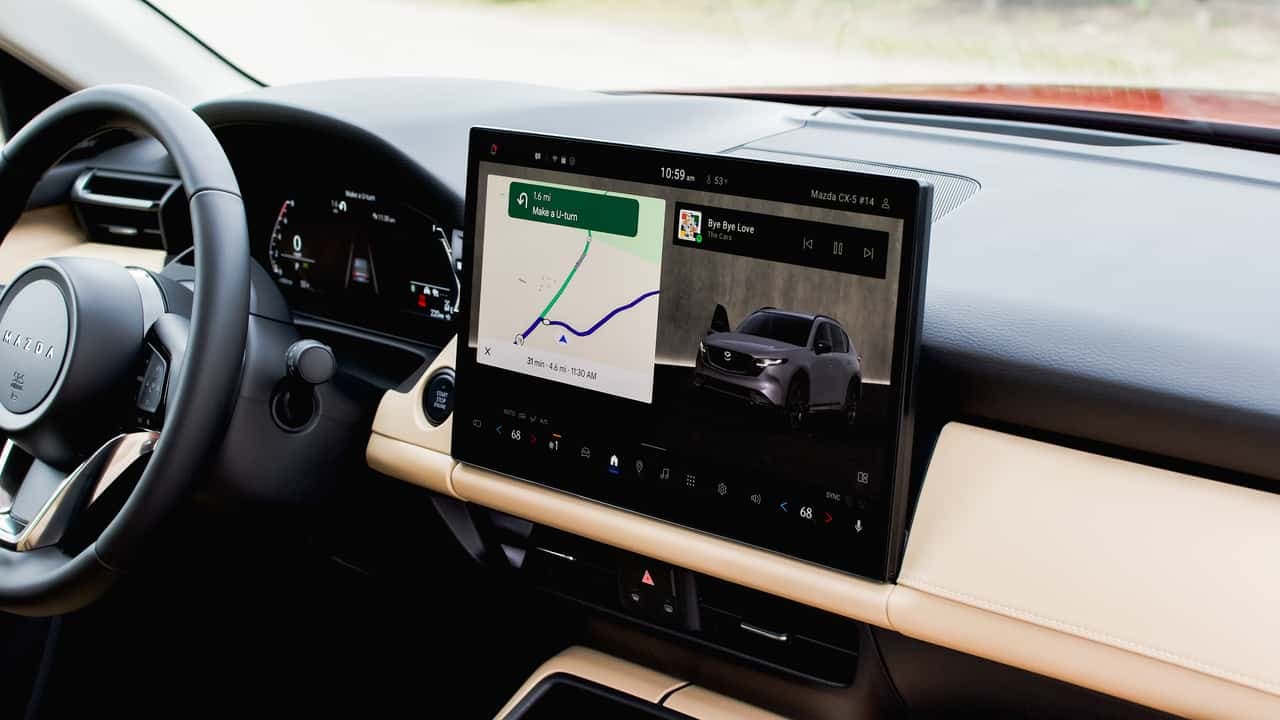
Mazda Takes a Stand: Big Screens Are Not the Enemy
For years, automotive purists and safety advocates have raised concerns about the growing size of touchscreens inside modern vehicles. The argument is straightforward: the larger and more complex the screen, the more a driver's eyes and attention are drawn away from the road. But Mazda is pushing back firmly against that narrative. The Japanese automaker has stated publicly that large displays are not inherently more distracting than traditional physical buttons — and they're standing behind their decision to equip the updated Mazda CX-5 with a prominent, large-format infotainment display.
This bold claim has sparked significant debate in the automotive community. With safety regulators, consumer groups, and even some independent researchers expressing concern about touchscreen-heavy cockpits, Mazda's position is either refreshingly data-driven or surprisingly contrarian, depending on who you ask. Let's break down what Mazda is actually saying, why it matters, and what it means for drivers considering the CX-5.
The Shift Away from Buttons: A Controversial Industry Trend
Over the past decade, virtually every major automaker has embraced the trend of replacing physical knobs, dials, and buttons with large touchscreen interfaces. The appeal is obvious: screens are cheaper to manufacture at scale, easier to update via software, and give vehicles a sleek, modern aesthetic that resonates with today's tech-savvy buyers. Tesla pioneered the approach with its minimalist interior, and others quickly followed suit.
However, the backlash has been real. Studies from organizations like the AAA Foundation for Traffic Safety and the UK's Transport Research Laboratory have suggested that interacting with touchscreens while driving can take a driver's eyes off the road for dangerously long periods — sometimes exceeding two seconds, which is widely considered the threshold for significantly increased crash risk. Sweden's Chalmers University of Technology found in a widely cited study that modern touchscreen-heavy vehicles performed worse than older button-equipped cars when it came to the time required to complete secondary tasks while driving.
Against this backdrop, Mazda's defense of large screens might seem surprising. But the company argues that the conversation is more nuanced than a simple buttons-versus-screens debate.
What Mazda Is Actually Claiming
Mazda's core argument is that screen size alone is not the determining factor in driver distraction. Instead, the company points to interface design, menu depth, and the intuitiveness of the user experience as the true variables that determine how distracting an infotainment system is. A well-designed large screen, Mazda contends, can actually be less distracting than a poorly laid-out cluster of physical buttons that requires a driver to search, feel around, and look away from the road.
The automaker has invested heavily in what it calls a human-centric design philosophy, which prioritizes minimizing cognitive load and eye movement for the driver. The CX-5's infotainment system is designed so that frequently used functions are accessible quickly and logically, reducing the time a driver needs to interact with the screen. Mazda also points to its rotary commander control — a physical dial that allows drivers to navigate menus without touching the screen directly — as a key safety feature that differentiates its approach from a pure touchscreen setup.
The CX-5's Large Display: Features and Design Thinking
The Mazda CX-5 has long been one of the brand's most popular and critically praised models, celebrated for its premium feel, engaging driving dynamics, and thoughtfully crafted interior. The introduction of a larger infotainment screen is part of a broader update aimed at keeping the CX-5 competitive in an increasingly feature-rich compact SUV segment.
Rather than simply enlarging the screen for the sake of aesthetics, Mazda's engineers and UX designers claim to have restructured the interface to take advantage of the additional real estate in a meaningful way. Key improvements include:
- Larger, easier-to-read icons and text that reduce squinting and searching at a glance.
- A cleaner menu structure that reduces the number of taps or inputs needed to reach common functions like navigation, audio, and climate settings.
- Improved Apple CarPlay and Android Auto integration with more screen space for map readability.
- Retained physical controls for the most frequently used functions, such as volume and temperature, ensuring drivers don't need to interact with the screen at all for routine adjustments.
Mazda argues that this hybrid approach — a large screen complemented by essential physical controls — gives drivers the best of both worlds without forcing them to choose between modernity and safety.
Why This Debate Matters Beyond Mazda
Mazda's stance is significant not just as a brand-specific talking point but as a broader signal about how the automotive industry might evolve its thinking on cockpit design. Regulators in Europe and the United States have increasingly scrutinized infotainment systems, and there is growing pressure on manufacturers to demonstrate that their in-car technology meets safety standards rather than simply wowing buyers in a showroom.
If Mazda's data and design methodology hold up to scrutiny, it could offer a template for how automakers can scale up screen size without sacrificing safety. Conversely, if independent testing reveals that the CX-5's large display still contributes to meaningful levels of distraction, it would add ammunition to those calling for stricter regulation of in-car touchscreen technology.
The Bigger Picture for CX-5 Buyers
For prospective Mazda CX-5 buyers, the takeaway is nuanced. The presence of a large screen should not automatically be a red flag. What matters more is how that screen is integrated into the overall driving experience. Mazda's commitment to retaining physical controls for key functions, combined with its rotary interface system and a redesigned menu structure, suggests the company has thought carefully about the distraction question rather than dismissing it outright.
That said, every driver is different. Those who are particularly sensitive to in-car technology distractions are encouraged to test the system thoroughly during a dealership visit before committing. The best infotainment system is ultimately the one that feels intuitive to you, keeps your eyes on the road, and lets you focus on the most important thing: driving.
Final Thoughts
Mazda's assertion that big screens aren't more distracting than buttons is a confident and commercially necessary statement, but it's also one that rests on a legitimate design philosophy. By focusing on interface quality over screen size as the primary driver of distraction, Mazda is reframing the debate in a way that is worth taking seriously. Whether the CX-5's updated infotainment system truly delivers on that promise will ultimately be judged by real-world drivers and independent safety researchers alike. For now, Mazda is betting that thoughtful design can make a large screen just as safe — if not safer — than a dashboard full of buttons.