
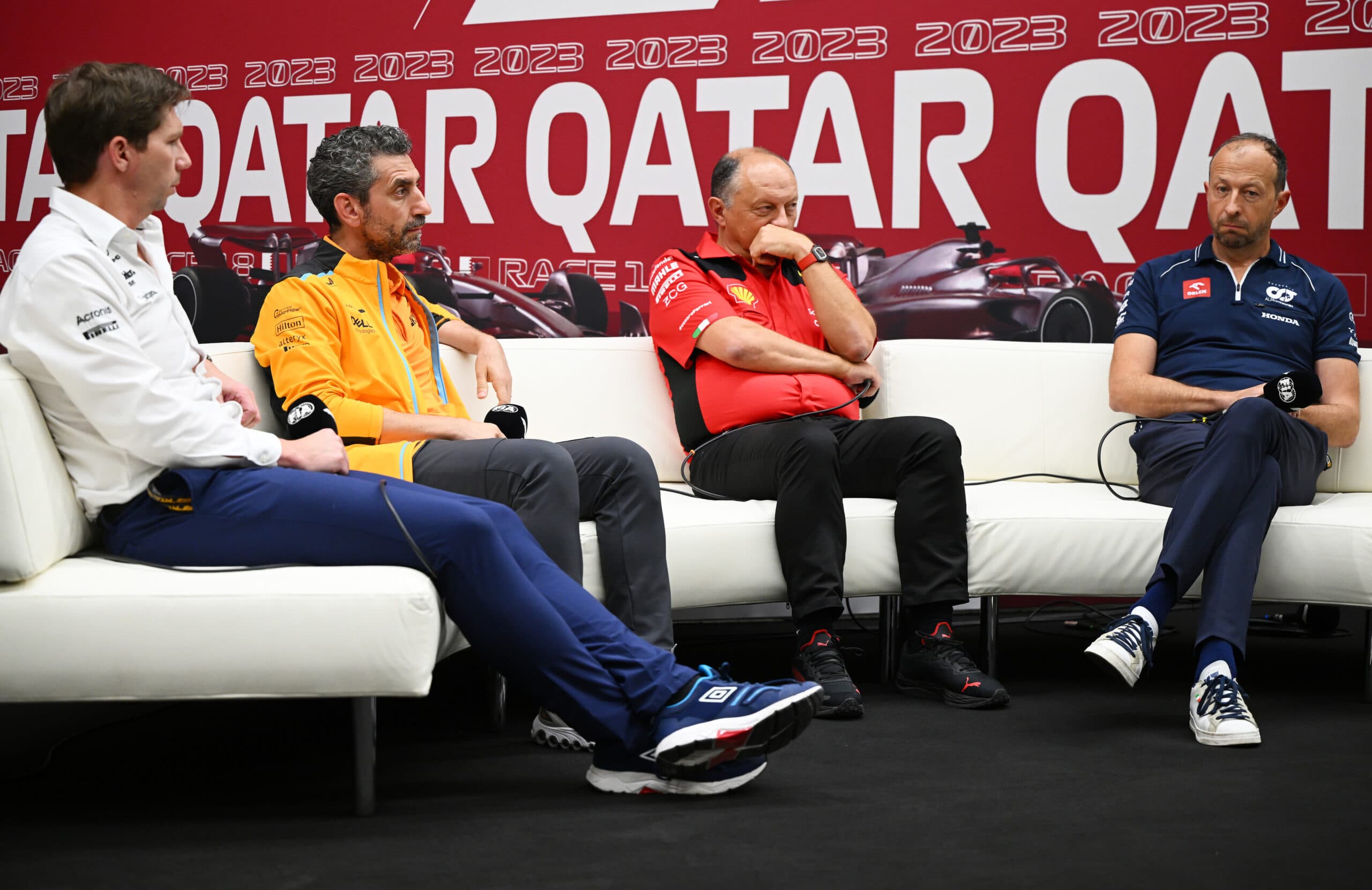
McLaren's Andrea Stella Sends a Formal Letter to the FIA Over F1's Two-Team Problem
Formula 1 has never been short of paddock politics, whispered accusations, or behind-the-scenes maneuvering. But what was once quiet grumbling among rival teams has now turned into an official escalation. McLaren Team Principal Andrea Stella has gone on record confirming that McLaren formally submitted a letter to the FIA addressing one of the sport's most discussed structural controversies: the growing issue of co-owned teams competing on the same grid under the banner of so-called independent constructors.
The target of the conversation, without much subtlety, is the relationship between Red Bull Racing and Racing Bulls — two separate operations that share the same powerful corporate parent. But Stella's concerns go beyond finger-pointing at one specific alliance. He is raising a fundamental question about what Formula 1 should actually stand for heading into the 2026 regulatory era.
What "Team Independency" Really Means in Modern F1
To understand why this matters, it helps to look at the current landscape of Formula 1 competition. The sport operates under strict cost cap regulations that are designed to level the playing field and prevent the wealthiest teams from simply outspending everyone else into irrelevance. Alongside those financial restrictions, aerodynamic testing is heavily policed, with each team allocated a limited number of wind tunnel runs and computational fluid dynamics hours based on their performance in the previous season.
The entire framework assumes that each team on the grid is a genuinely independent entity — competing separately, developing separately, and protecting its intellectual property from rival constructors. When two teams share a parent company, that assumption starts to crack. Not because anyone can point to a single smoking-gun data leak, but because the structural opportunity for crossover exists in ways that go far beyond what traditional rivals could ever exploit.
Stella articulated this concern directly in a print media session, the details of which were reported by Pit Debrief. "I would call this topic, 'team independency,'" he explained. "Like the letter, which uses examples, the letter is about the fact that we believe that Formula 1 should be a competition among independent constructors. And when you have co-ownership, it's very difficult to say that you're going to have a genuine and full independence of constructors."
That framing is important. Stella is not necessarily accusing Red Bull or Racing Bulls of cheating outright. He is making a structural argument — that co-ownership fundamentally undermines the premise of independent competition, regardless of whether any rules are technically being broken in the moment.
The Gray Areas That Don't Require a Smoking Gun
One of the most compelling aspects of Stella's position is his acknowledgment that you don't need a massive, coordinated data transfer to create a competitive advantage through co-ownership. In modern Formula 1, aerodynamic development is an incredibly nuanced and complex discipline. The most valuable insights are sometimes not found in raw data files or detailed technical drawings — they can be embedded in the mindset of an engineer, a design philosophy, or even a casual hallway conversation between colleagues who share corporate reporting lines.
When two teams exist under the same ownership umbrella, the barriers between them are never truly airtight, no matter how many legal firewalls are constructed on paper. Personnel movement, shared resources at the corporate level, and aligned commercial incentives all create environments where knowledge can travel in ways that are difficult to detect and nearly impossible to police under current FIA regulations.
This is the gray area that is causing the most frustration among genuinely independent constructors like McLaren, and it is exactly the kind of structural issue that Stella is pressing the FIA to address before the new 2026 technical regulations come into full effect.
Why 2026 Is the Critical Moment to Act
The timing of McLaren's formal letter is not accidental. Formula 1 is on the verge of its most sweeping regulatory overhaul in years. The 2026 season will introduce entirely new power unit regulations, revised aerodynamic philosophies, and a broader reset of the competitive order that every team has been preparing for intensely. With so much investment and development effort being poured into 2026-spec machinery, the stakes around intellectual property and genuine competitive separation have never been higher.
If co-ownership arrangements are allowed to persist without clearer rules governing what can and cannot be shared between affiliated teams, the 2026 reset could simply entrench advantages for multi-team corporate structures rather than creating the more level playing field the regulations are meant to foster. Stella and McLaren are essentially arguing that the FIA needs to define and enforce true constructor independence now, before the new era locks in patterns that will be even harder to unwind later.
What Happens Next
The FIA has not yet publicly responded to the substance of McLaren's letter, and it remains to be seen whether other independent teams will formally align with McLaren's position. However, the fact that a team of McLaren's stature and current competitive standing has put this concern in writing and on the record is significant. It shifts the conversation from paddock rumor to official regulatory dialogue.
- McLaren has formally submitted a letter to the FIA challenging co-ownership structures in F1.
- Andrea Stella argues that co-owned teams cannot be considered genuinely independent constructors.
- The concern centers on Red Bull and Racing Bulls sharing a corporate parent.
- Knowledge sharing does not require formal data transfers to create competitive gray areas.
- The 2026 regulatory reset makes resolving this issue more urgent than ever.
Whether the FIA acts swiftly or quietly shelves the complaint, Andrea Stella has made one thing clear: McLaren is no longer content to let this issue simmer in the background. The quiet part has been said out loud, it has been put in writing, and Formula 1 will need to decide what kind of competition it actually wants to be as it enters one of the most important chapters in its modern history.