
BMW Makes It Official: The Next M3 Is Staying Pure
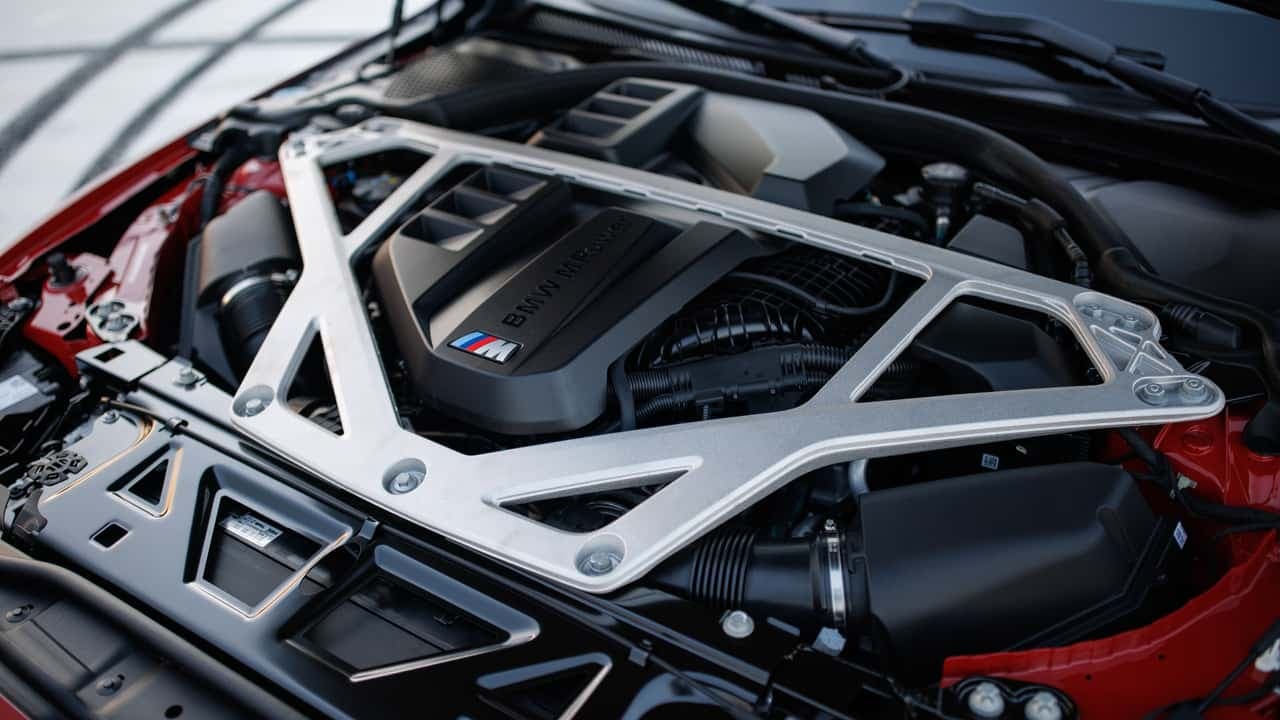
In a world where automakers are racing to electrify every vehicle in their lineup, BMW has drawn a clear line in the sand when it comes to one of its most iconic performance cars. The Bavarian manufacturer has officially confirmed that the next-generation BMW M3 will not be a hybrid. Instead, it will carry forward a refined, more powerful version of the beloved S58 inline-six engine, now enhanced with BMW's cutting-edge M Ignite technology. For driving purists and M car enthusiasts around the globe, this announcement is nothing short of a relief — and a reason to get excited.
Why BMW Is Skipping Hybrid Technology for the Next M3
The decision to keep the next M3 free of hybrid hardware is a deliberate and carefully considered one. BMW's M division has always prioritized the driving experience above all else — weight distribution, throttle response, and mechanical purity are the pillars on which every M car is built. Adding a hybrid system, while beneficial for fuel economy and outright power figures on paper, would inevitably introduce additional weight and complexity that the M engineers believe would compromise the character of the M3.
BMW M CEO has previously noted that not every performance model needs to follow the same electrification path. The M3 occupies a unique space in the market — it is a driver's car first and foremost, a sport sedan that competes as much on feel and engagement as it does on lap times. A hybrid powertrain would shift that balance in ways that BMW is not yet willing to accept for this particular nameplate.
This philosophy aligns with feedback from M3 customers and the broader enthusiast community, who have repeatedly voiced their preference for a lighter, more analogue driving experience. BMW is listening, and the decision to stay naturally aspirated with turbocharging — rather than layering in electric motors — reflects that commitment.
The Updated S58 Engine: What We Know So Far
At the heart of the next M3 will be a significantly updated version of the S58 inline-six engine. The S58 is already one of the most celebrated performance engines in the modern era, having debuted in the current M3 and M4 with outputs ranging from 473 horsepower in the standard Competition variant to 530 horsepower in the XM Label Red and other high-output applications. The next generation of this engine is expected to push the envelope even further.
What makes the updated S58 particularly noteworthy is the introduction of BMW's new M Ignite technology. While full technical details are still emerging, M Ignite is understood to be a suite of combustion and engine management enhancements designed to extract more power and torque from the existing inline-six architecture without resorting to additional displacement or electrification. Think of it as BMW engineering smarter, not necessarily bigger.
What Is BMW M Ignite Technology?
M Ignite represents a new chapter in BMW's approach to performance engine development. The technology focuses on optimizing the ignition and fuel delivery systems at a granular level, enabling the S58 to produce more aggressive power delivery, improved thermal efficiency, and sharper throttle response across the rev range. Early indications suggest that the updated S58 with M Ignite could produce well in excess of 500 horsepower in standard tune, with higher-output variants pushing even beyond that threshold.
Beyond raw power, M Ignite is also expected to improve the engine's soundtrack — an area where BMW has faced some criticism with the current generation. The goal is to create a more visceral, engaging engine note that complements the performance on offer, giving the driver a richer sensory experience every time they press the accelerator.
How the Next M3 Fits Into BMW's Broader Electrification Strategy
It would be a mistake to read BMW's decision about the M3 as a rejection of electrification altogether. BMW has been one of the more progressive mainstream manufacturers when it comes to building electric vehicles, with its i4, iX, and i5 models all receiving strong reviews. The M division itself has embraced hybrid and electric performance with models like the XM plug-in hybrid SUV and the upcoming fully electric M offerings.
The key distinction BMW is drawing is one of appropriateness. Not every model in the lineup needs to be electrified on the same timeline or in the same way. The M3 has a specific identity — a compact, driver-focused performance sedan — and BMW believes that identity is best served, at least for this generation, by a refined combustion powertrain rather than a hybridized one.
What This Means for M3 Competitors
The next BMW M3 will continue to compete directly with the Mercedes-AMG C63, which controversially made the leap to a four-cylinder plug-in hybrid powertrain in its latest iteration. That decision was met with significant backlash from fans who felt it compromised the character of the AMG C63. BMW's decision to stay the course with a high-revving, turbocharged inline-six positions the M3 as the more traditional option in the segment — and potentially the more desirable one for driving enthusiasts.
Audi's RS4 and RS5 remain relevant competitors as well, with the Alfa Romeo Giulia Quadrifoglio continuing to hold its own as a passionate alternative. BMW's commitment to the S58 engine platform gives the next M3 a strong technical argument in this competitive field.
Expected Specifications and Release Timeline
- Engine: Updated BMW S58 inline-six turbocharged with M Ignite technology
- Estimated output: Likely upward of 500 horsepower in base Competition trim
- Transmission: Eight-speed M Steptronic automatic expected as standard; manual gearbox availability still to be confirmed
- Drivetrain: Rear-wheel drive standard; M xDrive all-wheel drive as an option
- Expected debut: Anticipated reveal within the next 12 to 18 months
The Legacy of the M3 and Why This Decision Matters
The BMW M3 is not just a car — it is a cultural institution in the world of performance automobiles. Since its introduction in the mid-1980s, the M3 has represented the pinnacle of what BMW's engineers could achieve within the constraints of a road-legal sport sedan. Each generation has brought with it new technology, new performance benchmarks, and new ways of surprising and delighting drivers.
The decision to keep the next M3 free of hybrid hardware is, in many ways, a statement of intent. It says that BMW M understands what its customers value, and that those values include a level of purity and mechanical directness that electrification has not yet been able to fully replicate. Whether or not that philosophy evolves in subsequent generations remains to be seen, but for now, M3 fans have every reason to look forward to what BMW is building.
Final Thoughts: A Bold Choice in a Hybrid-Heavy World
In an automotive landscape increasingly dominated by electrification mandates and efficiency targets, BMW's confirmation that the next M3 won't be a hybrid is a bold and refreshing stance. By doubling down on the updated S58 engine with M Ignite technology, BMW is signaling that performance, driver engagement, and mechanical soul are still worth protecting. For the millions of M3 fans around the world, that message couldn't be clearer — or more welcome. The next chapter of the M3 story is shaping up to be one of the most exciting yet.