
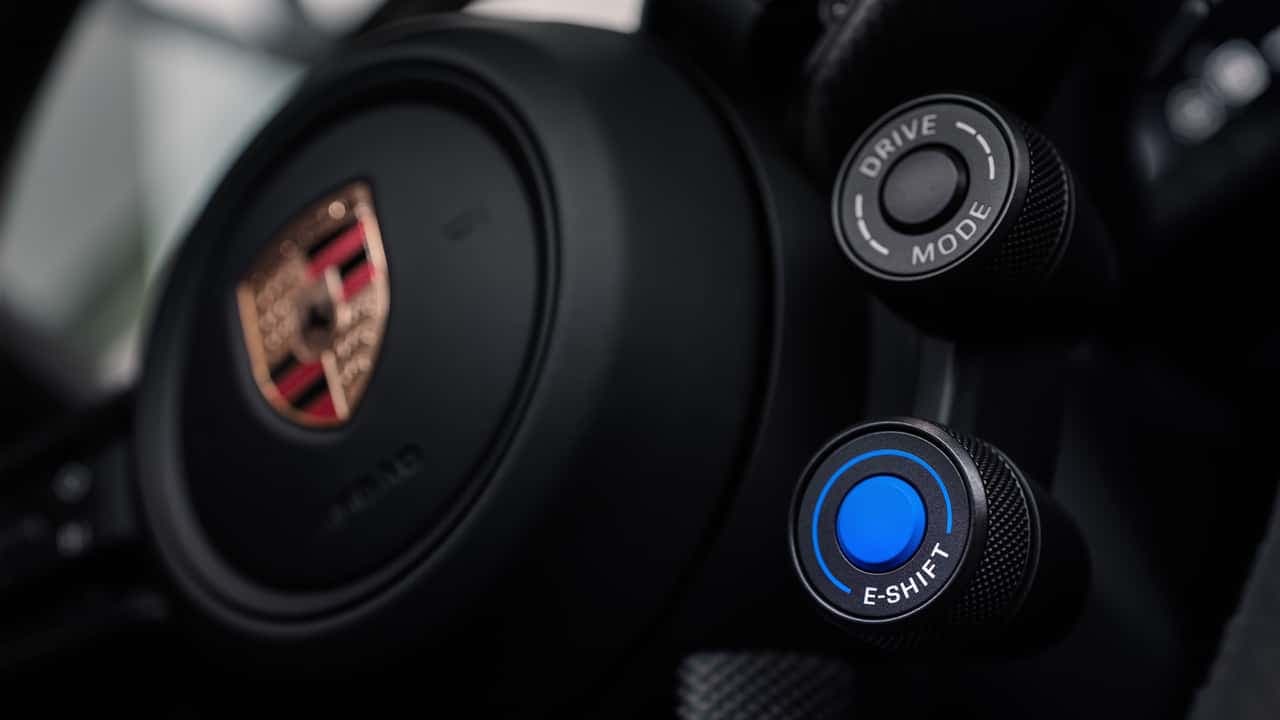
Porsche Adds Fake Gear Changes to the Taycan EV — And It's a Bigger Deal Than You Think
Porsche has never been a brand afraid to take a bold stance. But when it comes to the Taycan — its flagship all-electric sports car — the German automaker has made a surprising concession to driver sentiment. In a move that has sparked conversation across the automotive world, Porsche has introduced simulated gear changes to the Taycan EV, allowing drivers to use the car's shift paddles to cycle through a series of artificial gears. It's a feature that raises fascinating questions about the future of driving feel, EV adoption, and just how far automakers will go to keep enthusiasts happy.
What Are Simulated Gear Changes in an EV?
To understand why this is significant, it helps to understand how electric vehicles actually work. Unlike internal combustion engine (ICE) cars, EVs have no traditional gearbox. Electric motors deliver torque almost instantaneously across a wide RPM range, which means a multi-speed transmission simply isn't necessary. The result is a single-speed drivetrain that provides seamless, linear acceleration — powerful, efficient, and utterly smooth.
That smoothness, however, is precisely what some drivers find unsatisfying. Enthusiasts accustomed to the rhythmic punch of upshifts, the drama of a downshift before a corner, and the tactile connection of a gear lever or paddle have long argued that EVs feel sterile by comparison. Porsche's answer to this criticism in the Taycan is a software-driven system that mimics the sensation of moving through gears — complete with the shift paddles mounted behind the steering wheel.
When activated, the system introduces small, deliberate interruptions in the power delivery to replicate the momentary hesitation of a gear change. Drivers can manually tap the paddles to "upshift" or "downshift" through a set number of simulated ratios, making the experience feel considerably more like driving a traditional performance car.
Why Did Porsche Cave to Driver Demand?
The phrase "Porsche caves" tells you something important about the internal debate this decision reflects. For years, automotive engineers and EV advocates have pushed back against the idea of artificial driving sensations, arguing that faking mechanical behavior is gimmicky and even dishonest about what electric vehicles truly are. Porsche itself built the Taycan on a platform designed to showcase the purity and performance advantages of electric power.
So what changed? Simply put, the market spoke. Porsche's customer base is deeply rooted in driving culture. Many Taycan buyers have come from the Porsche 911, the Cayman, or the Panamera — cars with dual-clutch or manual gearboxes that reward driver engagement. These customers aren't just buying a means of transportation; they're buying an experience. When that emotional connection felt missing from the Taycan, feedback made its way back to the engineers in Zuffenhausen.
Porsche isn't the first automaker to grapple with this tension. Dodge famously included a simulated exhaust note system in the electric Charger Daytona, branding it "Fratzonic Chambered Exhaust." BMW has experimented with artificial engine sounds piped into the cabin. The industry is clearly wrestling with a fundamental question: should EVs pretend to be something they're not, or should they forge an entirely new identity?
How the Taycan's Simulated Gear System Works in Practice
Porsche has been thoughtful in how it has implemented this feature, ensuring it doesn't undermine the Taycan's core performance credentials. The simulated gear changes are optional — drivers who prefer the smooth, uninterrupted surge of pure EV acceleration can simply leave the system off. For those who want a more traditional feel, enabling the feature transforms the driving character in a meaningful way.
- Paddle activation: Drivers use the standard steering wheel-mounted shift paddles to move through the simulated gear ratios, just as they would in a PDK-equipped Porsche.
- Power interruption: The system briefly modulates power delivery to create the sensation of a gear change, adding a rhythmic quality to acceleration.
- Downshift simulation: Pulling the left paddle while decelerating replicates the feel of a downshift, adding a sense of drama when approaching corners or slowing for traffic.
- Performance integrity: Crucially, the underlying performance of the Taycan remains unchanged. The simulated gears are a layer of feel, not a compromise of function.
The Broader Implications for the EV Industry
Porsche's decision to add fake gear changes to the Taycan is more than a quirky software update — it signals a maturing conversation within the automotive industry about what drivers actually want from electric vehicles. For a long time, the assumption was that once people experienced the effortless speed and low running costs of an EV, they would naturally abandon their nostalgia for mechanical complexity. That assumption is proving harder to validate than expected.
Driving pleasure is deeply psychological. The sounds, sensations, and rituals of operating a performance car are tied up in decades of emotional memory for many enthusiasts. Replicating those cues — even artificially — may be a legitimate tool for making EVs feel more accessible and desirable to a broader audience. If a simulated gear change helps a passionate Porsche driver make the switch from a combustion engine to an electric one, it's difficult to argue that the industry is going in the wrong direction.
At the same time, there are valid counterarguments. Critics suggest that automakers should invest energy in developing new forms of driver engagement that are native to electric vehicles, rather than recreating old ones. The instantaneous torque, the low center of gravity, and the near-silent power of an EV offer their own unique pleasures — pleasures that deserve to be developed and celebrated on their own terms.
Is This the Future of Performance EVs?
Whether simulated gear changes become a standard feature across the performance EV landscape remains to be seen. What is clear is that Porsche has listened carefully to its customers and responded with a solution that preserves choice. Drivers who want the full EV experience get it. Drivers who want a bridge between the old world and the new get that too.
For Porsche, a brand whose entire identity is built on the driver's connection to the machine, finding ways to maintain that connection in the electric age isn't capitulation — it's craftsmanship. The Taycan was already one of the most impressive electric vehicles on the market. With the addition of simulated gear changes, it becomes one of the most human ones too.
Final Thoughts
The Porsche Taycan's simulated gear changes represent a fascinating intersection of technology, psychology, and driving culture. Whether you see it as a clever concession to enthusiast demands or an unnecessary illusion layered over an otherwise excellent car, it's hard to deny that Porsche has found a way to keep the conversation interesting. As the EV transition continues to accelerate, expect more automakers to follow suit — and expect the debate over authenticity versus engagement to grow louder in the years ahead. One thing is certain: the era of the purely rational, sensation-free electric car may be shorter than anyone predicted.