
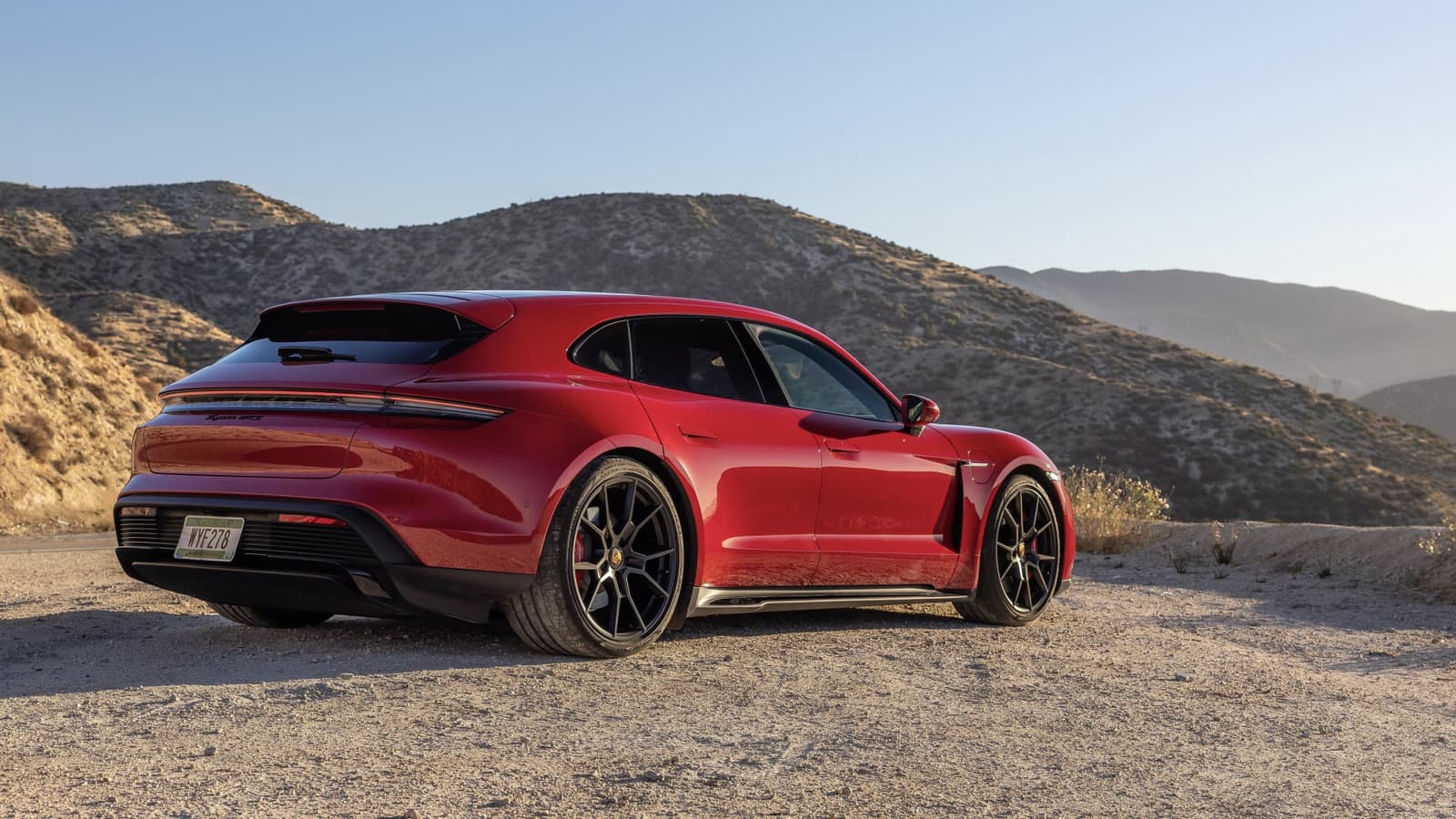
Porsche Is Dropping the Taycan Cross Turismo and Sport Turismo — Here's Why It Matters
Porsche has confirmed what many automotive enthusiasts feared: the Taycan Cross Turismo and Taycan Sport Turismo wagon variants are being phased out. If you were holding out hope for a practical, all-electric Porsche wagon in your driveway, the news isn't great. The decision reflects a broader and long-standing reality in the American automotive market — wagons, no matter how beautiful, fast, or technologically advanced, simply don't sell in meaningful numbers in the United States.
It's a story as old as the modern SUV era. Automakers pour engineering resources and genuine passion into wagon body styles, enthusiasts celebrate them loudly online, and then the sales figures come back underwhelming. Porsche's decision to retire both the Cross Turismo and the Sport Turismo is the latest chapter in that familiar tale.
What Were the Taycan Cross Turismo and Sport Turismo?
To understand what's being lost, it helps to know exactly what these vehicles were. The Taycan Sport Turismo was Porsche's sleek, low-slung electric wagon — a vehicle that combined the performance DNA of the standard Taycan sedan with a slightly more practical roofline, expanded cargo capacity, and a style that drew comparisons to some of the most desirable European wagons ever built. It was, by nearly every objective measure, a stunning machine.
The Taycan Cross Turismo took that formula one step further. Built on the same platform, it added raised ride height, rugged exterior cladding, and a more adventure-ready aesthetic. Think of it as a light-duty electric crossover wagon hybrid — something that could handle a ski trip without sacrificing the driving dynamics that define the Porsche brand. Both models were available with impressive all-wheel-drive powertrains, rapid DC fast charging, and the kind of interior craftsmanship that justifies the Porsche price tag.
Together, they represented one of the most compelling arguments for the electric wagon as a vehicle class. Yet that argument, it seems, was never convincing enough to American car buyers at scale.
Why Wagons Struggle in the U.S. Market
The American consumer's complicated relationship with wagons is well documented. For decades, the station wagon was the family hauler of choice across the country. Then the minivan arrived, then the SUV, and then the crossover — and wagons were left behind. Today, the segment survives in the U.S. almost entirely as a niche product, favored by enthusiasts and people who specifically want to avoid driving something that looks like every other vehicle on the road.
The problem is that "enthusiasts who want something different" is not a large enough customer base to sustain a full production line, especially for a premium automaker managing global logistics, regulatory compliance across multiple markets, and the considerable cost of EV development. When actual transaction data is analyzed rather than online enthusiasm, the gap between what enthusiasts want and what paying customers buy becomes painfully clear.
This isn't unique to Porsche. Volvo has watched its V-series wagons slowly fade from American dealerships. Audi's Allroad, a close conceptual cousin to the Cross Turismo, has barely maintained a foothold. Even Mercedes-Benz has scaled back its E-Class wagon presence. The pattern is consistent across luxury brands: wagons get critical acclaim, win comparison tests, and generate enormous goodwill — and then miss their sales targets.
What This Means for the Taycan Lineup Going Forward
With the Cross Turismo and Sport Turismo departing, the Taycan lineup will consolidate around the standard sedan body style and, presumably, the growing portfolio of Porsche's SUV-oriented electric vehicles. The Macan EV is already in market, and the electric Cayenne is on the horizon — both of which align far more comfortably with what American consumers are actually purchasing.
For Porsche, this is a pragmatic business decision rather than an ideological one. The brand hasn't abandoned performance or innovation; it's simply reallocating development and production resources toward vehicles that will generate the sales volume needed to fund future projects. In the brutal arithmetic of modern automotive manufacturing, even a beloved niche model must justify its existence on a balance sheet.
That said, the loss of these two variants does narrow the brand's appeal to buyers who specifically wanted a practical, daily-drivable Porsche that wasn't an SUV. For those customers, the options are now considerably more limited.
Is There Any Hope for the Electric Wagon Segment?
Despite this setback, the electric wagon segment isn't completely without a future. Rivian has explored wagon-adjacent concepts, and some European manufacturers continue to invest in the format for their home markets, where wagons remain genuinely popular. The key variable is always market geography — what sells in Germany or Sweden does not automatically translate to Texas or Florida.
There is also a reasonable argument that as EV adoption matures and buyers become more educated about the practical advantages of lower, more aerodynamic body styles — including superior range efficiency compared to tall SUVs — the wagon may find a second act. But that future, if it arrives, is likely years away.
The Bottom Line
The discontinuation of the Porsche Taycan Cross Turismo and Sport Turismo is a genuine loss for anyone who believes the wagon deserves a place in the modern automotive landscape. These were exceptional vehicles by any measure — fast, refined, practical, and visually striking. But exceptional vehicles still need buyers, and in the U.S., those buyers never showed up in sufficient numbers.
Porsche is making a rational call based on real market data, and that's ultimately what responsible automakers do. The passionate online chorus mourning the wagon's exit is loud, but it was never quite loud enough at the dealership. Until that changes, wagons will remain what they've been for decades in America: the car everyone admires and almost nobody buys.