
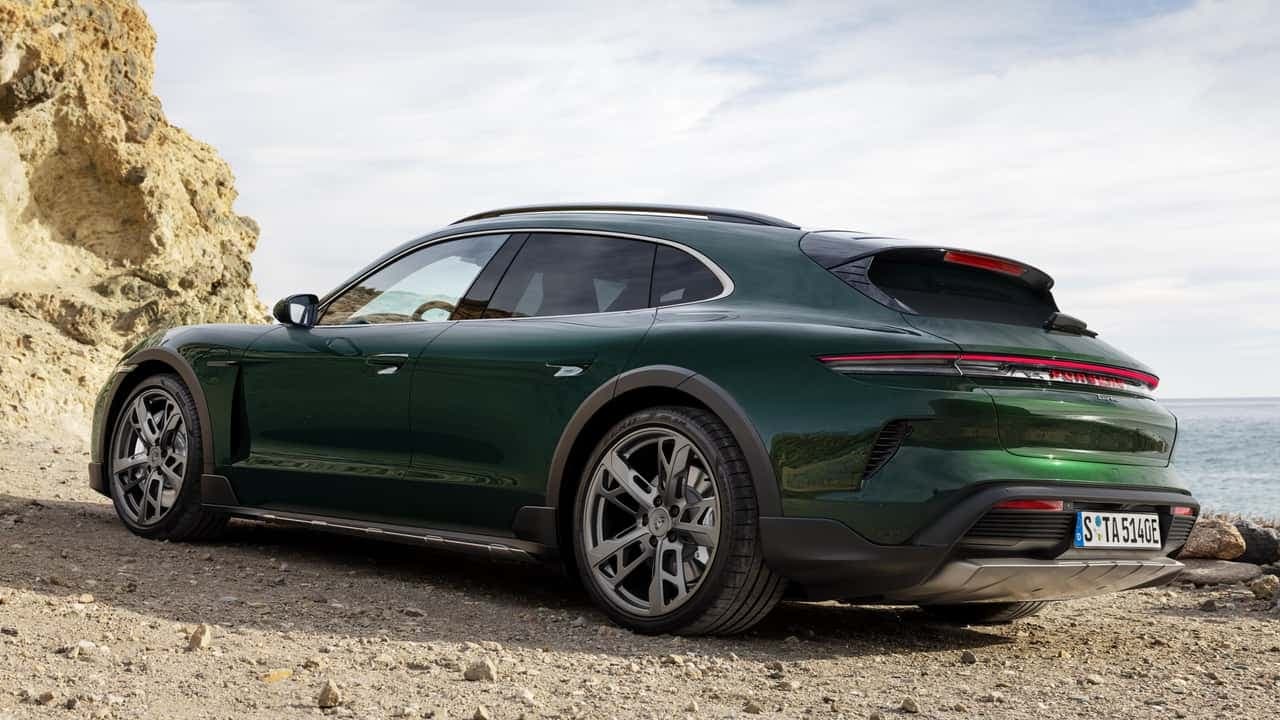
Porsche Pulls the Plug on Its Most Versatile Taycans
It's a sad day for electric vehicle enthusiasts and Porsche fans alike. The German automaker has reportedly made the decision to discontinue two of its most beloved and capable Taycan variants — the Taycan Cross Turismo and the Taycan Sport Turismo. According to multiple industry reports, the reason is straightforward and painfully familiar in the automotive world: low sales. Despite being widely praised by automotive journalists and EV advocates as arguably the most practical and exciting versions of the Taycan lineup, both models simply failed to move in enough numbers to justify their continued production.
This news has sent shockwaves through the enthusiast community, largely because these weren't just niche curiosities — they were, by many accounts, the best Taycans money could buy. So what went wrong, and what does this mean for the future of Porsche's electric ambitions? Let's break it all down.
What Were the Taycan Cross Turismo and Sport Turismo?
To understand the significance of this discontinuation, it helps to know exactly what Porsche was offering with these two variants.
Taycan Sport Turismo
The Taycan Sport Turismo was Porsche's sleek shooting brake answer to the electric age. Featuring a roofline that swept gracefully toward the rear while providing significantly more cargo space and rear headroom than the standard Taycan sedan, the Sport Turismo represented a near-perfect blend of sports car drama and everyday usability. It appealed to buyers who wanted the performance and prestige of a Porsche but needed something that could also swallow luggage for a weekend trip or comfortably seat taller rear passengers. In markets where estate-style vehicles remain culturally popular — particularly in Europe — the Sport Turismo should have been a natural hit.
Taycan Cross Turismo
The Taycan Cross Turismo took the Sport Turismo formula one compelling step further. Built on the same extended roofline but adding raised ride height, rugged body cladding, and optional off-road-oriented features, the Cross Turismo positioned itself as an electric sport utility alternative for drivers who wanted adventure capability without sacrificing performance or luxury. Think of it as Porsche's answer to a sporty crossover, but in wagon form, with blistering acceleration and zero direct emissions. It was a genuinely unique product in the EV space — nothing else quite like it existed at its price point.
Why Did Sales Fall Short?
This is the question that puzzles many observers. Both vehicles were critically lauded. Reviews were glowing. The specs were impressive. Yet the buying public largely looked the other way. Several factors likely contributed to their commercial underwhelming performance.
Market Preference for SUVs and Crossovers
The automotive industry has been shaped by an almost tectonic shift in consumer preference toward SUVs and crossovers over the past decade. Wagons and shooting brakes, no matter how beautifully executed, continue to struggle in markets like North America, which represent enormous volumes for luxury automakers. Buyers who wanted a Porsche EV with extra practicality largely gravitated toward the Cayenne E-Hybrid or awaited future electric SUV offerings. The wagon bodystyle, despite its logical advantages, carries perception challenges that even Porsche's brand power couldn't fully overcome.
Premium Pricing in a Competitive EV Landscape
The Taycan lineup sits at the premium end of the EV market, and the Cross Turismo and Sport Turismo variants commanded price premiums over the already expensive standard Taycan sedan. As the broader EV market became increasingly competitive — with luxury rivals from Mercedes-Benz, BMW, Audi, and newer entrants all fighting for the same wallets — buyers exercising spending discipline at that price point often defaulted to more conventional choices. A fully loaded Taycan Cross Turismo could push well past the six-figure mark, a threshold that narrows the buyer pool considerably.
Limited Brand Awareness Around the Variants
Despite Porsche's marketing muscle, the Cross Turismo and Sport Turismo never quite escaped the shadow of the standard Taycan sedan and the iconic Taycan Turbo and Turbo S variants. Many potential buyers simply weren't aware that these practical alternatives existed, or assumed the differences were cosmetic rather than structural. That awareness gap likely cost both models meaningful sales volume.
Why This Loss Hurts More Than It Might Seem
Beyond the numbers, the discontinuation of these two Taycan variants represents a broader creative loss for Porsche. In a segment often criticized for producing vehicles that look and feel increasingly alike, the Cross Turismo and Sport Turismo were genuinely different propositions. They proved that an EV could be stylish, practical, performance-oriented, and even mildly adventurous — all at once.
- The Sport Turismo offered best-in-class interior space for a performance EV without resorting to an SUV silhouette.
- The Cross Turismo was one of the very few electric vehicles with genuine off-road pretensions and a wagon body, a segment essentially occupied by no one else.
- Both models showcased Porsche's engineering flexibility on the J1 electric platform.
- Their departure leaves a genuine gap in the market that no current EV fills in quite the same way.
What Comes Next for the Taycan Lineup?
Porsche is not abandoning the Taycan or the electric vehicle segment. The standard Taycan sedan and Taycan Turbo variants are expected to continue, and Porsche has been vocal about its long-term electrification strategy. The brand has also been developing next-generation electric platforms and has hinted at expanded EV offerings further down the road. However, whether a spiritual successor to the Cross Turismo or Sport Turismo will ever emerge remains genuinely uncertain.
It is possible that Porsche could eventually fold some of the Cross Turismo's adventurous spirit into a future electric SUV or crossover — a vehicle category that has proven far more commercially viable in key markets. But for now, the specific combination of wagon practicality, performance, and subtle ruggedness that defined these two models appears to have no replacement on the horizon.
A Farewell to Porsche's Most Underrated EVs
The death of the Taycan Cross Turismo and Taycan Sport Turismo is a reminder that even exceptional products can fail commercially if consumer preferences and market timing don't align. These were not bad cars — by almost every objective measure, they were outstanding ones. They were, in the eyes of many, the best Taycans Porsche ever made. Practical without being boring, sporty without being impractical, and distinctive without being alienating.
If you were on the fence about buying one, the discontinuation announcement might actually work in your favor in the short term — remaining new stock and certified pre-owned examples could become available at more attractive prices as dealerships clear inventory. For collectors and enthusiasts, these models may also prove to be interesting long-term acquisitions given their unique positioning in Porsche's EV history.
For everyone else, the most fitting tribute is simply to acknowledge what Porsche achieved with these vehicles, and to hope that the lessons learned from their brief, brilliant existence inform whatever comes next from Stuttgart.