
A Hypercar Startup Is Rethinking Everything You Know About Driving
In the world of high-performance automobiles, incremental improvements are the norm. Manufacturers chase tenths of a second on the Nürburgring, squeeze out a few extra horsepower from already-ferocious engines, and refine aerodynamic packages that were already bewilderingly complex. But every once in a while, a new voice enters the conversation and asks a far more fundamental question: what if we've been thinking about this all wrong from the very beginning?
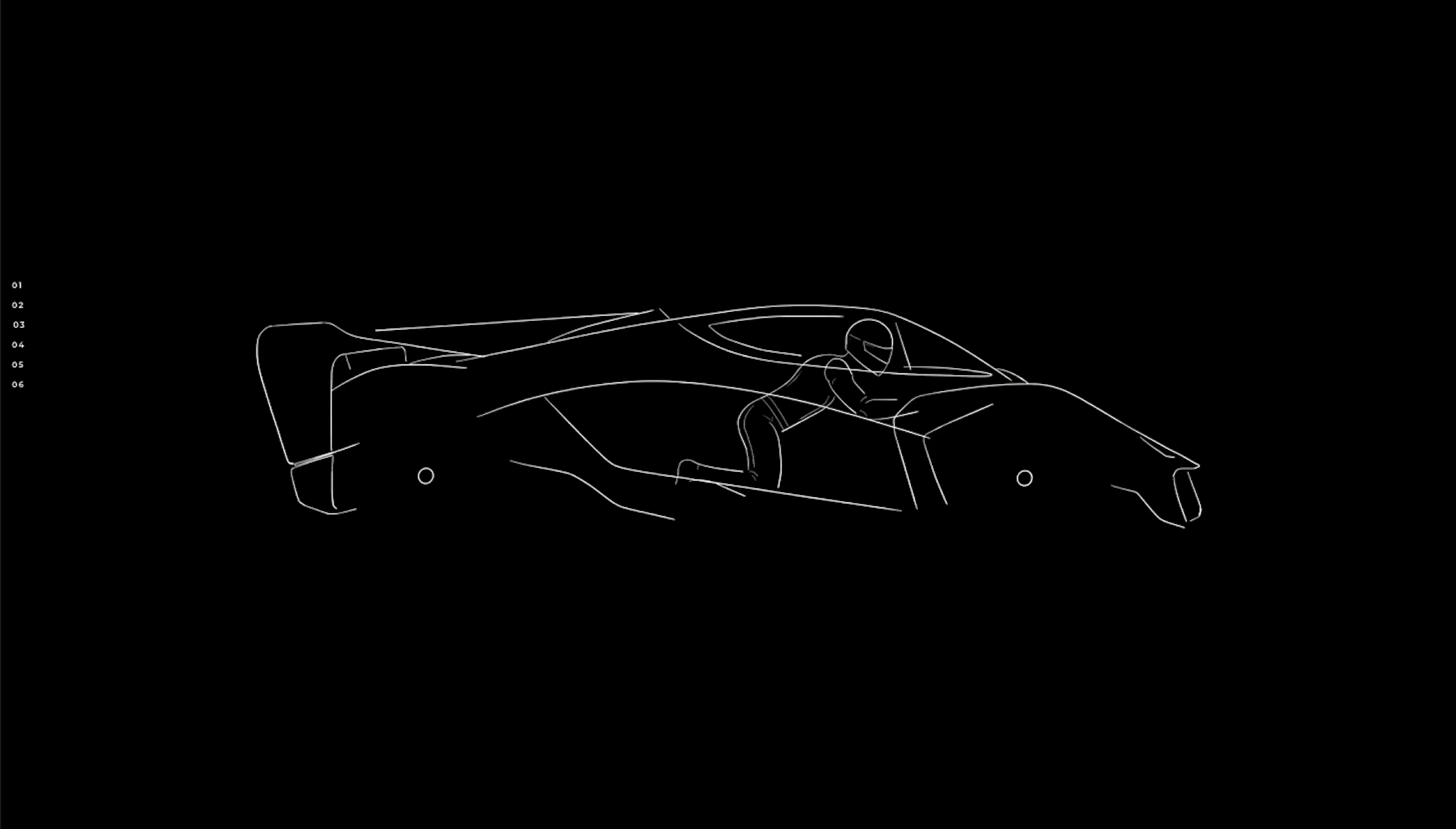
That's precisely the question being posed by Sanrivatti, a bold new hypercar startup that believes the relationship between a human being and a high-performance machine is long overdue for a radical reimagining. Their answer is something they call the Apex Position — a driving philosophy and physical configuration that borrows heavily from the world of motorcycle riding and applies it to a mid-engined supercar platform. It's an idea that sounds unconventional at first, but the more you think about it, the more sense it starts to make.
What Exactly Is the Apex Position?
At its core, the Apex Position is a reimagining of how a driver's body interacts with a car. Traditional supercars and hypercars place their drivers in a reclined, seat-based position — essentially a highly optimized version of the same configuration you'd find in a family sedan, just lower to the ground and surrounded by more carbon fiber. Sanrivatti argues that this approach, while familiar, is fundamentally misaligned with the demands of extreme, high-speed driving.
The Apex Position instead draws inspiration from how motorcycle riders relate to their machines. On a high-performance motorcycle, the rider is an active, dynamic part of the system. They lean into corners, shift their body weight to influence balance and handling, and maintain a forward-leaning posture that places their center of gravity in a deliberate relationship with the machine beneath them. The result is an experience that is viscerally connected, intuitive, and deeply physical.
Sanrivatti wants to bring that same philosophy into a four-wheeled, mid-engined supercar. Rather than sitting passively behind a wheel, the driver in a Sanrivatti vehicle would adopt a position that encourages active physical engagement — a blend of riding and driving that has, until now, remained the exclusive domain of two-wheeled machines.
Why Mid-Engined? The Physics Behind the Concept
The choice of a mid-engined platform for this concept is no accident. Mid-engined supercars place the heaviest mechanical component — the engine — as close to the vehicle's center of mass as possible. This configuration is widely recognized as offering the most balanced handling dynamics in high-performance vehicles, giving drivers the confidence to push harder through corners and transitions.
When you pair that inherently balanced platform with a driver position inspired by motorcycle ergonomics, the theoretical benefits are compelling. A driver leaning forward and actively engaging their body weight has the potential to become a more meaningful part of the vehicle's dynamic equation — rather than a passenger strapped to a seat while electronics do the heavy lifting.
Sanrivatti's core argument is that modern supercars have, in many ways, engineered the human out of the experience. Active suspension, torque vectoring, stability management systems, and driver aids of every conceivable variety have made these cars faster and safer — but arguably less connected. The Apex Position is their attempt to reconnect the human to the machine at a fundamental, physical level.
The Broader Shift in Hypercar Philosophy
Sanrivatti isn't alone in questioning the direction of high-performance car design. Across the industry, a growing number of voices have been pushing back against the increasing digitization and automation of the driving experience. Purists lament the disappearance of naturally aspirated engines, manual gearboxes, and unassisted steering racks. The question of what makes a driving experience genuinely engaging — rather than merely fast — has never been more hotly debated.
Into this conversation, Sanrivatti's Apex Position arrives as one of the most structurally ambitious proposals yet. Rather than simply removing a layer of electronic assistance, they are proposing a ground-up rethink of the driver's physical role in the vehicle. That's a far bolder move, and it carries with it a correspondingly higher degree of risk and reward.
Key Principles Behind the Apex Position Concept
- A forward-leaning driver posture borrowed from high-performance motorcycle riding, designed to increase physical engagement and connection with the vehicle's dynamics.
- Integration of the driver's body weight as an active handling variable, rather than a passive load to be managed by the chassis and electronics.
- A mid-engined layout chosen specifically to complement the balanced, dynamic nature of the proposed riding position.
- A philosophical commitment to returning the human being to the center of the performance equation in a meaningful and physical way.
Can an Idea This Different Actually Work?
The honest answer is that we don't yet know. Sanrivatti is a startup, and like all startups in the notoriously difficult world of low-volume, high-performance automotive manufacturing, the gap between a compelling concept and a production-ready vehicle is enormous. The challenges are not just engineering ones — they are regulatory, ergonomic, and commercial as well. Convincing a potential buyer to adopt an entirely new physical relationship with their car is a significant ask, even among enthusiasts who consider themselves open-minded.
And yet, the history of the automobile is full of ideas that seemed too strange to succeed until they didn't. The mid-engined layout itself was once considered exotic and impractical. Carbon fiber monocoques, active aerodynamics, hybrid powertrains — all were once radical departures that have since become standard tools in the hypercar builder's kit.
The Future of Driver-Focused Performance
What Sanrivatti represents, regardless of whether the Apex Position eventually reaches production, is a genuinely fresh perspective on a question the industry rarely stops to ask: what should the relationship between a human and a high-performance machine actually feel like? As autonomous driving technology continues its steady advance and electric powertrains transform the sound and feel of performance cars, startups willing to ask that question from first principles may end up being among the most important voices in shaping whatever comes next.
For now, the Apex Position is a provocation as much as it is a product. It challenges assumptions, invites debate, and dares the automotive world to consider a future where the driver isn't just along for the ride — but is, once again, the beating heart of the whole experience.