
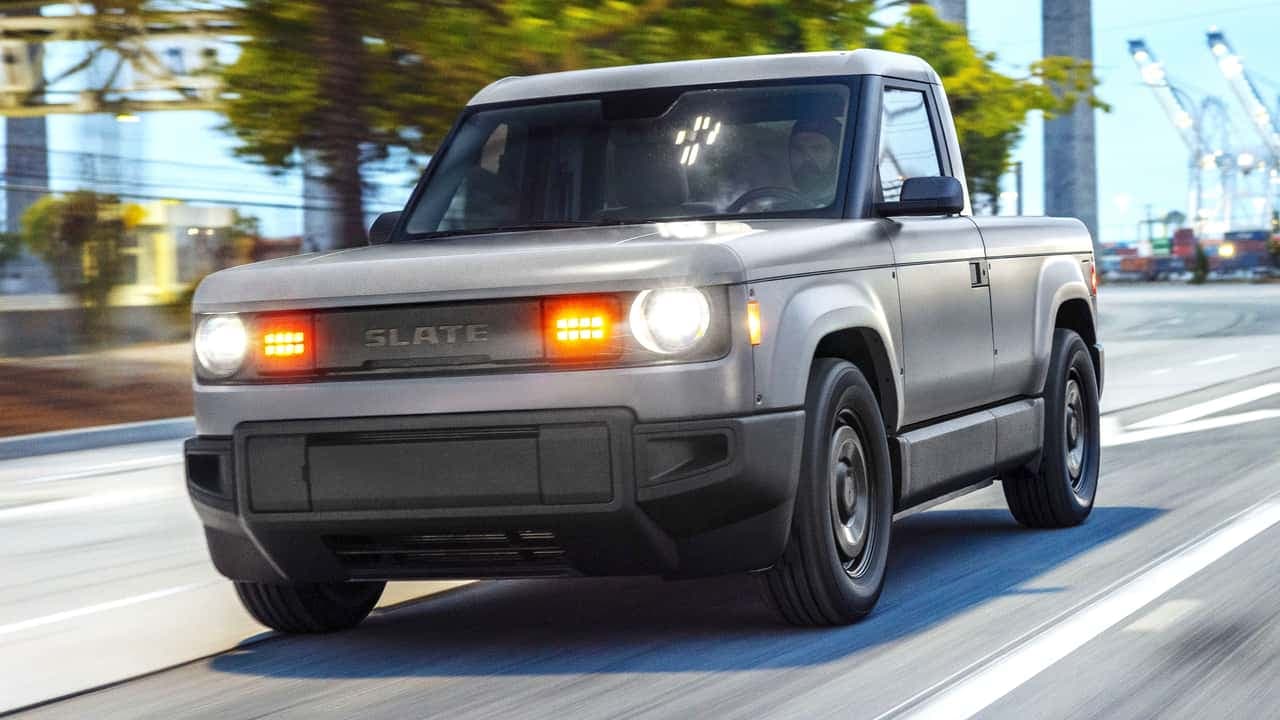
Slate Reveals Fresh Details About Its Affordable Mid-$20,000 Electric Truck
The electric vehicle market has long been criticized for pricing everyday drivers out of the conversation. Flagship EVs from established automakers routinely tip well past $50,000, and even entry-level electric pickups have struggled to break below the $40,000 barrier. That's exactly the gap that startup automaker Slate is setting out to close. The company has now shared fresh details about its boldly minimalist electric truck, targeting a mid-$20,000 price point that could genuinely shake up how Americans think about electric transportation.
What Is the Slate Truck?
The Slate Truck is an all-electric pickup being developed by the Michigan-based startup of the same name. Unlike most modern vehicles — electric or otherwise — the Slate Truck takes a deliberately stripped-back approach to its base configuration. The company's philosophy is simple: keep the starting price as low as possible by rolling the vehicle off the assembly line with only the essentials, then allow buyers to personalize their truck through a wide menu of add-on options.
This strategy is a direct inversion of how most automakers operate. Rather than loading vehicles with features and charging a premium, Slate is betting that cost-conscious buyers would rather pay for only what they actually want and need. It's a refreshing — and potentially disruptive — approach in a segment where feature bloat has become the norm.
The Price Point That Changes Everything
Perhaps the most headline-grabbing detail about the Slate Truck is its anticipated starting price in the mid-$20,000 range. To put that in perspective, the cheapest new electric vehicles currently available in the United States generally start around $27,000 to $30,000 for small passenger cars — not trucks. A work-ready electric pickup for under $25,000 would represent a historic milestone for the industry.
At that price, the Slate Truck would become accessible to a much wider demographic: tradespeople, small business owners, rural buyers, and young first-time vehicle purchasers who want the utility of a truck without the financial strain of a monthly payment on a $50,000+ EV. The potential for federal and state EV tax credits to push the effective purchase price even lower adds another compelling layer to the value proposition.
Minimal Features, Maximum Options
So what exactly do you get for that mid-$20,000 base price? According to Slate, the answer is: not a lot — and that's entirely intentional. The truck is expected to ship in a base trim that foregoes many of the comfort and technology features that buyers have come to expect as standard in modern vehicles. Think of it less as a bare-bones disappointment and more as a blank canvas.
Where the Slate Truck becomes genuinely exciting is in its customization ecosystem. The company has indicated that buyers will have access to a wide array of optional upgrades and add-ons, allowing them to build a truck that suits their specific lifestyle and budget. This modular philosophy empowers the consumer in a way that traditional vehicle purchasing rarely does.
Some of the types of options expected to be available include:
- Upgraded infotainment and connectivity packages for drivers who want a modern tech experience
- Enhanced comfort features such as improved seating, climate control options, and interior trim upgrades
- Utility-focused accessories including bed liners, tool storage solutions, and towing enhancements
- Aesthetic customization through different exterior finishes, wheel options, and styling packages
- Range and charging upgrades for buyers who need extended capability beyond the base battery configuration
This approach essentially lets buyers design their own truck rather than accepting whatever a manufacturer has decided a particular trim level should include. It also means the truck can serve vastly different audiences — from a contractor who needs raw utility to a city dweller who simply wants an affordable, eco-friendly daily driver.
Why the Slate Truck Matters for the EV Market
The electric vehicle industry is at an inflection point. Early adoption was driven largely by enthusiasts and higher-income buyers who could absorb the premium pricing. For EVs to achieve genuine mass-market penetration, the price barrier needs to fall significantly. Most major automakers have acknowledged this, but delivering on the promise has proven difficult given the cost of battery technology and manufacturing complexity.
Slate's approach — radical simplicity at the base level, supported by a rich options ecosystem — offers a credible path to affordability without requiring a technological breakthrough. By keeping the base build lean, the company reduces its own production costs while shifting spending decisions back to the consumer. It's a model that worked well for companies like IKEA in furniture; Slate is betting it can work for trucks too.
If the company can deliver a reliable, functional electric truck at a mid-$20,000 price point, it stands to attract serious attention not just from individual buyers but from fleet operators, municipalities, and small businesses looking to electrify their operations without going over budget.
What to Watch For Next
Slate has been steadily building momentum, and the release of fresh pricing and feature details signals that the company is moving closer to production reality. Potential buyers and industry watchers should keep an eye on announcements around official production timelines, range specifications, towing and payload capacity, and the full scope of the options catalog.
The Slate Truck may not be the flashiest electric vehicle on the market, but in a segment dominated by expensive, feature-heavy trucks, its no-frills promise at a genuinely accessible price could make it one of the most important ones. Affordable, practical, and customizable — that's a combination the EV market has been waiting for.