
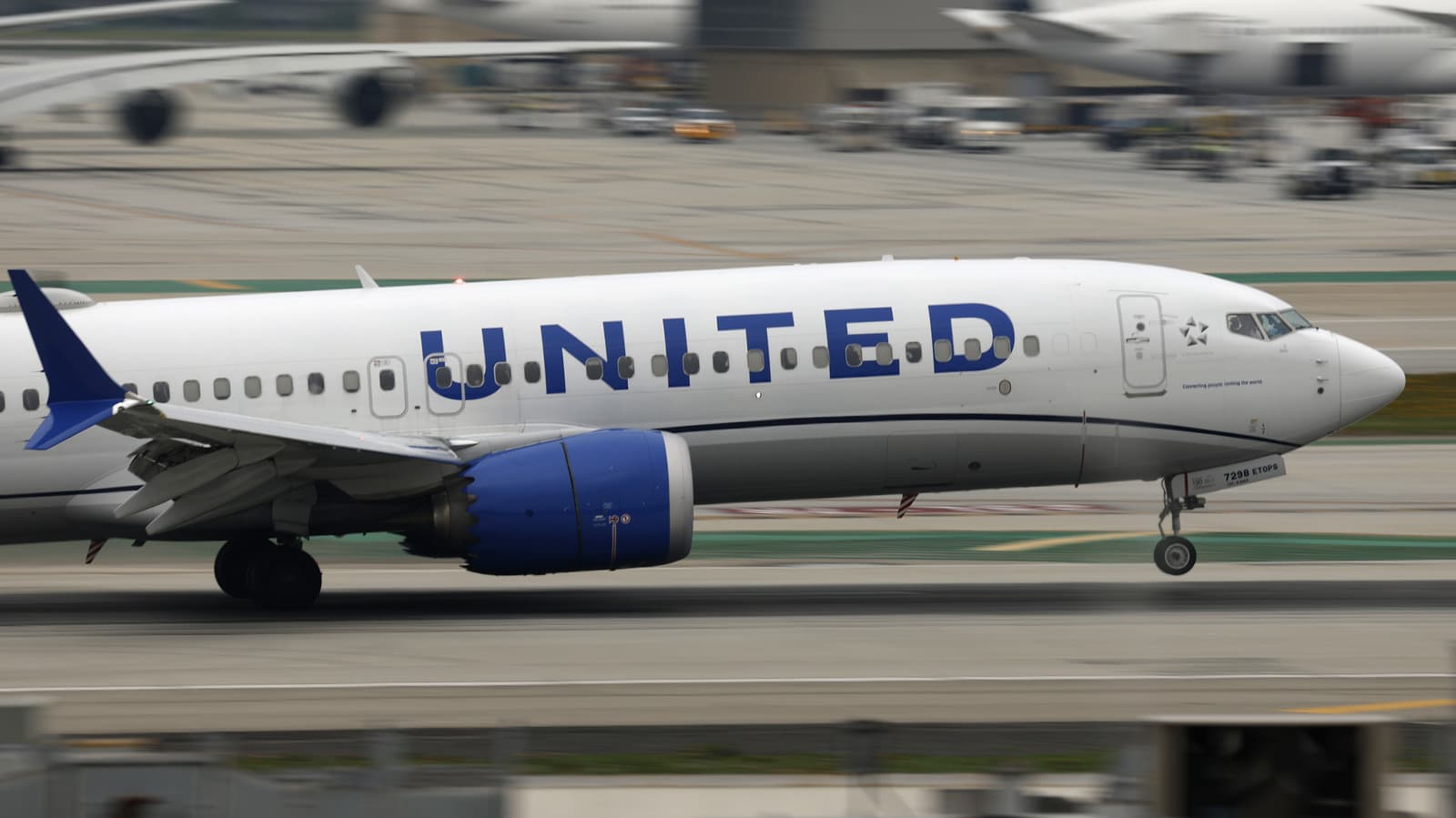
United Airlines Leaves World Cup Commentary Team Stranded Over 200 Miles Away at 3 AM
Traveling for a major live broadcast event is stressful enough on its own. Add a middle-of-the-night airline failure, a drop-off point more than 200 miles from your destination, and the pressure of covering one of the world's most-watched sporting events, and you have the makings of a genuine logistical nightmare. That's exactly what a World Cup commentary team recently endured at the hands of United Airlines, in a story that is drawing widespread attention and renewed frustration toward one of America's largest carriers.
The incident highlights a problem that frequent flyers know all too well: when airline operations break down, it's rarely a small inconvenience. For professionals whose jobs depend on being somewhere specific at a very specific time, a botched routing can mean far more than a missed connection. It can mean missing the broadcast entirely.
What Happened to the World Cup Commentary Crew
According to reports, United Airlines failed to get a World Cup commentary team to their intended destination, instead leaving them stranded at an airport more than 200 miles away — at approximately 3 AM local time. The details paint a picture of cascading failures that are all too common in modern air travel: misconnections, overnight disruptions, and a lack of immediate support when passengers need it most.
For a commentary team covering the FIFA World Cup, timing is everything. Pre-production work, venue walkthroughs, equipment checks, and editorial meetings all depend on crews arriving on schedule. Being dumped in the wrong city in the early hours of the morning doesn't just cause personal inconvenience — it threatens the professional obligations of everyone involved and, by extension, the broadcast product that millions of viewers expect to see.
United Airlines has not been a stranger to high-profile travel disruptions, and incidents like this one contribute to a growing narrative around the reliability — or lack thereof — of major U.S. carriers during peak travel periods like a FIFA World Cup tournament.
Why Airline Disruptions During Major Sporting Events Are So Damaging
The 2026 FIFA World Cup, co-hosted by the United States, Canada, and Mexico, has placed enormous strain on travel infrastructure across North America. Broadcast crews, journalists, production staff, and tens of thousands of fans are all moving between cities on tight schedules, often with zero margin for error. Airlines operating during this period face heightened demand, and when their systems fail, the consequences ripple outward quickly.
For media professionals in particular, a stranding like the one experienced by this commentary team can mean:
- Missing pre-show preparation and editorial briefings that are essential to live broadcasting quality.
- Arriving at a venue exhausted after hours of unplanned travel, impairing on-air performance.
- Scrambling for last-minute ground transportation across hundreds of miles, often at enormous expense.
- Missing the broadcast window entirely if the disruption is severe enough.
The human cost is easy to overlook in dry operational reports, but the reality is that real professionals with real deadlines were left in an airport at three in the morning with no viable path to where they needed to be. That's not a minor inconvenience — it's a failure of service at a fundamental level.
United Airlines and the Broader Problem of Airline Reliability
United Airlines is far from alone in struggling with on-time performance and operational reliability, but incidents like this one intensify scrutiny. U.S. airlines have faced sustained criticism in recent years over flight cancellations, mishandled rebooking, inadequate passenger support during irregular operations, and a general sense among travelers that the industry prioritizes revenue management over customer care.
When a disruption leaves passengers stranded overnight in the wrong city, the question isn't just what went wrong operationally — it's what the airline did in response. Were staff available to help rebook the crew? Was accommodation arranged? Was ground transportation offered to cover the 200-plus miles to their actual destination? These are the moments that define how an airline is truly perceived, and they matter enormously to frequent business travelers who depend on carriers to perform.
What Travelers Can Do to Protect Themselves
While no individual passenger can fully insulate themselves from airline failures, there are practical steps that frequent travelers — especially those on tight professional schedules — can take to reduce their exposure to disruptions like this one.
- Build in buffer time wherever possible. Arriving a day early for a critical event eliminates much of the risk posed by last-minute delays or cancellations.
- Book direct flights when available. Every connection is an additional point of failure. Eliminating layovers reduces the chances of a cascading disruption.
- Know your passenger rights. Under U.S. Department of Transportation rules, airlines have specific obligations when they cause significant delays or cancellations. Understanding these rights helps you advocate for yourself in real time.
- Use travel insurance for high-stakes trips. Comprehensive travel insurance that covers trip interruption, accommodation, and alternative transportation can offset the financial pain of a serious disruption.
- Keep key contacts on speed dial. For professional travelers, having a dedicated travel manager or corporate travel desk available around the clock can make the difference between a 3 AM disaster and a manageable reroute.
The Bigger Picture: Logistics Are Hard, But Accountability Matters
The brief but telling phrase attached to this story — "logistics are hard" — carries a lot of weight. It's true that running a major airline is an extraordinarily complex operation, and disruptions are an inevitable part of the business. Weather, air traffic control delays, mechanical issues, and crew scheduling challenges all contribute to a system that sometimes breaks down in ways no single party can fully control.
But "logistics are hard" cannot be allowed to function as a blanket excuse for failures that leave paying passengers stranded in the wrong city at three in the morning. Travelers, and especially professional travelers covering events of global significance, deserve better. They deserve proactive communication, immediate rebooking support, and genuine accountability when things go wrong.
As the 2026 World Cup continues and travel demand across North America remains at peak levels, incidents like the one suffered by this commentary team serve as a sharp reminder that the infrastructure supporting one of the world's great sporting events still has serious weak points. United Airlines, along with every other major carrier operating in this environment, has both an opportunity and an obligation to do better — because for the people on the wrong end of a 200-mile stranding at 3 AM, the cost of getting it wrong is anything but abstract.