
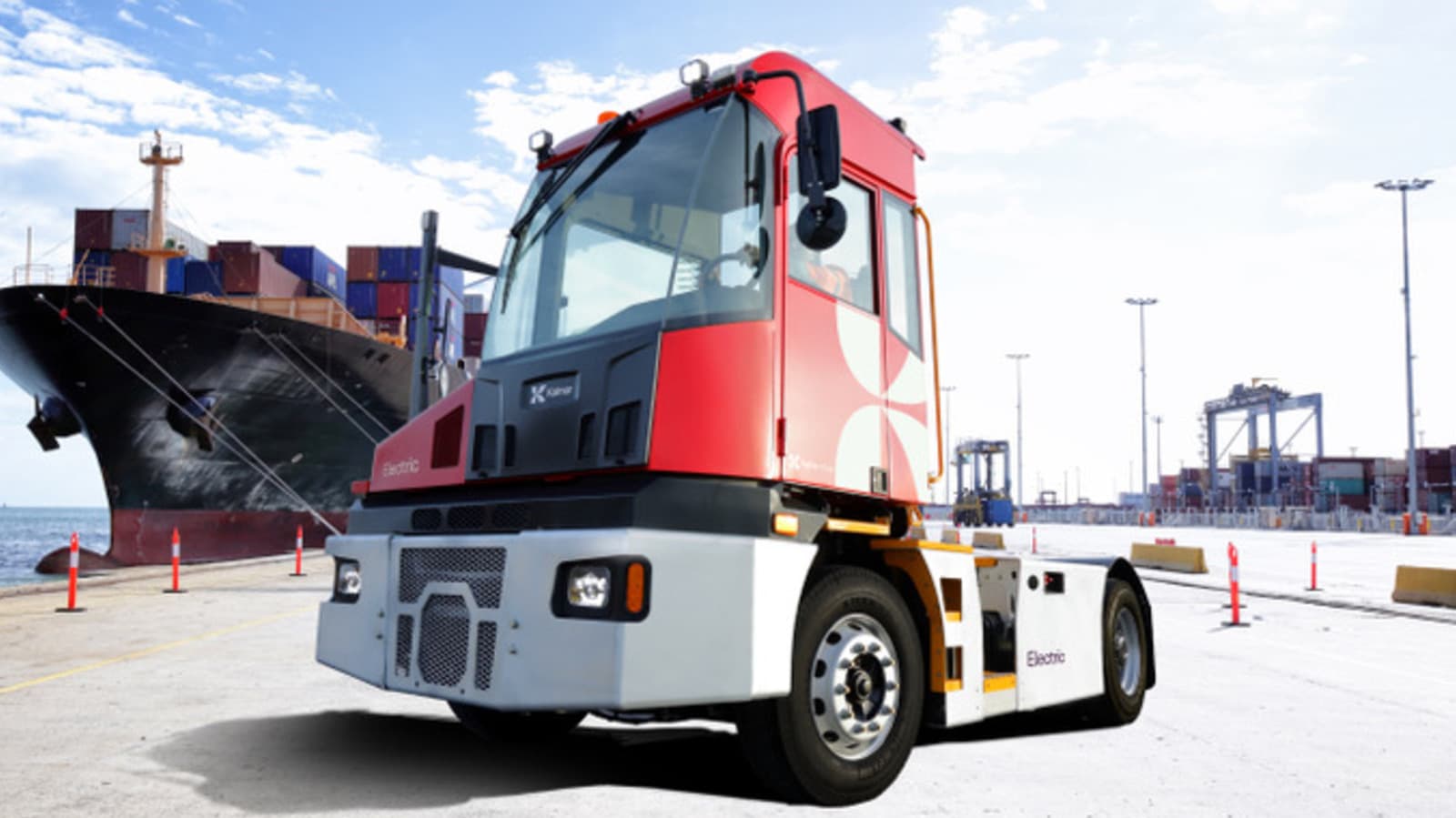
What Is a Yard Goat? The Compact Powerhouse of Warehouses and Cargo Yards
If you have ever driven past a large distribution center, freight terminal, or shipping warehouse, you have almost certainly spotted a short, stubby truck maneuvering trailers around the lot with surprising ease. That compact vehicle has a name — the yard goat — and it is one of the most specialized, purpose-built machines in the entire logistics industry. Despite rarely making headlines compared to its larger cousins on the highway, the yard goat plays an absolutely critical role in keeping supply chains moving smoothly every single day.
The Origin of the Name "Yard Goat"
The term "yard goat" is a piece of colorful industry slang that has stuck around for decades. In the trucking and freight world, the large lots surrounding warehouses and distribution centers are simply called "yards." The short tractor unit that scrambles around those yards, nudging and repositioning trailers with agile precision, came to be compared to a goat — nimble, sure-footed, and comfortable navigating tight and unpredictable terrain. Just as a mountain goat hops confidently across rocky ledges, the yard goat hops confidently between loading docks and staging areas without complaint.
You may also hear this vehicle called a terminal tractor, a yard truck, a spotter truck, or a hostler. All of these names refer to the same essential machine, though "yard goat" remains the most beloved nickname among drivers and warehouse workers alike.
How Does a Yard Goat Differ From a Regular Semi Truck?
At first glance, a yard goat looks like someone took a standard semi truck and cut off most of the back end. That observation is not far from the truth. While a conventional semi tractor is designed for long-haul highway travel — pulling fully loaded trailers across hundreds or thousands of miles — the yard goat is engineered for an entirely different mission. Its design reflects that purpose in almost every detail.
- Shortened wheelbase: The yard goat has an extremely short body, making it highly maneuverable in tight quarters where a full-sized semi would struggle or be completely unable to turn.
- Raised fifth wheel coupling: The fifth wheel hitch on a yard goat sits higher and is often hydraulically adjustable, allowing the driver to quickly hook and unhook trailers without needing to crawl underneath or make extensive adjustments.
- No sleeper cab: Because the yard goat never travels on public roads during normal operations, it has no need for a sleeping compartment. The cab is minimal and functional, focused entirely on visibility and ease of access.
- Low top speed: Most yard goats are not built for highway speeds. Their engines and transmissions are tuned for low-speed torque rather than high-speed performance, which is exactly what trailer spotting demands.
- Heavy-duty suspension: These trucks endure a punishing cycle of constant loading and unloading, so their suspension systems are reinforced to handle repeated stress throughout a single shift.
What Does a Yard Goat Actually Do?
The primary job of a yard goat — and the driver operating it — is trailer spotting. In a busy warehouse or distribution center, dozens or even hundreds of trailers may be present at any given time. Some are parked at loading docks being filled or emptied by forklift operators. Others are staged in rows throughout the yard, waiting for over-the-road trucks to pick them up. Still others arrive from suppliers and need to be moved to the correct dock door.
The yard goat driver, often called a spotter or hostler driver, is responsible for repositioning all of these trailers efficiently and safely. This involves backing trailers into tight dock positions — a skill that demands significant experience and spatial awareness — as well as moving empty trailers out of the way when they are no longer needed at a particular door. In a facility that processes thousands of shipments per day, the yard goat and its driver are the connective tissue that keeps every other operation on schedule.
The Engineering Behind the Yard Goat
Several major manufacturers produce terminal tractors specifically designed for yard use. Companies like Kalmar Ottawa, CAPACITY Trucks, and Autocar have built entire product lines around the unique demands of the yard environment. These machines are engineered to start and stop hundreds of times per shift, to handle the jolt of coupling with trailers at varying heights and conditions, and to operate reliably in weather ranging from sub-zero winter temperatures to sweltering summer heat.
Modern yard goats are increasingly available with electric powertrains, a development that makes considerable sense given their confined operating environments. Because they never leave the yard, they do not need the long range of a diesel highway truck. Electric yard goats can be charged overnight or during shift breaks, and their quiet, emissions-free operation makes them particularly attractive for facilities located near residential areas or subject to strict air quality regulations. Major logistics companies have begun deploying electric terminal tractors as part of broader sustainability commitments, and the technology is advancing rapidly.
Why the Yard Goat Is Indispensable to Modern Logistics
It is easy to overlook the yard goat when thinking about the impressive machinery that moves goods around the world. Container ships, cargo aircraft, and long-haul semi trucks tend to capture most of the attention. But without the humble yard goat working tirelessly behind the scenes, even the best-organized distribution network would grind to a halt. Trailers would pile up at the wrong doors, loading schedules would collapse, and delivery timelines would suffer across entire supply chains.
The next time you pass a warehouse and spot that small, stocky truck darting between rows of trailers, take a moment to appreciate what it represents — a brilliantly specialized piece of engineering built for exactly one job, doing that job better than anything else ever could.
Quick Facts About Yard Goats
- Also known as terminal tractors, yard trucks, hostlers, and spotter trucks.
- Designed exclusively for use within private yards and facilities — not licensed for public road use in standard configurations.
- Electric variants are growing rapidly in adoption across major logistics and e-commerce fulfillment centers.
- Drivers require specialized backing skills and are often among the most experienced operators in any warehouse facility.
- The adjustable fifth wheel allows yard goats to work with trailers of varying heights, including refrigerated units and flatbeds.
Conclusion
The yard goat may be one of the least glamorous vehicles on the road — or rather, off the road — but its contribution to global commerce is immeasurable. From its cleverly engineered short wheelbase to its high-torque drivetrain and its increasingly electrified future, the yard goat is a testament to the idea that the best tools are always the ones built with a single, clear purpose in mind. The next time a package arrives at your door, there is a very good chance a yard goat played a role in making that happen.