
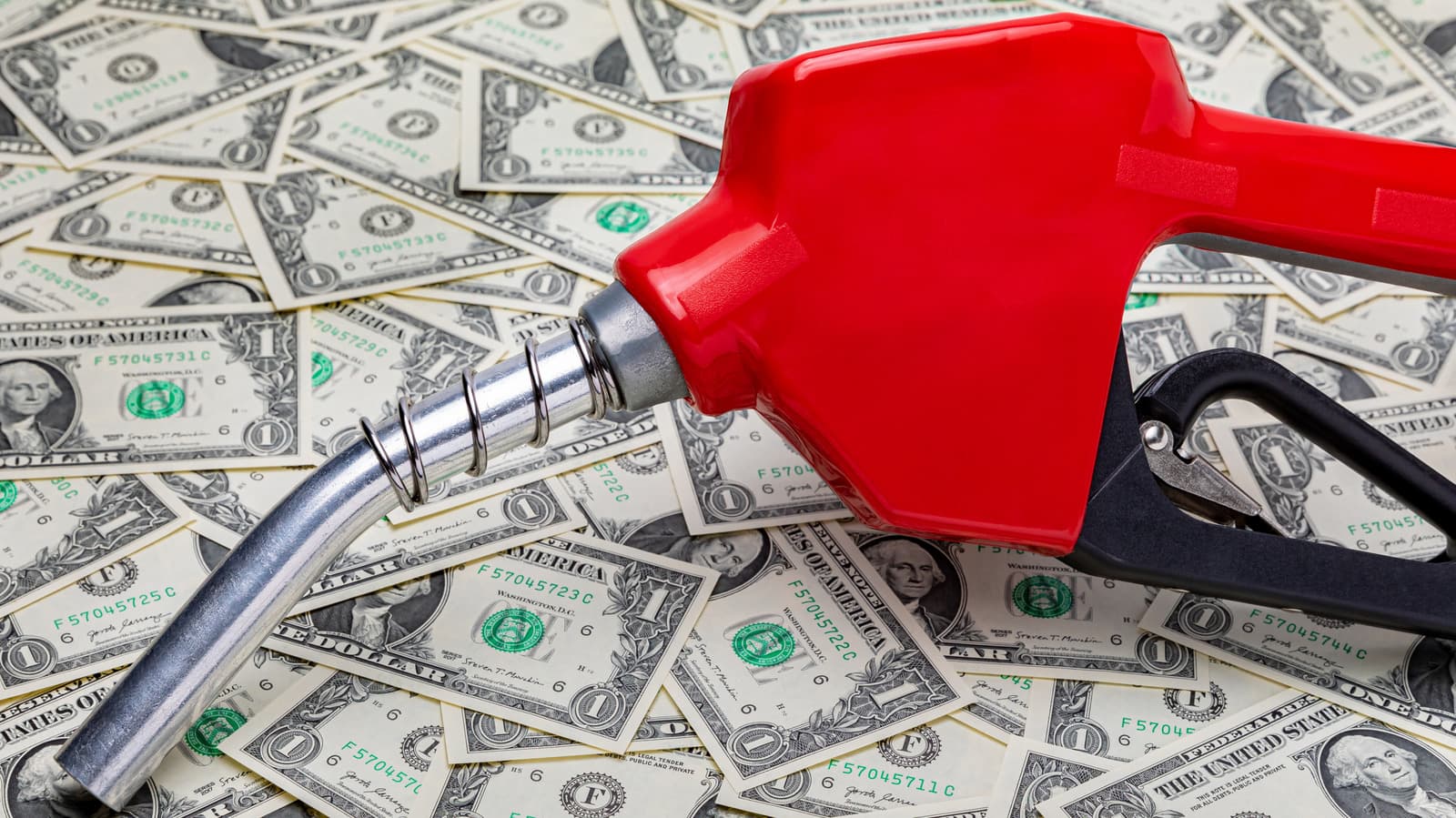
Is Switching to E85 Actually Worth It? Let's Do the Math
With gas prices continuing to pinch drivers at the pump, it's no surprise that more and more people are eyeing E85 as a money-saving alternative. After all, E85 ethanol fuel is almost always cheaper per gallon than regular unleaded gasoline — sometimes by as much as 50 cents to a dollar or more. But before you start filling up your flex-fuel vehicle with E85 and patting yourself on the back, there's a critical piece of the puzzle that most people overlook: your fuel economy drops significantly when you burn E85. So does the lower price actually translate into real savings? Let's break it all down.
What Exactly Is E85?
E85 is a blend of fuel composed of roughly 85% ethanol and 15% gasoline. It's considered an alternative fuel and is primarily produced from corn in the United States, making it a domestically sourced energy option. Because ethanol can be produced renewably and doesn't rely entirely on crude oil, it tends to cost less at the pump than conventional gasoline.
Not every car can run on E85, however. Only vehicles designated as "flex-fuel" — meaning they're equipped with engines and fuel system components designed to handle higher ethanol concentrations — can safely use E85. Regular gasoline-only vehicles should never attempt to run on E85, as it can damage fuel lines, injectors, and engine components not built to tolerate the corrosive nature of ethanol at high concentrations.
Why Does E85 Reduce Your Fuel Economy?
Here's the part of the E85 conversation that doesn't get enough airtime: ethanol contains significantly less energy per gallon than gasoline. Gasoline delivers approximately 114,000 BTUs (British Thermal Units) of energy per gallon, while ethanol only offers around 76,000 BTUs per gallon. Since E85 is 85% ethanol, a gallon of E85 provides considerably less usable energy than a gallon of regular gas.
What that means in real-world driving is that your engine has to burn more E85 to travel the same distance. Most drivers see a fuel economy reduction of somewhere between 15% and 27% when switching from regular gasoline to E85. The EPA commonly cites a figure of around 25–27% fewer miles per gallon on E85 compared to gasoline for most flex-fuel vehicles. That's a substantial drop, and it's the core reason why the pump price advantage of E85 doesn't automatically make it the cheaper option mile-for-mile.
The Real Savings Calculation: Price Per Mile, Not Price Per Gallon
To figure out whether E85 actually saves you money, you can't just compare price per gallon — you have to compare cost per mile. This is the number that truly tells you what you're spending to move your vehicle from point A to point B.
Here's how the math works. Suppose regular gasoline costs $3.50 per gallon and your flex-fuel vehicle gets 30 miles per gallon on gas. That means you're paying about 11.7 cents per mile. Now suppose E85 is priced at $2.80 per gallon — a full 70-cent discount — but your fuel economy drops to 22 miles per gallon on E85. In that case, you're paying about 12.7 cents per mile. In this scenario, E85 is actually costing you more per mile despite being cheaper at the pump.
For E85 to be the more economical choice, its price advantage over gasoline needs to exceed the fuel economy penalty it imposes. A commonly cited rule of thumb is that E85 needs to be at least 20–25% cheaper per gallon than regular gasoline just to break even on a cost-per-mile basis. Whether that threshold is met depends heavily on where you live and current local fuel prices.
When Does E85 Actually Make Financial Sense?
There are specific market conditions under which switching to E85 can genuinely save you money. These include situations where:
- E85 is priced 25% or more below the cost of regular gasoline in your area, which can happen in Midwest states like Iowa, Illinois, or Minnesota where ethanol production is concentrated and distribution costs are low.
- You drive a flex-fuel vehicle that is tuned or optimized for E85, which can partially offset the mileage penalty through better combustion efficiency at higher ethanol blends.
- Gasoline prices spike due to refinery disruptions, geopolitical events, or seasonal demand, widening the price gap between E85 and regular fuel enough to tip the math in E85's favor.
In states where E85 infrastructure is less developed or ethanol subsidies are weaker, the price gap may be too narrow to overcome the fuel economy hit, making E85 a poor financial choice regardless of its cheaper sticker price.
Beyond the Numbers: Other Factors to Consider
The financial calculation is the most important factor for most drivers, but it's not the only one. E85 has some additional characteristics worth considering. On the environmental side, ethanol burns cleaner than gasoline in certain respects and produces lower levels of some harmful tailpipe emissions. However, the full lifecycle environmental impact of corn-based ethanol — including farming, fertilizers, and processing — is a topic of ongoing debate among researchers and environmentalists.
On the performance side, ethanol actually has a higher octane rating than gasoline, which means some high-performance flex-fuel engines can produce slightly more power on E85. This is why some performance enthusiasts actually prefer E85 for track use, even if it's not cheaper in their region.
It's also worth noting that E85 availability varies widely. While the number of E85 stations has grown in recent years, it still lags far behind the ubiquitous availability of regular gasoline. Depending on where you live or travel, finding an E85 pump may require planning ahead.
The Bottom Line on E85
Switching to E85 can save you money — but only under the right conditions. The lower price per gallon is real, but so is the fuel economy penalty, and that penalty is steep enough to wipe out your savings unless E85 is priced significantly below regular gasoline in your market. The smartest approach is to calculate your cost per mile using current local fuel prices before making any decisions. If E85 is at least 20–25% cheaper per gallon than regular gas where you live, it may well be worth the switch. If the gap is smaller than that, you're likely better off sticking with conventional fuel. The pump price alone tells only half the story — the miles per dollar figure tells the whole truth.