
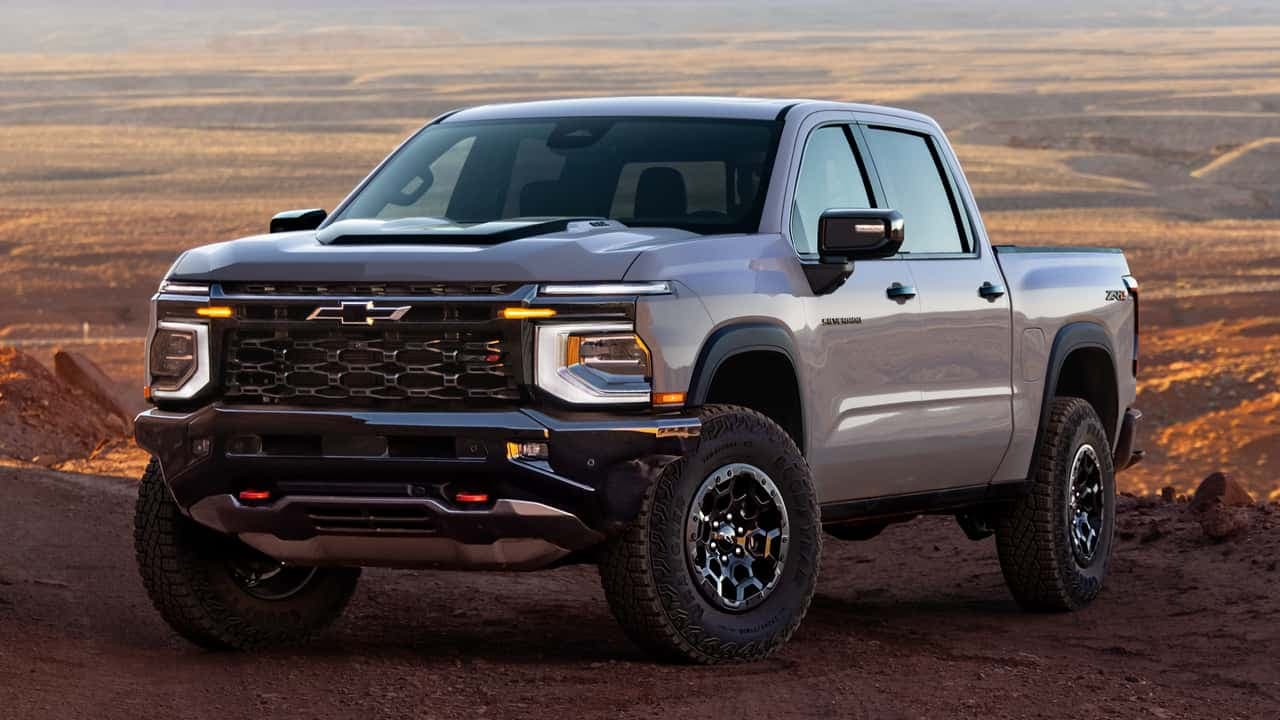
GM Acknowledges Shrinking Truck Demand as Fuel Prices Bite
General Motors, one of the largest automakers in the world and a company whose fortunes are deeply tied to the success of its full-size trucks and SUVs, is sounding the alarm. A senior GM executive has openly admitted that rising fuel prices are causing consumers to reconsider their purchase decisions, pulling them away from the large, gas-thirsty vehicles that have long served as the backbone of Detroit's profits. The timing could hardly be more awkward: this candid admission comes just as GM is preparing to roll out a brand-new V8 engine — a powerplant that, by its very nature, is synonymous with the kind of fuel consumption that today's price-conscious buyers are trying to avoid.
The tension between consumer demand signals and GM's product pipeline raises serious questions about the automaker's near-term strategy, the resilience of America's truck culture, and what the broader auto industry can expect as pump prices remain stubbornly elevated.
What the GM Executive Actually Said
The acknowledgment from within GM's executive ranks is notable precisely because automakers rarely telegraph softness in their flagship segments. Trucks and SUVs have delivered enormous profit margins for GM, Ford, and Stellantis for well over a decade. For a senior leader to openly describe demand as "shrinking" signals that the data is too significant to spin away with optimistic talking points.
The core message is straightforward: when gas prices climb, consumers begin calculating the true cost of ownership for large vehicles more carefully. Monthly fuel bills that once seemed manageable start to feel burdensome, and the psychological premium of owning a powerful, capable truck begins to erode when every trip to the gas station becomes a financial event.
The Irony of Launching a New V8 Right Now
Against this backdrop, GM's decision to press forward with a new V8 engine launch is drawing attention from industry analysts and automotive enthusiasts alike. The V8 is, culturally and mechanically, the heart of the American truck. It represents power, towing capacity, and a certain uncompromising character that a turbocharged four-cylinder or even a V6 simply cannot replicate for a significant portion of the truck-buying public.
Yet from a purely market-timing perspective, introducing a large-displacement gasoline engine when fuel costs are actively discouraging truck purchases is a complicated proposition. GM is essentially betting that its core truck buyers — loyal, brand-committed, and often willing to absorb higher operating costs — will stay the course. It is a bet grounded in years of sales data, but it is not without risk.
Who Still Buys V8 Trucks Despite High Gas Prices?
- Commercial and work-use buyers who need maximum towing and payload capacity and for whom the V8 remains a practical necessity rather than a luxury choice.
- Brand-loyal enthusiasts who have driven GM trucks for decades and view the V8 as a non-negotiable feature of the ownership experience.
- Performance-oriented consumers purchasing high-trim variants like the Silverado High Country or GMC Sierra Denali, where the V8 is part of a premium package.
- Rural and suburban buyers who regularly tow trailers, boats, or farm equipment and require the torque and durability a V8 provides.
The Broader Pressure on Truck Sales
GM's situation is not unique. The entire Detroit truck segment has faced growing headwinds over the past several years. Vehicle prices have escalated dramatically, with many popular truck configurations now carrying sticker prices north of $60,000 and premium trims approaching or exceeding $80,000. When those prices are combined with elevated interest rates and high fuel costs, the monthly total cost of ownership for a new full-size truck has become genuinely prohibitive for a large swath of middle-income buyers.
This is a structural shift, not just a temporary blip. First-time truck buyers who might have stretched their budgets a few years ago are now more likely to opt for a midsize crossover or even a smaller pickup like the Chevy Colorado or Ford Maverick. The aspirational purchase of a full-size truck is increasingly being deferred or abandoned altogether among younger, more fuel-cost-sensitive consumers.
How Electric Trucks Factor Into GM's Long-Term Response
GM has publicly committed to an electrified future, with the Chevy Silverado EV and GMC Hummer EV already on the market and additional electric truck variants in the pipeline. In theory, these vehicles represent GM's long-term answer to the fuel price problem — eliminating the gas pump equation entirely for buyers who adopt them. However, electric trucks carry their own cost barriers, with prices that often exceed their gasoline counterparts, and infrastructure concerns that continue to slow adoption outside of urban and suburban markets.
The V8 launch and the EV rollout are, in some ways, GM playing both ends of the market simultaneously — reassuring its traditional base with the familiar rumble of a large-displacement engine while positioning itself for a future it knows is coming. Whether that dual strategy holds together as economic pressures mount remains to be seen.
What This Means for Consumers and the Auto Market
For consumers, GM's acknowledgment of shrinking truck demand is actually useful information. It suggests that negotiating leverage at dealerships may be shifting back toward buyers in certain truck segments, as inventory builds and urgency to move units increases. Shoppers who have been priced out of the new truck market should watch for incentive programs and financing deals that tend to emerge when manufacturers need to stimulate demand.
For the broader auto market, the signal from GM reinforces a narrative that has been building for some time: the era of effortlessly selling expensive, fuel-intensive vehicles at full sticker price — a dynamic that defined the post-pandemic car market — is fading. Automakers will need to become more competitive on price, more creative with financing, and more transparent about the real-world operating costs of their vehicles if they want to maintain volume in an environment where every dollar matters to buyers.
The Road Ahead for GM's Truck Business
General Motors built an empire on the Silverado and Sierra nameplates, and that foundation is not going to crumble overnight. But the executive admission about shrinking demand is a meaningful data point that the company is navigating a more complex operating environment than it faced even two or three years ago. The new V8 may well find a loyal and enthusiastic audience among the buyers who have always prioritized power and capability above fuel economy. The challenge for GM will be ensuring that audience remains large enough — and financially ready enough — to sustain the kind of truck volumes the company has come to depend on.
In an industry defined by long product development cycles and billion-dollar tooling decisions made years in advance, moments like this reveal just how difficult it is to time the market perfectly. GM's new V8 was conceived and engineered during a period when truck demand seemed invincible. Today, that assumption deserves a harder look.