
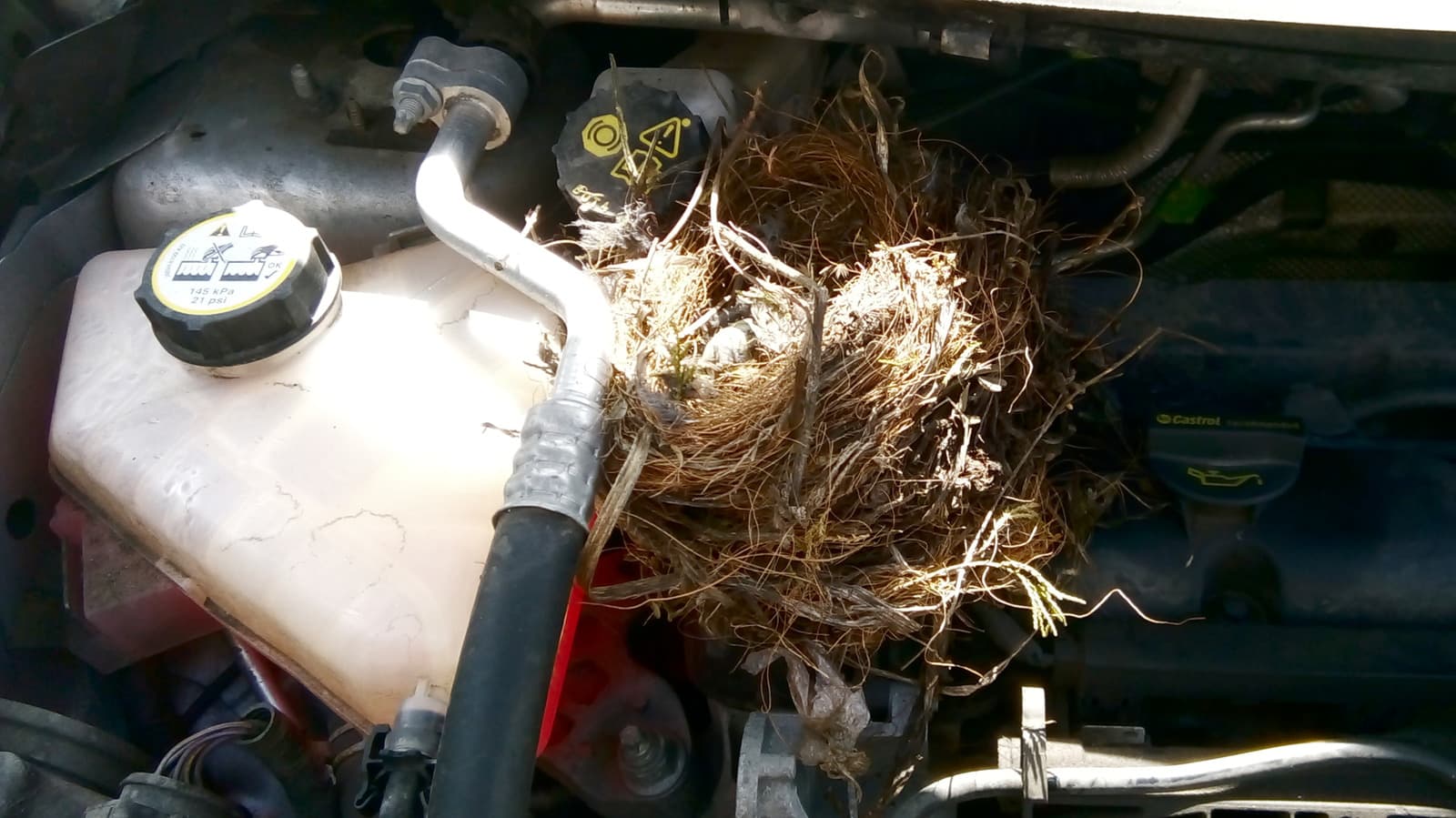
That Chirping Under Your Hood Is Not Your Imagination
You walk out to your car one morning, turn the key, and hear something unexpected — a faint chirping coming from somewhere beneath the hood. Before you dismiss it as a weird engine noise, consider the possibility that your vehicle has become a five-star hotel for a family of birds. A bird nest in your car is far more than a quirky nuisance. Left unaddressed, it can become a genuine fire hazard, cause expensive mechanical damage, and even put the birds themselves in danger. Here is everything you need to know about why this happens, what risks are involved, and how to handle it the right way.
Why Do Birds Nest In Cars?
Birds are opportunistic nesters. They look for spaces that are sheltered, warm, and protected from predators — and a car engine bay checks all of those boxes surprisingly well. Vehicles that sit parked for several days in a row are particularly attractive targets. The engine retains heat long after the car has been turned off, and the dense tangle of hoses, wiring, and structural components provides excellent anchoring points for nesting materials like twigs, leaves, grass, and feathers.
Common offenders include sparrows, starlings, robins, and wrens, all of which are known for nesting in tight, enclosed cavities. If your car is parked near trees, hedges, or open fields, your risk goes up considerably. A vehicle that rarely moves is essentially sending out an open invitation.
The Real Dangers of a Bird Nest Under Your Hood
Many drivers assume that a bird nest in the engine bay is just a minor inconvenience. In reality, the risks are serious and should not be underestimated.
Fire Hazard
This is the most significant danger. Nesting materials — dry grass, leaves, twigs, and synthetic fibers — are highly combustible. Your engine bay reaches extreme temperatures during operation, and hot components like the exhaust manifold or turbocharger can easily ignite dry nesting debris. Engine bay fires are not uncommon when nests go undetected, and they can cause total vehicle loss in a matter of minutes.
Wiring and Hose Damage
Birds do not build nests passively. They chew, tuck, and weave materials into place, and in doing so they can damage rubber hoses, plastic covers, and most critically, electrical wiring. Chewed wires can lead to shorts, blown fuses, failed sensors, and in worst cases, complete electrical system failures. Repair bills for wiring harness damage can run into the thousands of dollars.
Air Filter and Intake Blockages
Nesting materials can work their way into the air intake system, partially or fully blocking airflow to the engine. This causes rough idling, poor fuel economy, reduced performance, and can trigger check engine lights. In severe cases, debris can be drawn directly into the engine intake, causing mechanical damage.
Health Risks
Bird nests harbor mites, ticks, bacteria, and fungi. When the car's ventilation system draws in air from the engine bay, these contaminants can enter the cabin. People with allergies, asthma, or compromised immune systems are especially vulnerable. Certain bird droppings also carry pathogens like histoplasma and salmonella.
How To Safely Remove a Bird Nest From Your Car
Removing a bird nest requires care — both for your own safety and, depending on the situation, for the legal protection of wildlife. In many countries, including the United States and the United Kingdom, it is illegal to disturb or destroy an active nest containing eggs or live chicks. Always check local wildlife protection laws before proceeding.
Step 1 — Assess the Situation
Before touching anything, open the hood and carefully inspect the nest. Is it active? Look for eggs, hatchlings, or adult birds returning to the site. If the nest is active, your best option is to wait. It typically takes two to three weeks for most songbird chicks to fledge and leave the nest. Consult a local wildlife rehabilitator if you are unsure what to do.
Step 2 — Gear Up
Once the nest is confirmed to be empty and abandoned, put on disposable gloves and a dust mask before handling it. This protects you from allergens, parasites, and any pathogens that may be present in the nesting materials or droppings.
Step 3 — Remove the Nest and Clean the Area
Carefully remove all nesting material by hand and place it in a sealed plastic bag for disposal. Use a soft brush or compressed air to clear any remaining debris from tight spaces. Wipe down the surrounding area with a disinfectant-safe cloth. Inspect all wiring, hoses, and filters for visible damage before closing the hood.
Step 4 — Have Your Car Inspected
Even if everything looks fine visually, it is worth having a mechanic perform a quick inspection of the engine bay and electrical system. Hidden chew damage on wiring can cause intermittent problems that only show up later on the road.
How To Prevent Birds From Nesting In Your Car Again
Prevention is far easier than dealing with the aftermath. There are several effective strategies to keep birds from treating your engine bay as prime real estate.
- Move the car regularly. A car that moves every day is far less appealing to nesting birds. Even a short daily drive disrupts the process of nest building and signals that the space is not safe or stable.
- Use an engine bay cover or car cover. A fitted car cover reduces access points for birds looking to get under the hood. For vehicles stored for longer periods, engine bay covers provide an additional barrier.
- Use natural deterrents. Birds dislike the scent of certain materials. Placing cedar blocks, or using peppermint-based sprays around the parking area, can discourage nesting activity without harming animals.
- Install visual deterrents. Reflective tape, old CDs hung nearby, or commercially available predator decoys like owl silhouettes can deter birds from approaching your parking area.
- Park in a garage when possible. An enclosed garage is the single most effective way to keep birds away from your vehicle entirely.
Bottom Line
A bird nest in your car might seem like a charming, harmless surprise at first glance. But between fire risks, electrical damage, intake blockages, and health hazards, it is a situation that demands prompt and informed action. Stay observant, check under your hood periodically if your car sits parked for extended periods, and take preventive steps to ensure your engine bay stays bird-free. A few minutes of awareness now can save you a very expensive repair bill — or worse — down the road.