
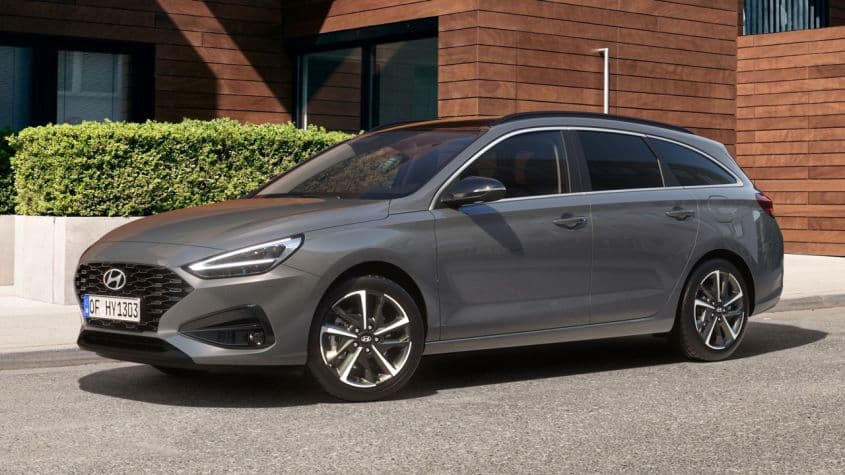
Hyundai Confirms the Death of Its Estate Car Lineup
The estate car has long been a staple of European motoring culture — a practical, spacious, and stylish alternative to the ever-growing SUV. But one by one, manufacturers are pulling the plug on their wagon offerings, and Hyundai has just delivered what many are calling another definitive nail in the estate car coffin. The South Korean automaker has confirmed that its estate car is dead, with absolutely no plans to revive the wagon format in any future product cycle. For fans of the traditional load-lugger, this is yet another devastating blow to a body style that is rapidly disappearing from showroom floors.
What Did Hyundai's Estate Car Lineup Look Like?
Hyundai's most notable estate offering in recent years was the i30 Tourer, a well-regarded compact wagon that competed in a segment alongside the Volkswagen Golf Estate, the Ford Focus Estate, and the SEAT Leon ST. The i30 Tourer was praised by automotive journalists and everyday drivers alike for its generous boot space, comfortable ride, and competitive pricing. It struck a balance that many families found genuinely appealing — the practicality of an estate without the elevated ride height, added weight, and higher running costs of an SUV.
Yet despite its critical reception, sales figures told a different story. Like most estate cars in the modern market, the i30 Tourer struggled to compete with the dominant crossover and SUV segments, which have consumed an ever-larger share of new car registrations across Europe over the past decade. Consumer preferences shifted, and Hyundai's sales data ultimately reflected that shift in unmistakable terms.
Why Are Estate Cars Disappearing From the Market?
The decline of the estate car is not a Hyundai-specific problem — it is an industry-wide trend driven by several powerful forces reshaping the automotive landscape.
- The SUV and crossover boom: Buyers who once gravitated toward estate cars for their practicality and space have largely migrated to SUVs and crossovers. These vehicles offer similar or greater cargo capacity, along with higher seating positions that many drivers prefer, and a perception of versatility and safety that estate cars struggle to match in consumer minds.
- Electrification priorities: As car manufacturers redirect enormous financial resources toward developing electric vehicle platforms, lineups are being ruthlessly rationalized. Estate cars, which typically account for a small fraction of total sales, are among the first casualties when brands decide which body styles are worth the investment of electrification.
- Changing family dynamics: The traditional family estate buyer — someone who needed to transport children, dogs, bicycles, and camping gear on a weekly basis — is increasingly choosing a seven-seat SUV instead, finding that it checks all the same boxes while also functioning as a status symbol in ways that a wagon historically has not.
- Profit margins: Manufacturers generally earn higher margins on SUVs than on estate cars. When market share is shrinking and profit-per-unit is lower, the business case for continuing to develop and produce an estate variant becomes very difficult to justify to shareholders and boardrooms.
Which Other Brands Have Already Abandoned the Estate?
Hyundai is far from alone in walking away from the estate car segment. Ford discontinued the Focus Estate in many markets. Vauxhall axed the Astra Sports Tourer. Renault dropped the Mégane Estate. Honda ended production of the Civic Tourer. The list of fallen wagons reads like an automotive obituary column, and it grows longer with each passing model cycle.
Even premium brands, which once considered the estate a cornerstone of their lineup, are reconsidering their positions. While Audi, BMW, and Mercedes-Benz continue to produce estate variants of their core models for now, there is increasing speculation within the industry about how long that commitment will last as electric vehicle architecture makes it harder to justify low-volume body style variants.
Is There Any Future for the Estate Car?
Despite the gloomy picture, a small number of manufacturers continue to champion the estate car, and there remains a loyal — if shrinking — customer base that passionately prefers wagons over SUVs. Brands like Skoda, with its long-celebrated Octavia Estate and Superb Estate, continue to demonstrate that there is still a viable market for buyers who prioritize driving dynamics, efficiency, and a lower centre of gravity over the raised ride height of an SUV.
Volvo, too, continues to invest in its estate lineup, recognizing that the wagon is deeply embedded in Scandinavian automotive identity and still commands strong loyalty among its core customer base in Europe. And in the premium electric space, Porsche's Taycan Sport Turismo and the Audi RS6 Avant have proven that high-performance estates can still generate genuine excitement — and real sales numbers — when executed at the top end of the market.
However, these examples are becoming increasingly exceptional rather than representative. The broader trajectory is unmistakably clear: the estate car is in structural decline, and every announcement like Hyundai's accelerates that trajectory further.
What Does This Mean for Used Estate Car Values?
There is an interesting silver lining for those who already own or are considering buying an estate car. As production volumes fall and new models become rarer, used estate cars — particularly well-maintained examples from recently discontinued nameplates — may hold or even increase their residual values. Scarcity has a way of creating desirability, and in collector and enthusiast circles, beloved wagons like the Hyundai i30 Tourer could develop a loyal following in the second-hand market.
The Verdict: A Shrinking Segment With Passionate Defenders
Hyundai's decision to end its estate car production is a rational, commercially driven choice that is entirely consistent with where the global automotive market is heading. But it is also a genuine loss for drivers who value low-loading heights, exceptional boot space, sharp handling, and the understated elegance that a well-designed wagon delivers. The estate car is not dead yet — but with Hyundai's exit, its future looks bleaker than ever before.