
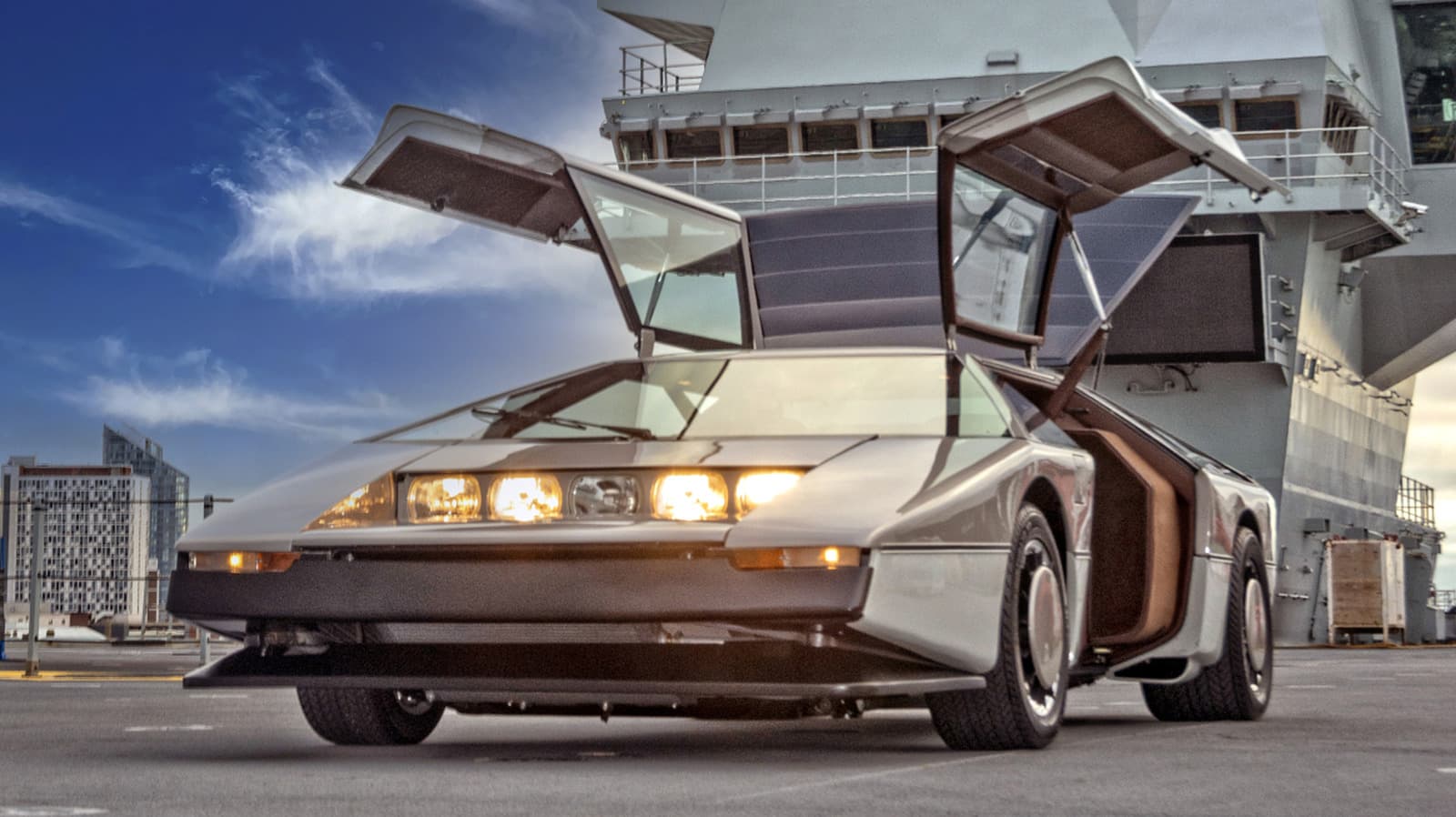
When Legendary Prototypes Come Back from the Dead
In the world of automotive history, few stories are more heartbreaking than that of the lost prototype. These one-of-a-kind machines — hand-built, painstakingly engineered, and loaded with historical significance — were never meant for ordinary roads. They were meant to push boundaries, spark revolutions, and sometimes, simply prove that a wild idea could become rolling reality. And yet, for decades, many of them simply vanished.
For car enthusiasts, the destruction or disappearance of a prototype is a genuine tragedy. Unlike production cars, prototypes often exist in a single copy. When they're gone, they're gone forever — or so the story usually goes. The automotive industry, particularly in the United States, has a long and uncomfortable history of crushing, burning, or otherwise disposing of prototype vehicles once their purpose was served. Legal liability concerns, corporate secrecy, and simple indifference have all played a role in erasing irreplaceable pieces of automotive heritage.
But every so often, the story takes a different turn. A barn gets cleaned out. A private collection surfaces. An old warehouse yields its secrets. And suddenly, a car that the world had given up on reappears — dusty, perhaps neglected, but alive. These are the stories that remind us why preserving automotive history matters so deeply.
Why Prototypes Disappear in the First Place
To appreciate how remarkable it is when a lost prototype turns up, it helps to understand just how precarious their existence tends to be. Most automakers treat prototype vehicles as tools rather than artifacts. Once a design study has done its job — influenced a production model, tested a new technology, or wowed an audience at an auto show — the corporate instinct is often to move on and eliminate the evidence.
This is especially true in the United States, where liability concerns have historically driven manufacturers to destroy show cars before they can end up on public roads without meeting federal safety standards. The fear that a prototype could be driven, crash, and result in a lawsuit has sent countless irreplaceable vehicles to the crusher over the decades.
In other cases, prototypes simply slipped through the cracks. They were loaned out, sold off quietly, stored in a forgotten corner of a facility, or purchased by employees who had a personal attachment to a particular project. Years passed. Companies merged, collapsed, or moved. Records were lost. And the cars sat quietly in garages and storage units, their identities unknown or unacknowledged.
The Thrill of Rediscovery
When a lost prototype does resurface, it can send shockwaves through the collector car community. The discovery raises immediate questions about provenance, authenticity, and condition. In many cases, these found vehicles require extensive research to verify their identity — chassis numbers, build records, photographs, and the recollections of engineers and designers who worked on them long ago all play a role.
The condition of a rediscovered prototype varies enormously. Some have been lovingly maintained by private owners who understood exactly what they had. Others emerge in various states of deterioration, having spent years exposed to the elements or subjected to amateur modifications. Restoring a prototype presents unique challenges, since by definition there are no replacement parts made specifically for it, and original documentation is often incomplete or nonexistent.
Despite these challenges, the rediscovery of a lost prototype is almost always cause for celebration. These vehicles represent a window into the decision-making processes of automakers at a particular moment in time. They show us roads not taken, technologies that almost made it to production, and design languages that were ultimately shelved in favor of something safer or more commercially viable.
What Lost and Found Prototypes Tell Us About Automotive History
Every prototype that survives — whether it was quietly preserved from the start or dramatically rediscovered after decades — adds to our collective understanding of how the cars we know and love came to be. The design choices made on a show car from the 1950s or 1960s didn't happen in a vacuum. They were responses to cultural trends, technological possibilities, competitive pressures, and the personal visions of the engineers and stylists involved.
When we can study a surviving prototype in person, we can see details that photographs and documents can never fully capture — the quality of the craftsmanship, the feel of the materials, the ways in which the production version ultimately differed from the original vision. These machines are primary sources in the truest sense.
The Importance of Preservation
The nine prototype cars highlighted in this story are remarkable survivors. Their existence today is due to some combination of luck, foresight, and the passion of the individuals who recognized their value and took steps to protect them. They serve as a powerful reminder of what can be saved when people care enough to try.
For the broader automotive community, their stories make a compelling case for more systematic preservation efforts. Museums, private collectors, and automakers themselves all have roles to play in ensuring that the engineering and design heritage represented by surviving prototypes is documented, protected, and made accessible for future generations.
- Prototype vehicles are often the only surviving evidence of significant engineering and design milestones.
- Many were nearly destroyed due to liability concerns or corporate indifference, making survivors all the more precious.
- Rediscovered prototypes require careful research and often complex restoration to return them to their original state.
- Each surviving prototype offers irreplaceable insight into the creative and technical decisions that shaped automotive history.
- Preservation efforts by museums, collectors, and manufacturers are essential to keeping these stories alive.
The next time a long-lost prototype emerges from a dusty garage or forgotten warehouse, the automotive world will undoubtedly hold its breath — and then exhale with relief. Because every single one of these machines that survives is a victory for history, for craftsmanship, and for the enduring human passion for the automobile.