
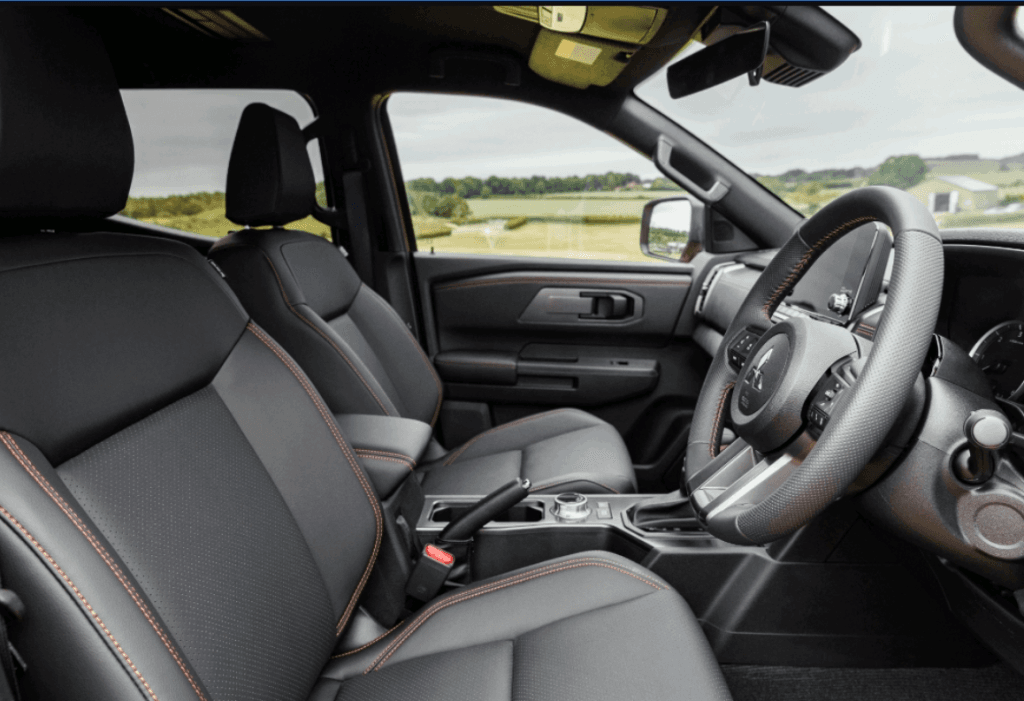
Mitsubishi Is Back: The Brand Returns to the UK Market
After a three-year absence, Mitsubishi has made its long-anticipated return to the United Kingdom. The Japanese automaker officially withdrew from the UK market in 2021 during a period of significant global restructuring, leaving loyal fans and fleet buyers without access to new models. Now, with market conditions shifting in its favour, Mitsubishi is back — and it means business. The brand's UK return centres on two flagship models: the new Mitsubishi L200 Series 7 pickup truck and the upgraded Mitsubishi Outlander plug-in hybrid electric vehicle (PHEV), both set to arrive in the UK this summer.
UK sales will be managed by International Motors, a multi-brand specialist distributor with the expertise and infrastructure to support a strategic, measured reintroduction of the Mitsubishi name on British roads. Far from a flashy relaunch, the company is describing this return as a natural continuation — a logical next step rather than a dramatic reset.
Why Now? The Case for Mitsubishi's UK Return
Speaking at the official launch event, Toby Marshall, Director at International Motors, was clear that this is not merely a relaunch for the sake of headlines. "This isn't a relaunch or a restart. This is constituency; it's logical to be doing this now. We believe that the market conditions are perfect right now for us to be introducing these two new models in the UK market," he stated.
And looking at the broader landscape, it is hard to argue with that assessment. The UK pickup truck segment continues to grow, and consumer appetite for plug-in hybrid vehicles has never been stronger. With government incentives supporting low-emission vehicles and increasing pressure on drivers to reduce their carbon footprint, the timing for the Outlander PHEV in particular feels strategically sound. Mitsubishi is not scrambling to catch up — it is stepping back in with purpose and precision.
Introducing the Mitsubishi Outlander PHEV: Smarter, Greener, and More Capable
The new Mitsubishi Outlander PHEV is one of the most eagerly awaited returns in the plug-in hybrid SUV segment. Building on the strong foundations of its predecessor — which was once the UK's best-selling PHEV — this new generation brings meaningful technological upgrades that address both performance and efficiency.
Super All-Wheel Control (S-AWC)
At the heart of the new Outlander PHEV's dynamic capability is Mitsubishi's proprietary Super All-Wheel Control system, known as S-AWC. This advanced vehicle dynamics technology combines yaw control with torque vectoring, delivering a more responsive and precise driving experience on everyday roads. More importantly, it also provides substantially improved grip and stability in low-traction conditions — making the Outlander PHEV a genuinely capable all-season, all-terrain vehicle rather than simply a green-badged family SUV.
Three Intelligent Drive Modes
One of the most practical highlights of the new Outlander PHEV is its three automatic drive modes, each offered as standard across the range. Drivers can choose between:
- EV Mode — runs entirely on electric power, ideal for urban commuting and short journeys where zero-emission driving is a priority.
- Series Hybrid Mode — the petrol engine acts as a generator to charge the battery, which in turn drives the electric motors, optimising efficiency on longer routes.
- Parallel Hybrid Mode — both the combustion engine and electric motors work together directly, delivering maximum power output for more demanding driving situations such as motorway cruising or overtaking.
This flexibility allows drivers to adapt the vehicle's behaviour to suit specific driving conditions, making it one of the more intelligently calibrated PHEVs currently available in the UK market. Whether navigating city streets or heading out on a long motorway run, the Outlander PHEV can be tuned to deliver the best possible balance of performance and economy.
Introducing the Mitsubishi L200 Series 7: The Pickup Reinvented
Alongside the Outlander PHEV, Mitsubishi is bringing back one of the most respected names in the UK pickup truck market: the L200. The new L200 Series 7 represents the seventh generation of a model that has built an enviable reputation for toughness, reliability, and off-road capability over several decades.
Titan and Barbarian Specifications
For the UK market specifically, the new L200 Series 7 will be available in two distinct specifications: Titan and Barbarian. Both variants carry forward Mitsubishi's well-regarded four-wheel-drive capability, ensuring the L200 remains a credible workhorse for both commercial users and adventure-oriented private buyers alike.
Shift-on-the-Fly Four-Wheel Drive
A standout feature of both L200 configurations is Mitsubishi's 'shift-on-the-fly' technology, which allows the driver to switch seamlessly between two-wheel drive and four-wheel drive while the vehicle is in motion. This eliminates the need to stop and manually engage four-wheel drive — a significant practical advantage when road conditions change unexpectedly. Whether transitioning from a dry motorway to a muddy track or encountering wet surfaces mid-journey, the L200 Series 7 adapts quickly and confidently.
International Motors: The Distributor Behind the Return
The decision to partner with International Motors is a telling one. As a multi-brand specialist distributor, International Motors brings both operational scale and genuine market knowledge to the Mitsubishi reintroduction. With dedicated UK heads of sales and PR already in place — including Alex Sheward as Head of Sales and Brian Wheeler as PR Manager — the infrastructure for a credible, sustained market presence is already established.
This is not a tentative dipping of toes back into the UK market. It is a structured, commercially grounded approach designed to rebuild Mitsubishi's presence steadily and sustainably over the coming years.
What This Means for UK Buyers
For consumers, the return of Mitsubishi to UK showrooms represents a genuinely welcome addition to the marketplace. The L200 Series 7 slots into a competitive pickup segment alongside the likes of the Ford Ranger and Toyota Hilux, but brings Mitsubishi's specific strengths — particularly in four-wheel-drive engineering and durability — back to the conversation. The Outlander PHEV, meanwhile, re-enters a PHEV SUV segment that has matured significantly since it first helped define the category, and arrives with the technology needed to compete with newer entrants.
With both models arriving in the UK this summer, prospective buyers and fleet managers should begin their research now. Mitsubishi's return may have been three years in the making, but on the strength of these two models, it looks very much worth the wait.