
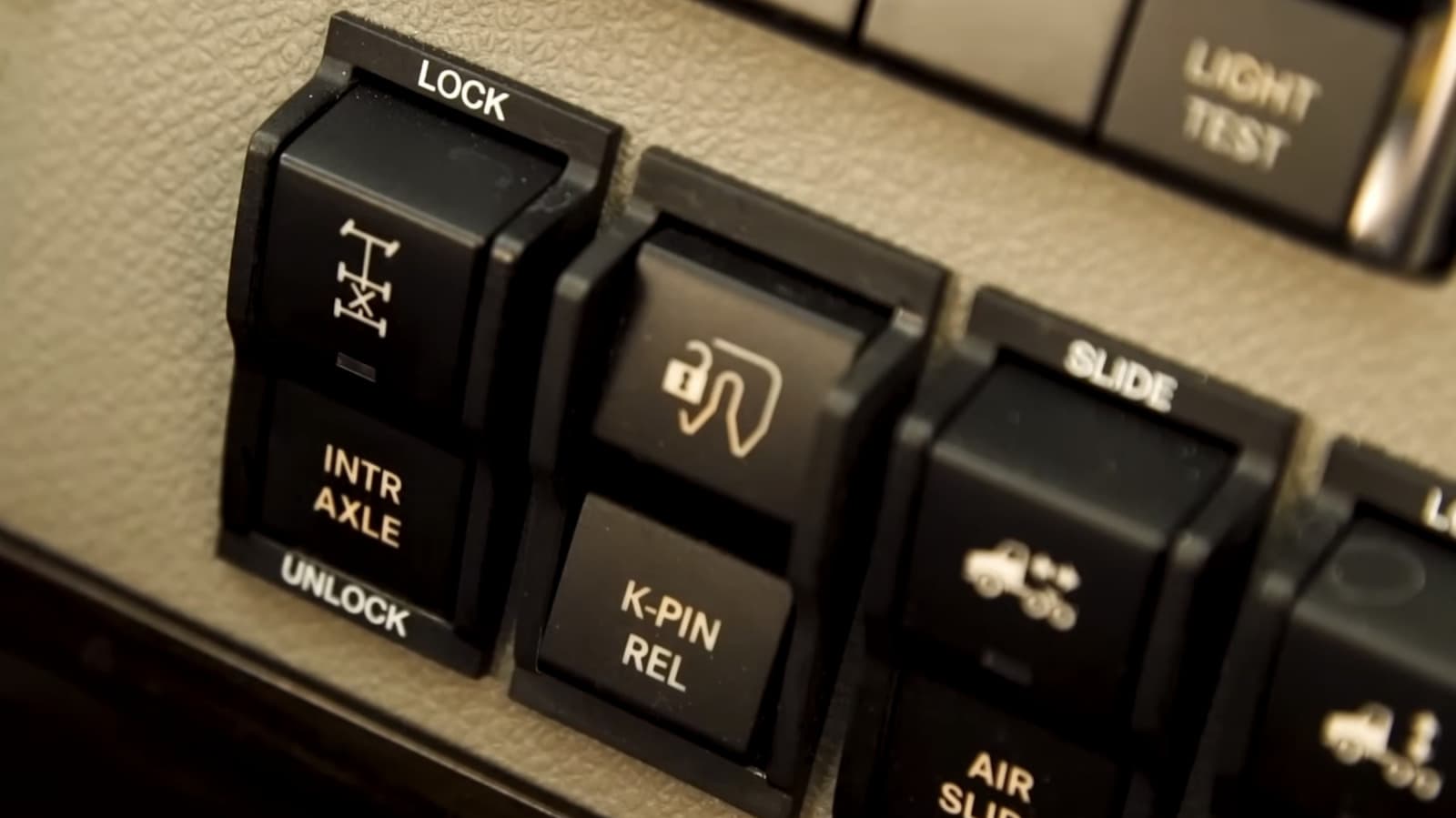
What Is a Power Divider in a Semi Truck?
If you've ever climbed into the cab of a modern semi truck, you've probably noticed a collection of switches, buttons, and toggles that would look right at home in a commercial aircraft. Among these controls, one of the most functionally critical — and most misunderstood — is the power divider switch. For experienced truck drivers, it's second nature. For everyone else, it raises an obvious question: what exactly does it do, and why does it matter so much?
At its core, a power divider is a mechanical device that manages how engine power is distributed between the two rear drive axles on a tandem-axle semi truck. Unlike a standard passenger vehicle that typically has just one driven rear axle, most commercial semi trucks use a tandem rear axle setup — meaning two drive axles positioned close together at the back of the tractor. The power divider sits between these two axles and controls whether they operate independently of each other or are locked together to work as a unified unit.
Understanding the Inter-Axle Differential
To fully appreciate what a power divider does, it helps to understand differentials in general. A differential is a mechanical system that allows two wheels or axles to rotate at different speeds while still receiving power from the engine. This is essential during turns, for example, because the outside wheel travels a greater distance than the inside wheel and therefore needs to spin faster.
In a tandem-axle semi truck, a similar principle applies between the two rear axles. When the truck is traveling in a straight line on a smooth, dry surface, both axles rotate at essentially the same speed. However, during turns, over uneven terrain, or on roads with slight variations in elevation, the two axles naturally want to turn at slightly different speeds. The inter-axle differential — which is the technical name for the power divider mechanism — allows this to happen without binding or damaging the drivetrain.
The power divider switch in the cab gives the driver control over whether this inter-axle differential is open (unlocked) or locked. Each state has its own appropriate conditions and consequences, and using them correctly is a key part of professional truck driving.
When the Power Divider Is Unlocked (Open)
Under normal driving conditions on paved, dry roads, the power divider should be left in the unlocked or open position. In this state, the inter-axle differential operates freely, allowing each rear axle to rotate at its own speed as needed. This reduces mechanical stress on the drivetrain, minimizes tire wear, and allows the truck to handle turns and road irregularities smoothly.
Driving with the power divider unlocked is the default mode for highway driving, city driving, and any situation where both drive axles have solid, consistent traction. It places less strain on the axle shafts, U-joints, and differential components, which translates directly into lower maintenance costs and longer component life over the long haul.
When to Engage the Power Divider Lock
The power divider lock — sometimes labeled as the inter-axle differential lock or simply the "diff lock" — comes into play when traction conditions become difficult. This is where the switch earns its reputation as one of the most important controls in a semi truck cab.
When the power divider is locked, it forces both rear drive axles to rotate together at the same speed, effectively eliminating any speed difference between them. This means that if one axle begins to lose traction and spin freely, engine torque is still transferred to the other axle, which may still have grip. The result is significantly improved traction in challenging conditions.
Drivers should engage the power divider lock in situations such as:
- Driving on wet, icy, or snow-covered roads where slip is likely
- Navigating unpaved surfaces, gravel roads, or construction zones
- Pulling out of a loading dock or staging area with a heavy load
- Climbing steep grades where axle slip could cause the truck to lose momentum
- Any low-speed maneuver where one axle might encounter reduced traction
How to Operate the Power Divider Switch Safely
Engaging and disengaging the power divider requires a little technique and timing to do it correctly and safely. Most modern trucks allow the driver to engage the power divider lock while the vehicle is in motion, but there are important guidelines to follow.
To engage the lock, the driver should ease off the throttle momentarily to reduce torque load on the drivetrain, then flip or push the power divider switch to the locked position. The momentary torque reduction allows the internal locking mechanism to engage cleanly without grinding or forcing the components. Some trucks will display a dashboard indicator light to confirm that the lock has engaged.
To disengage the lock, the same principle applies — briefly lifting off the throttle allows the internal components to equalize and release smoothly. Attempting to disengage the lock under heavy load or full throttle can cause the mechanism to hang or release abruptly, potentially causing a loss of control.
Critically, drivers should never use the power divider lock on dry pavement at highway speeds. When both axles are forced to rotate at the same speed on a surface with high traction, it creates axle windup — a buildup of torsional stress in the drivetrain that can damage U-joints, axle shafts, and differential housings. It can also cause handling problems, as the locked axles resist the natural variation in wheel speed required during turns.
Power Divider vs. Wheel-End Differential Locks
It's worth noting that the power divider is separate from wheel-end differential locks, which are another common feature on heavy trucks. While the power divider manages power distribution between the two rear axles, wheel-end differential locks control power distribution between the left and right wheels on a single axle. Many trucks are equipped with both systems, and in severe off-road or low-traction situations, a driver might engage both for maximum traction.
Understanding the distinction between these systems helps drivers choose the right tool for the conditions they're facing, rather than reaching for every available lock and potentially causing more harm than good.
Why This Knowledge Matters Beyond the Cab
For professional truck drivers, understanding the power divider is part of the foundation of safe, efficient vehicle operation. Misusing it — whether by leaving it locked on dry pavement or failing to engage it when needed — can lead to costly mechanical failures, reduced tire life, or dangerous loss of traction in the middle of a challenging haul.
For anyone else curious about commercial trucking, the power divider is a perfect example of the engineering sophistication hidden inside these massive vehicles. What looks like a simple switch on a dashboard panel is actually the driver's interface with a complex mechanical system designed to balance power, traction, and drivetrain longevity across dozens of different road conditions. It's a small control with a very big job — and knowing how to use it correctly is what separates a knowledgeable professional driver from someone just along for the ride.