
A New Hypercar Startup Is Challenging Everything You Know About Driving Position
For over a century, the fundamental relationship between a human body and a car has remained largely unchanged. You sit upright, feet forward, hands on a wheel in front of you. It's so ingrained in automotive culture that almost no one thinks to question it. But a bold new hypercar startup called Sanrivatti is doing exactly that — and the concept it's proposing might just change the performance car world forever.
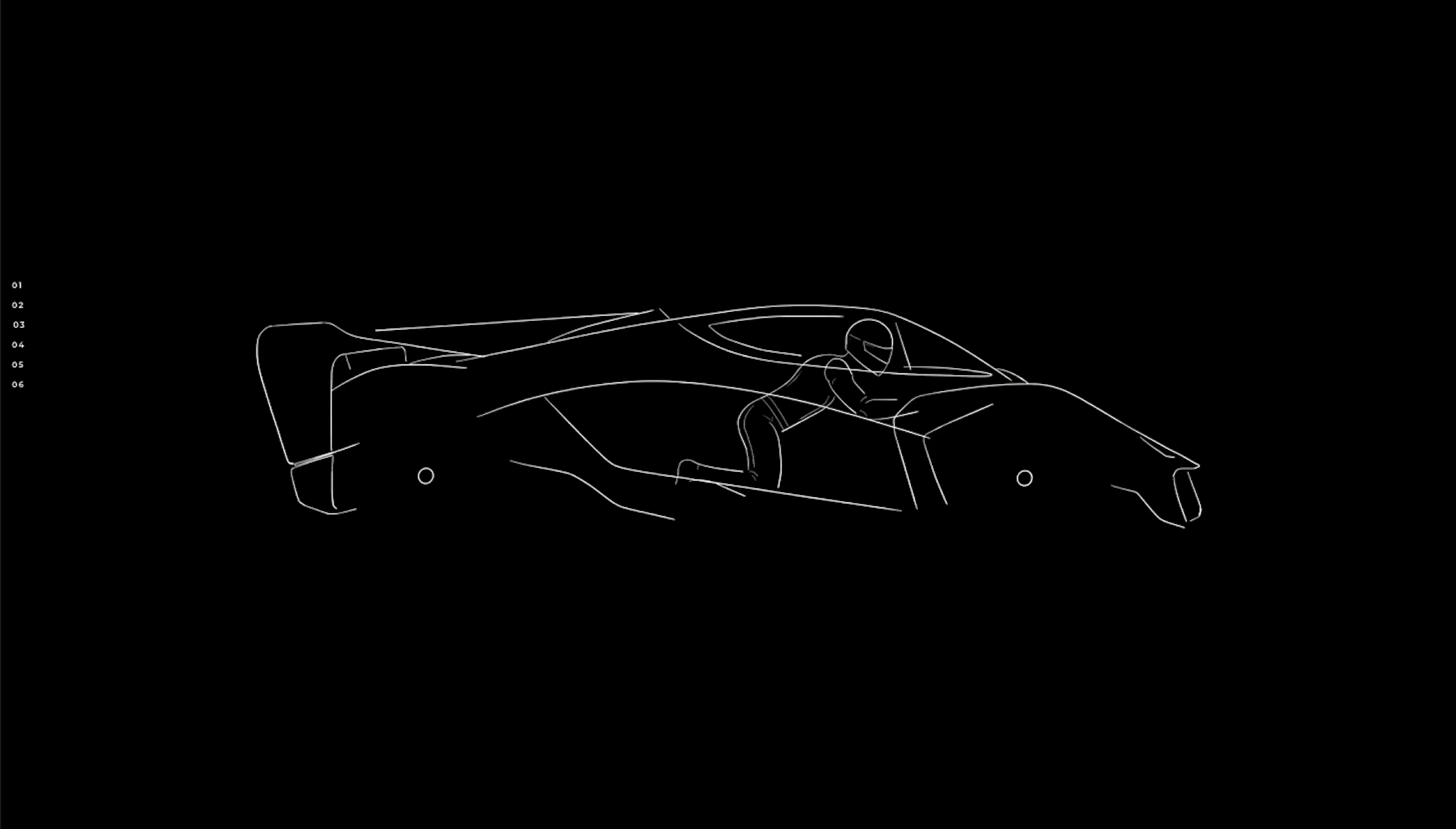
Sanrivatti is introducing what it calls the Apex Position, a radical rethinking of how a driver interacts with a mid-engined supercar. Drawing inspiration from the world of motorcycles, the Apex Position blends the visceral, connected feel of two-wheeled riding with the precision and protection of four-wheeled driving. The result, according to Sanrivatti, is a driving experience unlike anything currently available on the market.
What Exactly Is the Apex Position?
The Apex Position is best understood as a hybrid between a motorcycle riding stance and a traditional driving posture. Rather than sitting back in a conventional bucket seat, the driver leans forward and inward, adopting a more aggressive, body-forward orientation that places them closer to the car's center of gravity. Think of the way a MotoGP rider tucks into a corner — purposeful, aerodynamically conscious, and deeply connected to the machine beneath them.
In practice, this means the driver isn't simply steering a car from a comfortable, somewhat detached position. Instead, they are physically integrated into the performance equation. Weight distribution, body angle, and even the driver's center of mass become active contributors to how the vehicle handles at the limit. It's an approach that supercar purists have long dreamed about, and one that the motorcycle world has refined for decades.
Sanrivatti believes this concept is especially well-suited to a mid-engined platform, where the engine sits behind the driver and ahead of the rear axle — the same layout used by legends like the Ferrari 458, McLaren 720S, and Lamborghini Huracán. A mid-engined car is already optimized for balance and dynamic precision. Pairing that architecture with a driver who is physically engaged in the experience takes that philosophy to its logical extreme.
Why Motorcycle-Inspired Driving Makes Sense for Supercars
Motorcycles have long been regarded as the purest form of motorized transport. There is no separation between rider and machine — every lean, every throttle input, every braking event is felt directly through the body. That intimacy creates a feedback loop that no conventional car, no matter how technically advanced, has fully replicated.
Sanrivatti's core argument is that this sensory gap doesn't have to exist. With careful engineering of the cockpit, control layout, and ergonomic geometry, a four-wheeled vehicle can deliver a comparable level of driver immersion. The Apex Position is their answer to bridging that divide.
- Enhanced feedback: A more forward-leaning posture increases the driver's sensitivity to lateral G-forces, braking loads, and surface texture through the chassis.
- Improved aerodynamic integration: A lower, more tucked driver position reduces the overall frontal area of the cockpit, benefiting high-speed aerodynamic efficiency.
- Psychological engagement: Adopting a riding-style posture activates a different mental mode — one associated with focus, alertness, and heightened situational awareness.
- Center of gravity benefits: Positioning the driver's mass lower and more centrally contributes to the overall balance of a mid-engined platform.
Sanrivatti's Place in the Growing Hypercar Landscape
The timing of Sanrivatti's emergence is worth noting. The hypercar segment has never been more competitive or more innovative. Established names like Bugatti, Koenigsegg, and Pagani continue to push the boundaries of speed and craftsmanship, while newer entrants like Rimac, McMurtry, and Czinger are introducing radical thinking around electrification, manufacturing, and driver interface. Sanrivatti enters this arena not by chasing raw horsepower records, but by questioning something even more fundamental: the human element itself.
This approach is refreshingly different. While much of the industry's conversation centers on power outputs, lap times, and battery ranges, Sanrivatti is asking a quieter but equally profound question — what does it actually feel like to be inside a supercar, and can that feeling be made more honest, more raw, and more meaningful?
The Challenges of Reinventing the Cockpit
Of course, rethinking a driving position that has been standard for generations is not without its challenges. Safety regulations, crash structure requirements, and occupant protection standards are all built around conventional seating geometry. Convincing regulatory bodies that an alternative posture can meet or exceed existing safety benchmarks will require significant engineering investment and real-world testing data.
Comfort and accessibility also come into play. A motorcycle-inspired position may feel exhilarating on a closed circuit, but longer journeys or drivers with different physical profiles will need to be accounted for. Sanrivatti will need to demonstrate that the Apex Position is not merely a concept showpiece, but a genuinely livable and inclusive design for real-world use.
A Vision Worth Watching
What Sanrivatti represents — regardless of whether the Apex Position becomes an industry standard or remains a niche curiosity — is the kind of first-principles thinking the automotive world desperately needs more of. Rather than iterating on existing templates, the startup is willing to ask uncomfortable questions and propose genuinely unconventional answers.
The mid-engined supercar has been one of automotive engineering's greatest achievements. If Sanrivatti can successfully marry that platform with a driving position that finally closes the gap between car and motorcycle, the result could be something truly extraordinary. Performance car enthusiasts, designers, and engineers alike should be paying close attention to what this hypercar startup does next.