
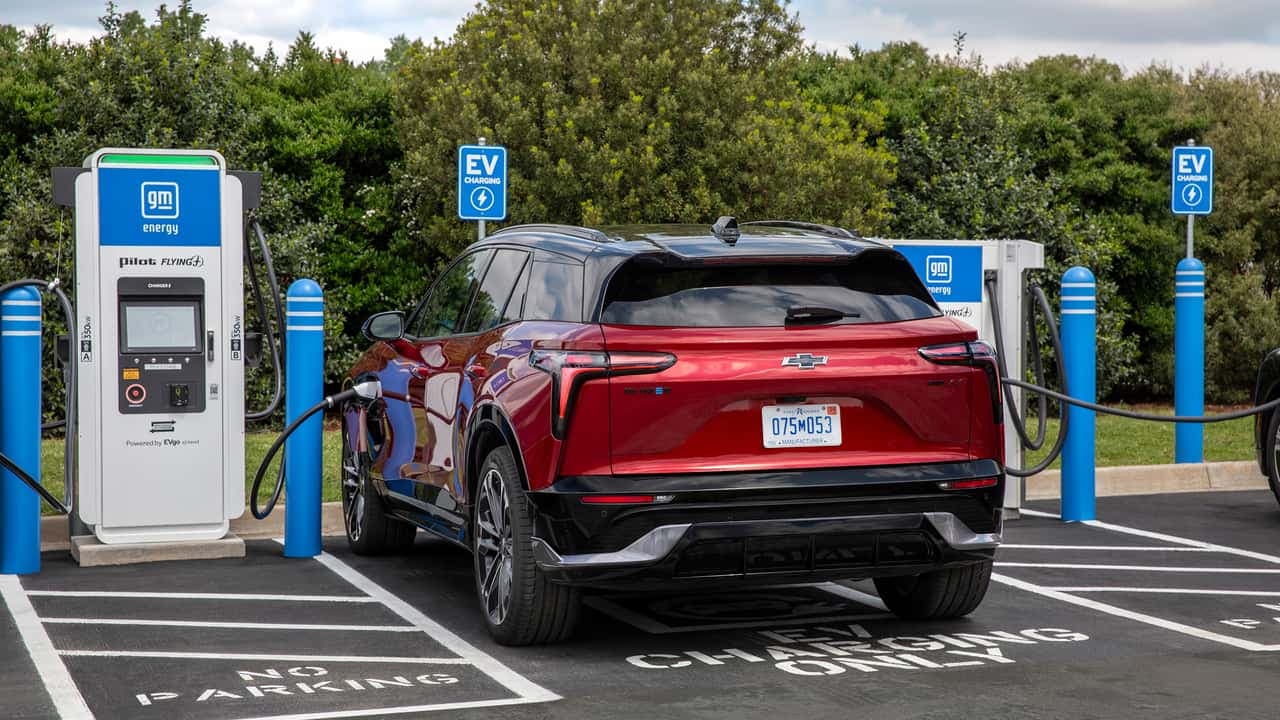
America's EV Charging Network Just Crossed a Historic Threshold
The United States has officially crossed a milestone that seemed ambitious just a few years ago: more than 250,000 electric vehicle charging hookups are now active across the country, spanning Level 1, Level 2, and DC fast charging infrastructure. For anyone who has watched the EV industry grow from a niche curiosity into a mainstream movement, this number tells a powerful story about where America's energy future is headed — and how quickly the road beneath our wheels is changing.
This achievement is more than a round number to celebrate. It represents a fundamental shift in the way Americans think about fueling their vehicles, planning their trips, and investing in clean transportation. It signals that the so-called "chicken and egg" problem — where consumers hesitated to buy EVs without sufficient chargers, and companies hesitated to build chargers without sufficient EV owners — is finally beginning to resolve itself in favor of both.
Understanding the Three Tiers of EV Charging
To appreciate the scale of what 250,000 hookups actually means, it helps to understand how EV charging infrastructure is organized. Not all chargers are created equal, and each tier serves a distinct purpose in the broader ecosystem.
Level 1 Charging: The Slow and Steady Option
Level 1 chargers operate on a standard 120-volt household outlet — the same kind you use to plug in a lamp or a phone charger. They are the most accessible form of EV charging, requiring no special installation, but they are also the slowest, typically adding only three to five miles of range per hour. For drivers who commute short distances and park their vehicles overnight, Level 1 charging is often entirely sufficient. These chargers are commonly found in residential settings and some workplace parking facilities.
Level 2 Charging: The Everyday Workhorse
Level 2 chargers run on a 240-volt circuit, the same type used by large home appliances like dryers and ovens. They can add anywhere from 10 to 60 miles of range per hour, depending on the vehicle and the charger's power output. This makes them the backbone of public charging infrastructure. You'll find Level 2 chargers at shopping centers, hotels, parking garages, libraries, and workplaces across the country. They strike the sweet spot between cost-effectiveness and charging speed, making them the most widely deployed category in the national network.
DC Fast Chargers: Powering Long-Distance Travel
DC fast chargers, also known as Level 3 chargers, are the heavy hitters. Using direct current rather than alternating current, they can deliver 80% charge to many EVs in as little as 20 to 45 minutes. These are the chargers you find along major highways, at travel plazas, and in dedicated EV charging hubs. While they are more expensive to install and maintain, they are essential for enabling long-distance travel and eliminating range anxiety — one of the most frequently cited concerns among prospective EV buyers.
Why 250,000 Hookups Is a Real Turning Point
Numbers alone don't tell the full story, but context makes this milestone genuinely significant. For comparison, the United States has approximately 145,000 gas stations nationwide. While a single gas station typically has multiple pumps that can serve several vehicles simultaneously in just a few minutes, the sheer volume of EV charging hookups now approaching and surpassing that figure underscores how rapidly the landscape is evolving.
Just a decade ago, there were fewer than 10,000 public EV charging outlets in the entire country. The exponential growth since then reflects a combination of federal investment, state-level policy incentives, aggressive expansion by private charging networks, and the rapidly increasing fleet of electric vehicles on American roads. Programs like the National Electric Vehicle Infrastructure (NEVI) Formula Program, which allocated billions of dollars to build chargers along designated highway corridors, have played a measurable role in accelerating deployment.
Automakers have also stepped in, with companies like Tesla, GM, and others investing heavily in proprietary and open-standard charging networks. Tesla's Supercharger network, once exclusive to Tesla vehicles, has increasingly opened its connectors to other EV brands — a move that meaningfully expanded access and helped push the overall hookup count higher.
What This Means for EV Drivers Right Now
For current and prospective EV owners, the growth of the charging network translates into very practical benefits. Range anxiety, once the single biggest psychological barrier to EV adoption, continues to diminish as charging options multiply along highways, in urban cores, and in suburban communities. Drivers in major metropolitan areas now have access to dozens of charging options within just a few miles of their homes or offices.
Trip planning has also become dramatically simpler. Apps and in-vehicle navigation systems can now map routes with charging stops factored in automatically, often calculating exactly how much charge a driver will arrive with at each stop and how long they'll need to top off. The infrastructure, in other words, is maturing to match the technology inside the vehicles themselves.
Challenges That Still Lie Ahead
Reaching 250,000 hookups is a reason to celebrate, but it is not a reason to slow down. Reliability remains an ongoing concern — studies have found that a meaningful percentage of public chargers experience downtime due to software glitches, payment system failures, or maintenance issues. Ensuring that chargers are not only present but consistently operational is the next major challenge for the industry.
Geographic equity is another pressing issue. Charging infrastructure remains heavily concentrated in coastal cities and wealthier zip codes, leaving rural communities and lower-income neighborhoods underserved. Truly democratizing EV adoption will require deliberate investment in areas that market forces alone may not prioritize.
The Road Ahead for American EV Infrastructure
Surpassing 250,000 EV charging hookups is a milestone worth marking, but it is best understood as a checkpoint on a much longer journey. The Biden-era federal goal set a target of 500,000 public chargers by 2030, meaning the country still has significant ground to cover. With EV sales continuing to climb, battery ranges improving with each new model year, and both public and private investment flowing into the sector, the trajectory is clearly pointed upward.
For American drivers, policymakers, and the clean energy industry alike, the message embedded in this milestone is straightforward: the electric future is not a distant promise. It is infrastructure you can plug into today, in more places across this country than ever before.