
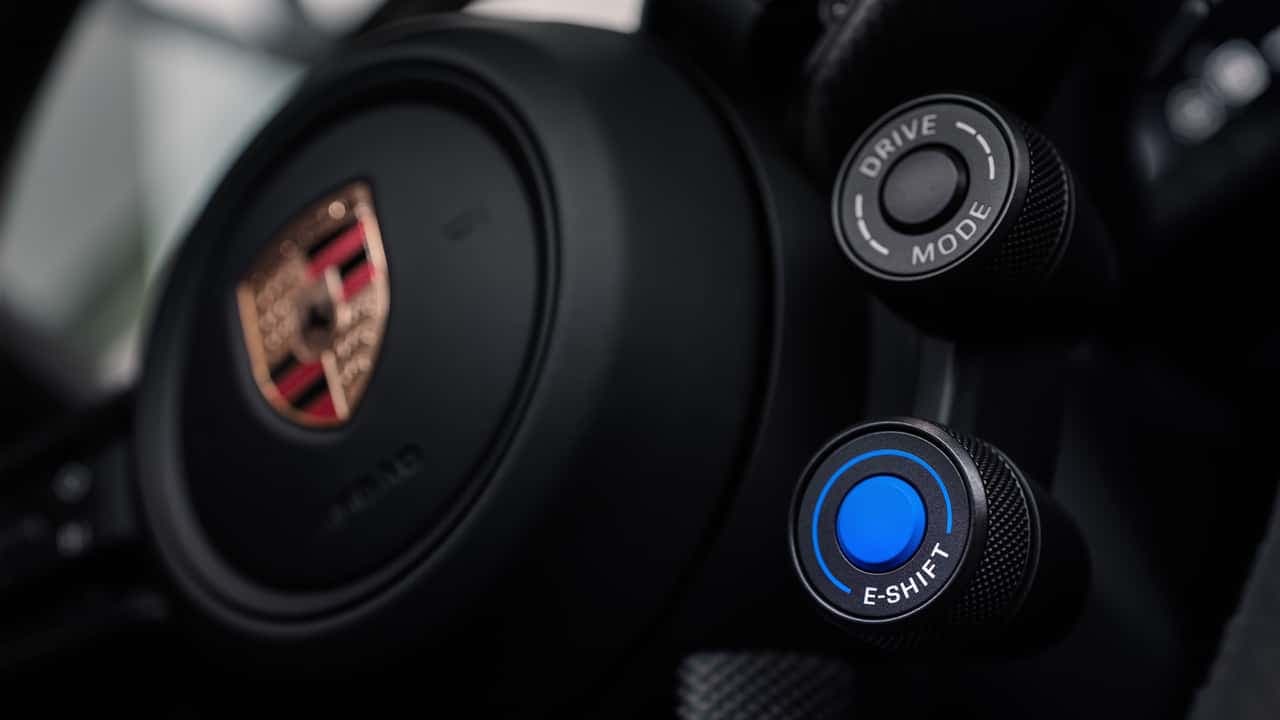
Porsche Adds Simulated Gear Shifts to the Taycan EV — A Bold Move or Brilliant Compromise?
Porsche has never been a brand afraid to listen to its loyal fanbase, and its latest move with the Taycan proves that once again. In a development that has sparked debate across the automotive world, Porsche has officially added simulated gear changes to its all-electric Taycan. That's right — one of the most technologically advanced electric vehicles on the market now offers a feature that mimics the feel of a traditional multi-gear transmission, complete with functional shift paddles mounted behind the steering wheel. Whether you see this as a clever concession or an unnecessary gimmick, there's no denying it's one of the most talked-about EV updates in recent memory.
Why Would an Electric Car Need Fake Gear Changes?
To understand why Porsche made this decision, you first need to understand what makes electric vehicles fundamentally different from their combustion-engine counterparts. Traditional internal combustion engines (ICE) rely on a multi-speed gearbox to keep the engine operating within an efficient RPM range. As speed increases, the driver — or the automatic transmission — shifts up through the gears, producing that distinctive surge of acceleration followed by a brief moment of transition. It's a sensory experience that millions of driving enthusiasts have grown to love over decades behind the wheel.
Electric motors, by contrast, deliver power across a wide RPM range without needing multiple gears. The Taycan, like most EVs, uses a simple single or dual-speed transmission that operates seamlessly and silently. This is objectively more efficient, but for a segment of drivers — particularly those accustomed to Porsche's high-performance sports cars like the 911 or the Boxster — the absence of gear changes can feel clinical, even sterile. The driving engagement they associate with Porsche's DNA simply wasn't there in the same way.
Porsche heard the feedback. And rather than dismissing it, the Stuttgart-based automaker engineered a solution.
How Do the Simulated Gears Actually Work in the Taycan?
The feature works through the Taycan's existing shift paddles, which in previous configurations were primarily used to adjust regenerative braking levels. With the new simulated gear change functionality enabled, drivers can use these paddles to progress through a series of virtual gears — much like using paddle shifters in a traditional automatic sports car.
The system doesn't actually change any mechanical gear ratios, since there are none to change in the conventional sense. Instead, the vehicle's software modulates throttle response, motor output, and — crucially — delivers artificial feedback sensations that replicate the feel of an upshift or downshift. The result is a driving experience that mimics the rhythm and cadence of rowing through gears in a high-performance sports car, without any of the mechanical complexity of an actual multi-speed gearbox.
Drivers who have tested the feature report that it adds a meaningful layer of engagement to spirited driving, particularly on winding roads or track sessions where the connection between driver input and vehicle response matters most.
The Broader Debate: Authenticity vs. Driver Experience
Not everyone is celebrating this development. A vocal portion of the automotive community views simulated features — whether fake engine noise piped through speakers or artificial gear shifts — as fundamentally dishonest. The argument goes that electric vehicles represent a new chapter in mobility, and manufacturers should embrace what EVs are, rather than engineer illusions of what they are not.
It's a fair philosophical point. But Porsche's counterargument is equally compelling: the goal has always been driver engagement, and if software can recreate a meaningful portion of that engagement for drivers who would otherwise feel disconnected, then it serves a legitimate purpose. The Taycan is, after all, a performance sports car first and an EV second in the eyes of many who buy it.
How This Fits Into Porsche's Broader EV Strategy
This update reflects something important about Porsche's approach to electrification more broadly. Unlike some manufacturers that have treated EV adoption as a simple product transition, Porsche has consistently worked to ensure that its electric vehicles carry the same emotional weight as its combustion-engine lineup. Features like the Taycan's two-speed rear-axle transmission, its remarkably flat torque curve, and its track-focused chassis tuning all speak to this philosophy.
Adding simulated gear changes is simply the next expression of that same commitment. Porsche isn't trying to pretend the Taycan has a traditional gearbox — the feature is optional, configurable, and transparent. Drivers know what it is. The question is whether it enhances their enjoyment, and for a significant portion of Taycan owners, the answer appears to be yes.
What This Means for the Future of EV Driving Dynamics
Porsche's willingness to add this kind of feature may well set a precedent for how premium and performance EV brands approach driver engagement going forward. As the industry shifts away from combustion engines, the challenge of preserving the emotional and tactile aspects of driving will only grow more pressing. Solutions like simulated gear shifts — however artificial — represent one answer to that challenge.
- Other performance brands such as BMW and Ferrari have already experimented with artificial soundscapes in their EVs, suggesting the broader industry is wrestling with the same question.
- Software-defined vehicles are uniquely positioned to offer these kinds of configurable experiences, meaning features like this can be added, updated, or refined over time via over-the-air updates.
- Driver preference data collected from features like this could help automakers better understand what aspects of combustion-era driving feel most irreplaceable — useful intelligence for future model development.
Final Thoughts: A Compromise That Makes Sense
Porsche caving to driver demand for fake gear changes might sound like a retreat from EV purity — but looked at another way, it's an example of a manufacturer taking its customers seriously. The Taycan was already widely praised as the most driver-focused electric car on the market. Adding an optional, opt-in system that allows enthusiasts to engage with the car through simulated shifts doesn't diminish what the Taycan is. If anything, it deepens the options available to the driver.
In an era where electric vehicles are rapidly becoming the norm rather than the exception, the brands that will thrive are those that understand driving is about more than just getting from point A to point B. It's about how the car makes you feel. Porsche, it seems, has not forgotten that.