
Porsche's CEO Charts a Bold New Course: Fewer Cars, More Profit
In an era where most automakers are racing to maximize volume and grow market share through sheer output, Porsche is doing something that might surprise industry observers — it is deliberately selling fewer cars while aiming to make more money. Porsche CEO Michael Leiters has made it clear that the iconic German brand does not need to chase production numbers to secure its financial future. Instead, the company's strategy hinges on exclusivity, premium pricing, and a calculated push toward flagship models and limited special editions.
This approach is not just a short-term reaction to a sluggish market. It reflects a fundamental philosophy about what Porsche is and what it should be: a brand that commands premium value precisely because it is not everywhere. Understanding how Leiters plans to execute this vision — and why it might actually work — requires a closer look at the broader trends shaping the luxury automotive industry today.
What Is Happening With Porsche's Production Numbers?
Porsche has been experiencing a notable production downturn in recent periods, a trend that has raised eyebrows among investors and industry analysts. Global demand for luxury vehicles has faced headwinds from rising interest rates, economic uncertainty, and a slower-than-expected transition to electric vehicles in certain key markets. These pressures have contributed to a pullback in deliveries across several of Porsche's core segments.
Yet rather than treating this downturn as a crisis to be solved through discounting or aggressive inventory management — tactics that can quickly dilute a premium brand's image — Leiters has responded with a notably confident posture. His message is essentially that selling fewer cars is not the problem. Selling cheaper cars to compensate for declining volume would be.
This distinction is critical. For a brand like Porsche, the perceived value of ownership is deeply tied to scarcity and aspiration. The moment a Porsche becomes too easy to obtain, or too heavily discounted to move units off lots, the brand risks losing the very allure that justifies its price premiums in the first place.
The Strategy: Flagships and Special Editions as Profit Drivers
Michael Leiters has signaled that the path forward for Porsche involves leaning into the upper end of its lineup — the flagship models and exclusive special editions that carry the highest margins and generate the greatest enthusiasm among loyal enthusiasts. This is a strategy that prioritizes profit per vehicle over total unit sales, a metric that luxury automakers increasingly treat as the more meaningful measure of brand health.
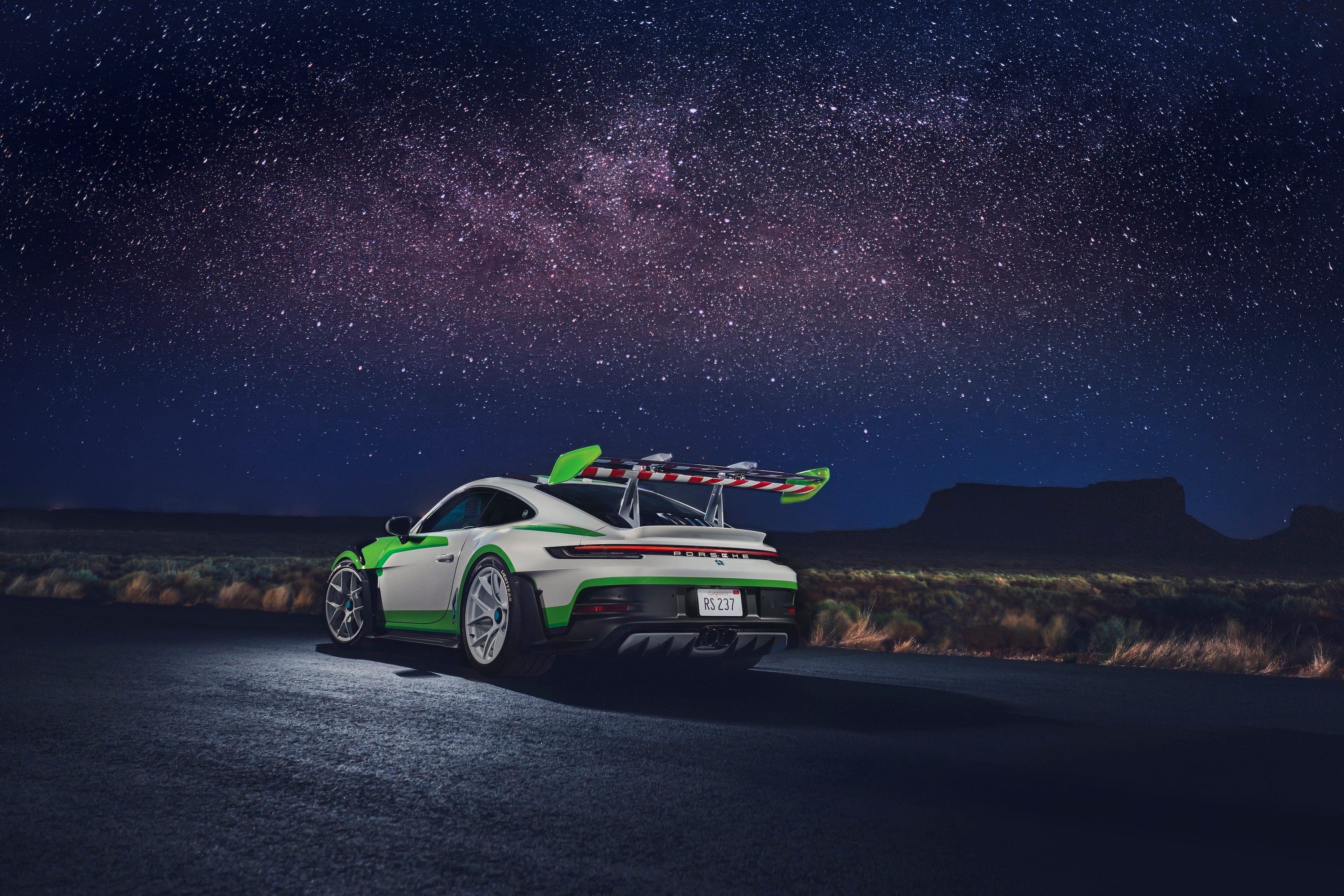
Special editions have long been a potent tool in Porsche's arsenal. Limited-run variants of the 911, bespoke versions of the Cayenne, and exclusive Taycan configurations have consistently commanded significant premiums above their standard counterparts. Buyers of these vehicles are often collectors and enthusiasts willing to pay substantially more for rarity, unique specifications, and the prestige that comes with owning something truly uncommon.
Flagship models serve a complementary purpose. Vehicles positioned at the very top of a lineup not only generate strong margins themselves but also function as halo products that elevate the perception of every other model in the range. When Porsche releases an extraordinary, high-priced flagship, it reinforces the idea that even the entry-level Porsche belongs to an exceptional family of automobiles.
Why This Strategy Makes Sense for Porsche
Porsche occupies an enviable position in the automotive landscape. Unlike mass-market manufacturers that depend on volume to spread fixed costs across millions of units, Porsche has built an identity around craftsmanship, performance heritage, and emotional desirability. This means the brand has significantly more room to operate in a lower-volume, higher-margin space without losing its fundamental business logic.
- Brand integrity is preserved: By avoiding the temptation to discount or flood the market with inventory, Porsche protects the long-term equity of its nameplate, which is one of the most valuable assets it possesses.
- Margins expand with exclusivity: Special editions and flagships often carry margins that are substantially higher than standard production models, meaning that even a modest number of these sales can have an outsized positive impact on overall profitability.
- Customer loyalty is deepened: Enthusiasts who know that Porsche is not compromising its standards — even under financial pressure — tend to become more committed buyers and brand advocates over time.
- Resale values stay strong: Maintaining production discipline keeps used Porsche values elevated, which in turn encourages new buyers who see strong residuals as part of the ownership proposition.
The Risks and Challenges Ahead
No strategy is without its risks, and Leiters' plan will need to be executed carefully. Relying heavily on special editions and flagships to drive profit growth assumes a consistent pool of wealthy, enthusiastic buyers willing to pay top dollar — and that pool, while resilient, is not infinite. Global economic conditions, fluctuating currency markets, and the growing competitive pressure from luxury electric vehicle brands all represent real challenges that could complicate this vision.
There is also the question of how Porsche balances its electrification roadmap with this exclusivity-first strategy. The Taycan has performed well as an electric flagship, but the broader EV transition continues to introduce uncertainty around consumer preferences and the cost structure of producing premium electric vehicles at scale.
Furthermore, investors will need to be patient. A strategy built around margin improvement rather than volume growth can take time to deliver the kinds of headline profit numbers that markets tend to reward in the short term. Communicating this clearly and consistently will be an important part of Leiters' leadership challenge.
What This Means for Porsche Buyers and Enthusiasts
For those who love the brand, the signals coming from Porsche's leadership are broadly encouraging. A CEO who refuses to cheapen the brand in order to chase short-term sales figures is, in many ways, a CEO who understands what makes Porsche worth caring about. Enthusiasts can likely look forward to a pipeline of compelling special editions, high-specification flagship variants, and limited-production models that celebrate the brand's motorsport heritage and engineering excellence.
If Michael Leiters successfully executes this vision, Porsche may well emerge from its current production downturn not as a weakened brand that sacrificed its identity under pressure, but as a stronger, more focused luxury powerhouse — one that proved it could grow its bottom line by staying true to what makes it extraordinary in the first place.
Conclusion: Exclusivity as an Engine of Growth
Porsche's strategy under Michael Leiters represents a compelling case study in how luxury brands can navigate difficult market conditions without compromising their core identity. By prioritizing profit per vehicle through flagships and special editions over raw production volume, Porsche is betting that in the world of premium automobiles, being desired is ultimately more valuable than being ubiquitous. It is a bet that, given Porsche's track record and brand strength, has a very real chance of paying off handsomely.