
Renault's Affordable EV Strategy Just Got More Ambitious
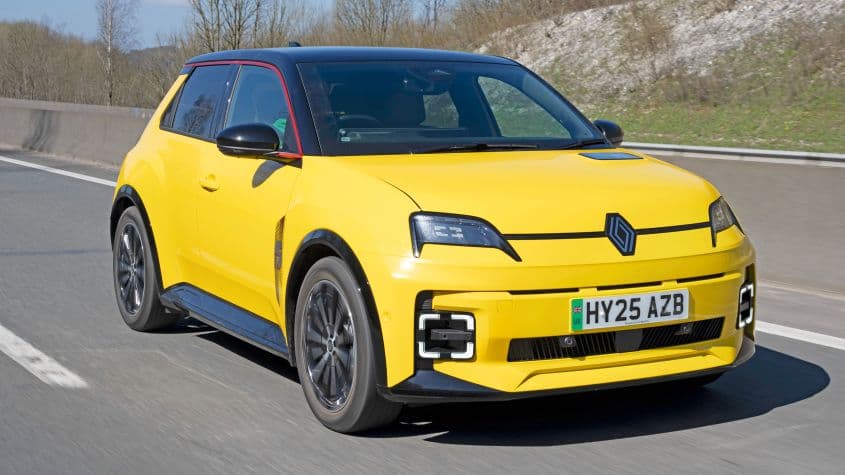
Renault has been on a remarkable journey with its electric vehicle lineup, positioning itself as one of the most serious players in the race to make EVs genuinely accessible to everyday drivers. The Renault 5 and Renault 4 have already turned heads across Europe by offering stylish, practical electric mobility at price points that put larger rivals to shame. But if recent reports are anything to go by, the French automaker isn't done yet. Thanks to the battery technology being developed for the upcoming Renault Twingo, both the Renault 5 and Renault 4 could become even more affordable in the near future.
What Is LFP Battery Technology and Why Does It Matter?
At the heart of this potential price reduction is a shift in battery chemistry. LFP stands for lithium iron phosphate, a battery technology that has been gaining serious momentum across the EV industry over the past few years. Unlike the more common NMC (nickel manganese cobalt) batteries found in most mainstream electric vehicles today, LFP cells use iron and phosphate instead of expensive and supply-chain-sensitive materials like cobalt and nickel.
This distinction is enormously important from a cost perspective. Cobalt and nickel are not only expensive but also subject to volatile pricing and ethical sourcing concerns. By eliminating these materials entirely, LFP batteries can be manufactured at a significantly lower cost per kilowatt-hour, which translates directly into cheaper battery packs and, ultimately, more affordable cars for consumers.
LFP batteries also come with a number of other advantages that make them particularly well-suited to urban and everyday driving use cases:
- They are highly thermally stable, meaning they are less prone to overheating and carry a reduced fire risk compared to some NMC alternatives.
- They can be charged to 100% regularly without the same long-term degradation concerns associated with NMC cells, making them better suited for drivers who want to top up their battery every night.
- Their longer cycle life means the battery pack is likely to outlast the car itself in many real-world use scenarios.
- They are already widely used by manufacturers such as Tesla, BYD, and various Chinese automakers, proving their readiness for mass-market deployment.
The trade-off, historically, has been slightly lower energy density compared to NMC batteries, which can mean a heavier pack for the same range. However, advances in LFP cell design — including blade battery formats pioneered by BYD — have been closing this gap rapidly, making the technology increasingly viable for smaller European city cars.
The Twingo Connection: A Technology Trickle-Down Effect
The Renault Twingo is set to be one of the most affordable electric cars ever sold in Europe, with Renault targeting a price point around €20,000 or below. To hit that target, the Twingo needs to use the cheapest possible battery technology without compromising reliability or driver confidence. That is precisely where LFP chemistry comes in.
Renault is developing LFP battery solutions specifically for the Twingo, and the smart business logic here is that once you have invested in building the supply chains, manufacturing partnerships, and engineering integration work for LFP cells, it becomes far easier and more cost-effective to deploy that same technology across other models in your lineup. The Renault 5 and Renault 4, which currently use NMC battery packs, are the natural next candidates to benefit from this trickle-down effect.
Industry insiders and reports from Renault suggest that LFP variants of the Renault 5 and Renault 4 are being considered, likely as entry-level battery options sitting below the current NMC configurations. This would allow Renault to offer each model at a broader range of price points, welcoming buyers who might currently be priced out while preserving higher-spec NMC versions for drivers who prioritise maximum range.
What Could This Mean for the Renault 5 and Renault 4 Buyer?
For consumers, the implications are genuinely exciting. The Renault 5 is already one of the most talked-about electric city cars in Europe, blending retro-inspired styling with modern EV practicality. The Renault 4, meanwhile, has been celebrated for bringing a slightly larger, more versatile body style to the affordable EV segment. An LFP-equipped version of either car could potentially shave a meaningful sum off the purchase price, making them accessible to an even wider audience.
It is worth noting that for the kinds of driving patterns most suited to these cars — urban commuting, school runs, weekend errands — LFP's slightly lower energy density rarely presents a practical problem. If the majority of your driving takes place within a range of 150 to 200 kilometres on a single charge, an LFP-equipped Renault 5 or Renault 4 would serve you just as well as a pricier NMC version, potentially for thousands of euros less.
Renault's Broader Mission: Making EVs for Everyone
This potential development fits neatly into Renault's overarching strategy of democratising electric mobility across Europe. The company has been vocal about its belief that the EV transition will only succeed if affordable options exist at every rung of the market ladder, not just at the premium end where Tesla and others currently dominate.
With the Twingo targeting the sub-€20,000 bracket, the Renault 5 sitting comfortably in the mid-range, and the Renault 4 offering a slightly more spacious option, Renault is building a cohesive EV family that covers a broad spectrum of budgets and lifestyles. Introducing LFP technology across this lineup would strengthen that position considerably.
When Could We See LFP Versions of the Renault 5 and Renault 4?
No firm dates have been officially confirmed by Renault at the time of writing. However, given that the Twingo is expected to arrive in showrooms in the coming years and LFP integration work is already underway, it is reasonable to expect that LFP variants of the Renault 5 and Renault 4 could follow within a similar timeframe. Renault has demonstrated a clear ability to move quickly when the technology and supply chains are ready, so optimism is certainly warranted.
For anyone currently considering a Renault 5 or Renault 4 purchase, this news is a useful data point — though waiting indefinitely for a future variant is rarely the right call if the current cars already meet your needs. The existing NMC-powered models are already excellent value, and an LFP option, when it arrives, will simply give buyers even more flexibility.
The Bottom Line
Renault's plan to leverage Twingo LFP battery technology across the Renault 5 and Renault 4 is exactly the kind of strategic thinking that could genuinely accelerate EV adoption in Europe. By using economies of scale and smarter battery chemistry to bring prices down further, Renault is making a compelling case that the future of affordable electric transport doesn't have to mean compromise. As LFP technology matures and supply chains deepen, the prospect of a well-equipped, stylish, and genuinely cheap Renault electric car is no longer a distant dream — it is increasingly a matter of when, not if.