
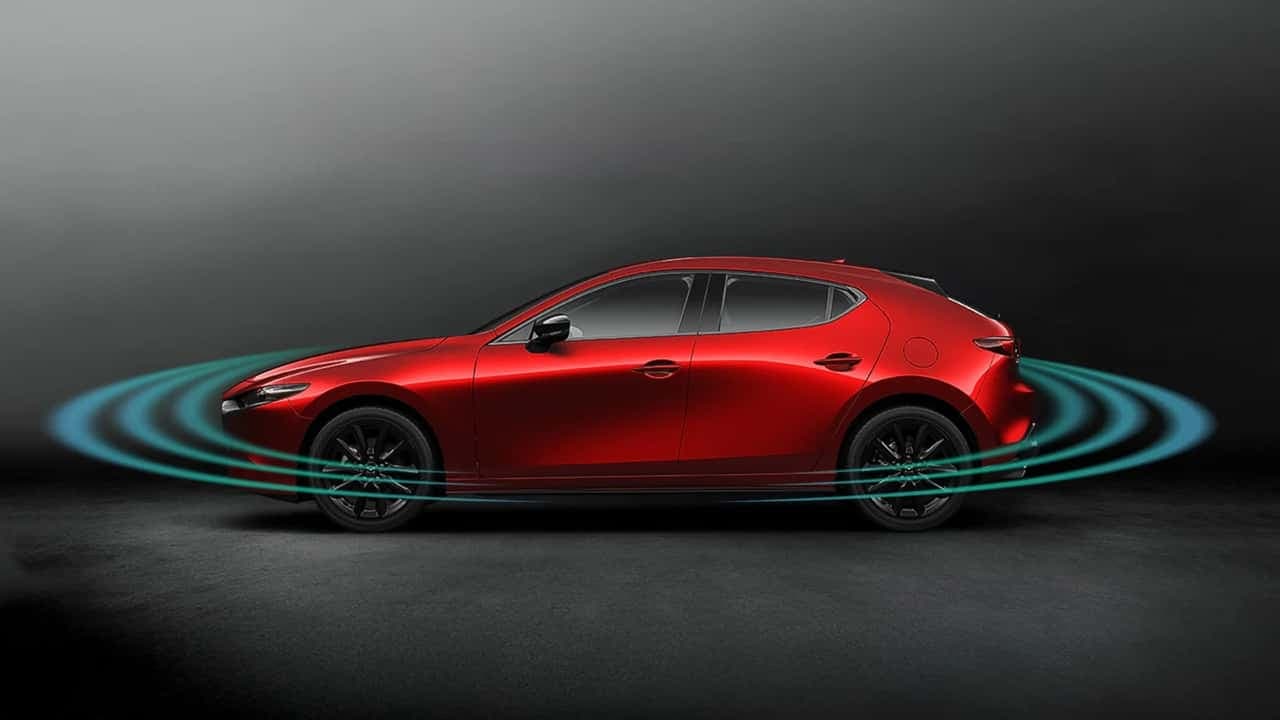
Not All Driver Assistance Technology Is Created Equal
Modern vehicles are packed with more technology than ever before. From automatic emergency braking to lane-keeping assist and adaptive cruise control, the automotive industry has spent billions marketing these features as game-changers for road safety. But are they actually making drivers safer — or are some of them quietly making things worse?
The Insurance Institute for Highway Safety (IIHS) set out to answer exactly that question. Motor1 was granted rare access to the IIHS Vehicle Research Center in Ruckersville, Virginia, where engineers and researchers test and evaluate the real-world effectiveness of driver-assistance systems. What they found was both reassuring and surprising: some technologies deliver meaningful safety benefits, while others may actually increase driver distraction and create a false sense of security behind the wheel.
What Is IIHS and Why Does Its Research Matter?
The Insurance Institute for Highway Safety is an independent, nonprofit scientific and educational organization dedicated to reducing the losses — deaths, injuries, and property damage — from motor vehicle crashes. Funded by auto insurers, the IIHS conducts rigorous crash tests and evaluates vehicle safety systems based on real-world outcomes, not just manufacturer claims.
When the IIHS speaks about what works and what doesn't in automotive safety, the industry listens. Automakers routinely redesign vehicles to earn IIHS Top Safety Pick and Top Safety Pick+ awards, which have become powerful consumer trust signals. Its research on advanced driver-assistance systems (ADAS) carries equal weight, particularly as these technologies become standard equipment on mainstream vehicles.
The Driver Assistance Systems That Actually Work
According to IIHS research, several driver-assistance technologies have demonstrated clear, measurable benefits in reducing crashes and fatalities.
Automatic Emergency Braking (AEB)
Automatic emergency braking consistently ranks among the most effective driver-assistance features available today. AEB systems detect an imminent collision — whether with another vehicle, a pedestrian, or a cyclist — and apply the brakes automatically if the driver doesn't respond in time. IIHS data shows that front-to-rear crashes have been significantly reduced in vehicles equipped with AEB, and the technology has been particularly effective at lower speeds where inattention crashes are most common.
The effectiveness of AEB has been compelling enough that the National Highway Traffic Safety Administration (NHTSA) has moved toward mandating the technology in new vehicles, a policy direction strongly supported by IIHS findings.
Rear Automatic Emergency Braking
Rear AEB, which helps prevent low-speed backing collisions, has also shown strong results. These crashes — often occurring in driveways and parking lots — frequently involve children or pedestrians who are invisible in a driver's mirror view. Vehicles equipped with rear AEB have shown meaningful reductions in backing incidents, making the technology particularly valuable for families.
Blind-Spot Warning Systems
Blind-spot monitoring systems alert drivers when a vehicle enters a hard-to-see zone alongside their car. IIHS research indicates these systems are associated with a reduction in lane-change crashes and related injuries. When paired with active steering intervention that nudges the vehicle back if a driver attempts an unsafe lane change, the benefit grows even further.
The Systems That May Actually Increase Distraction
Here is where the IIHS research becomes especially important — and somewhat counterintuitive. Not every driver-assistance feature earns a clean bill of safety health. Some systems, despite good intentions, appear to lull drivers into a reduced state of engagement, which can be more dangerous than driving without any assistance at all.
Partial Automation and the Monitoring Problem
Systems that fall under the umbrella of partial automation — such as lane-centering combined with adaptive cruise control — are among the most scrutinized. These features can handle many routine driving tasks on highways, reducing the physical workload for the driver. The problem is cognitive: research suggests that when a system handles the routine aspects of driving, human attention naturally drifts.
The IIHS has been vocal about the risks posed by systems that allow hands-off or eyes-off driving without sufficient safeguards to re-engage driver attention. Some commercially available systems have been found to be too easy to game, allowing drivers to disengage without meaningful alerts or consequences. Tesla's Autopilot, GM's Super Cruise, and Ford's BlueCruise have all come under scrutiny regarding how effectively they monitor driver attention and respond when that attention lapses.
Driver Monitoring Systems — A Critical Gap
One of the IIHS's clearest recommendations is that effective driver monitoring systems need to be integrated alongside any partial automation feature. Camera-based driver monitoring that watches eye gaze and head position — rather than simply detecting steering wheel pressure — is far better at identifying genuine inattention. Without robust monitoring, partial automation can become a distraction enabler rather than a safety tool.
What Drivers Should Know Before Relying on These Systems
The IIHS research delivers a clear message to consumers: understanding the limits of your vehicle's technology is just as important as knowing its capabilities. Driver-assistance systems are designed to assist, not to replace, a fully engaged human driver.
- Read your owner's manual and understand exactly what your vehicle's systems can and cannot do in varying conditions such as rain, snow, or low light.
- Stay alert even when partial automation is active — these are Level 2 systems, meaning the driver remains fully responsible for safe operation at all times.
- Do not confuse features like adaptive cruise control or lane-centering with full self-driving capability. No consumer vehicle currently on the market is fully autonomous.
- Pay attention to how your vehicle monitors your attention. Systems that rely only on steering wheel torque rather than eye-tracking offer weaker engagement safeguards.
The Road Ahead for Driver-Assistance Technology
The IIHS isn't anti-technology — far from it. The institute actively advocates for stronger, smarter implementation of ADAS features. Its ongoing evaluation programs are designed to push automakers toward systems that deliver real safety dividends rather than impressive-sounding marketing claims.
As vehicle automation continues to advance toward higher SAE levels, the line between driver-assistance and autonomous driving will become increasingly complex to navigate — for regulators, manufacturers, and consumers alike. The IIHS research serves as a critical anchor in that conversation, grounding the discussion in data rather than hype.
For now, the takeaway is straightforward: automatic emergency braking, blind-spot warning, and rear AEB have earned their place as genuinely life-saving technologies. But partial automation features demand respect, attention, and a driver who never fully checks out. The car may be getting smarter — but the human behind the wheel still matters more than ever.