
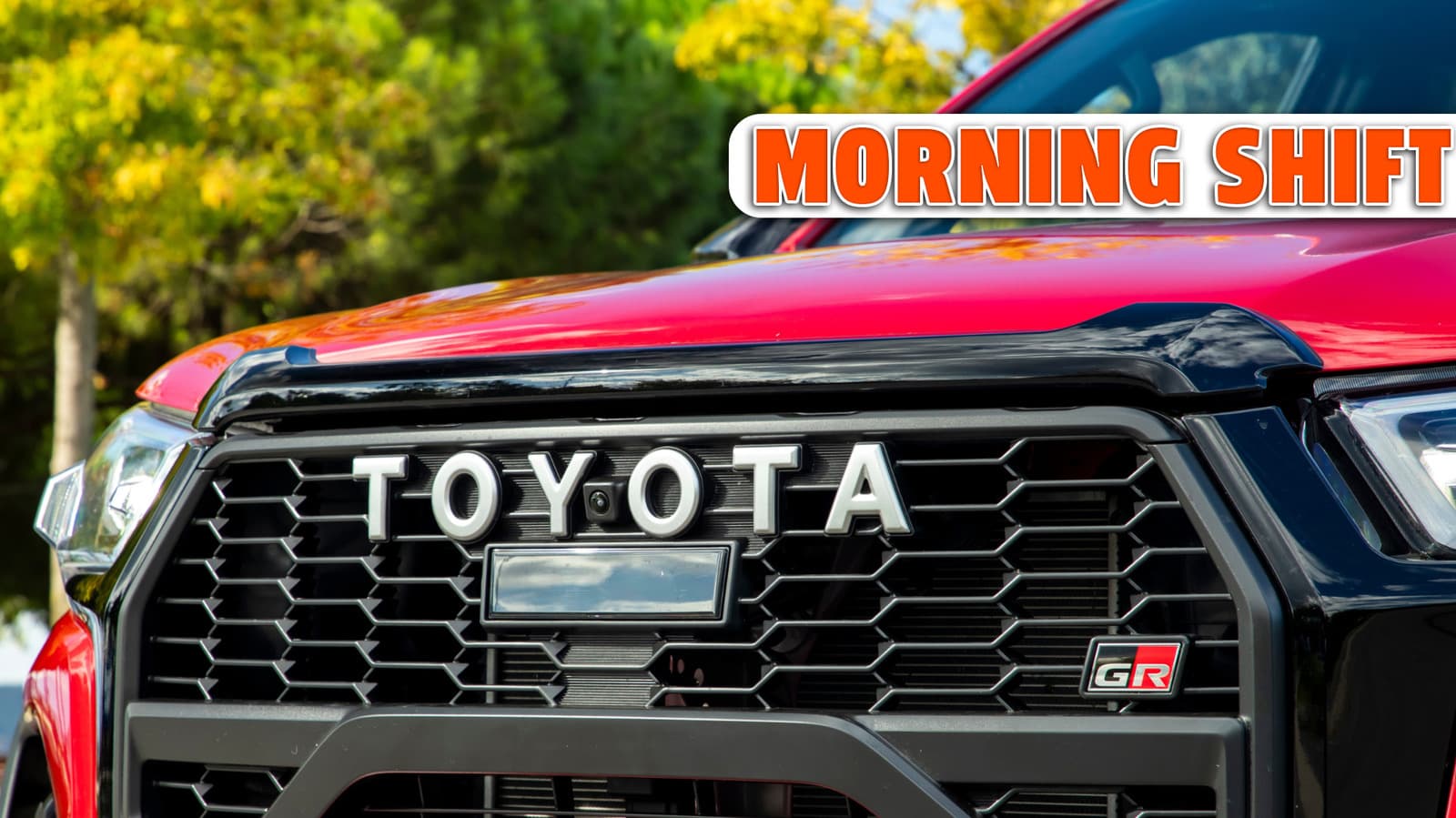
Toyota's Cost-Cutting Push: A Necessary Move or a Risky Gamble?
Toyota has long been regarded as the gold standard of automotive reliability. From the near-indestructible Land Cruiser to the perennially top-ranked Camry, the Japanese automaker built its global empire on a simple but powerful promise: build it right, and the customers will come. Now, however, Toyota is signaling a new era — one defined less by the relentless pursuit of perfection and more by the relentless pursuit of efficiency. The automaker is tightening its belt, and the automotive world is watching closely to see what gets cut in the process.
Why Toyota Is Looking to Reduce Costs
The pressures driving Toyota's cost-reduction strategy are not unique to the brand — they are symptomatic of a seismic shift reshaping the entire automotive industry. Rising raw material costs, the expensive pivot to electric vehicles, intensifying competition from Chinese automakers, and a global economic environment that has made consumers increasingly price-sensitive have all combined to squeeze automakers' margins in unprecedented ways.
Toyota, despite remaining one of the world's most profitable carmakers, is acutely aware that the landscape is changing faster than at any point in its history. The company has reportedly been pushing suppliers and internal departments alike to identify areas where expenses can be reduced without — at least in theory — affecting the end product. The goal is leaner operations, a more agile supply chain, and a cost base that can weather the turbulence ahead.
In that context, a degree of belt-tightening makes sense. Every major corporation periodically audits its spending. What makes Toyota's situation particularly charged is the weight of its own reputation. When you are the company that literally wrote the book on efficient, quality-first manufacturing — the Toyota Production System, the inspiration behind "lean manufacturing" globally — any hint of compromise carries enormous symbolic and practical weight.
The Fine Line Between Efficiency and Quality Erosion
This is where the story gets complicated. Cost reduction and quality are not inherently at odds. Toyota's own production philosophy, after all, was born from the idea that eliminating waste actually improves quality rather than diminishing it. True inefficiencies — redundant processes, unnecessary complexity, supply chain bloat — can be trimmed without the customer ever noticing. In fact, they should be.
But there is a category of cost-cutting that masquerades as efficiency while quietly degrading the product. This is the version that substitutes cheaper materials, reduces testing cycles, pressures suppliers to hit lower price points that are only achievable by reducing component quality, or trims the engineering and quality-assurance headcount that serves as the last line of defense before a vehicle reaches a customer. The automotive graveyard is littered with once-respected brands that went down this path.
- Material substitution: Replacing higher-grade metals, plastics, or fabrics with cheaper alternatives can reduce per-unit costs significantly, but often accelerates wear and diminishes the tactile experience that reinforces quality perception.
- Supplier pressure: Squeezing suppliers on price without helping them find genuine efficiencies simply shifts the problem downstream — and suppliers, to survive, often cut corners of their own.
- Reduced testing and validation: Shortening the development and testing cycles that catch failures before production is one of the most dangerous cost-cutting moves in the automotive industry, with consequences that can take years to surface publicly.
- Workforce reductions: Cutting experienced engineers and quality specialists saves money on paper while eroding the institutional knowledge that underpins consistent manufacturing excellence.
Toyota has navigated this tension before, not always perfectly. The recall crisis of 2009 and 2010, which involved millions of vehicles and allegations of unintended acceleration, was widely attributed in part to a period of rapid expansion that stretched the company's quality controls. Toyota recovered — through transparency, accountability, and a recommitment to its founding principles — but the episode served as a stark reminder that even the best can stumble when growth or cost pressures override discipline.
What This Means for Toyota Buyers
For consumers, the immediate question is a practical one: should you be worried about buying a Toyota in the current environment? The honest answer is nuanced. In the short term, there is little reason for alarm. Toyota's quality systems are deeply embedded and do not collapse overnight. The vehicles rolling off production lines today still benefit from decades of accumulated engineering discipline.
However, buyers would be wise to pay closer attention to long-term reliability data over the next several model cycles. Third-party reliability surveys, owner forums, and independent testing organizations will be the first places where any meaningful quality shifts become visible. If material changes or supplier decisions are quietly affecting build quality, those signals tend to emerge within two to three years of a cost-reduction program taking effect.
It is also worth noting that Toyota's competitive advantage has always been rooted in its total cost of ownership proposition. Buyers accept a higher sticker price — or at least a comparable one — because they expect to pay less in repairs over the vehicle's lifetime. If reliability erodes even modestly, that calculation changes, and Toyota's pricing power goes with it.
Can Toyota Afford to Get This Wrong?
The stakes here extend well beyond quarterly earnings. Toyota is simultaneously managing one of the most complex technological transitions in its history — the shift to electrification — while competing against Chinese EV manufacturers who are pricing vehicles aggressively and improving quality faster than most Western analysts anticipated. A stumble in core quality at this particular moment could be deeply damaging, arriving precisely when the brand needs its reliability halo most.
There is also the broader question of corporate culture. Toyota's identity is inseparable from its manufacturing philosophy. The Toyota Production System, kaizen — the concept of continuous improvement — and the principle of jidoka, or building in quality at every step, are not just operational frameworks. They are the company's mythology, its internal north star. Aggressive cost-cutting that visibly undermines those principles does not just affect product quality; it can affect employee morale, supplier relationships, and the organizational coherence that makes Toyota, Toyota.
The Bottom Line
Toyota tightening its belt is neither surprising nor automatically alarming. Every automaker must adapt to the new economic realities reshaping the industry. The question is not whether Toyota will cut costs — it will — but whether it will do so with the surgical precision its own manufacturing philosophy demands, or whether the pressure to deliver short-term financial results will lead to decisions that slowly hollow out the very thing that made it great.
History suggests Toyota is more self-aware than most about this risk. Its leadership has seen the consequences of overreach before and built corrective mechanisms into the company's DNA. But history also shows that no organization is immune to the slow drift that comes when financial pressure is sustained and unrelenting. The automotive world will be watching every J.D. Power score, every Consumer Reports ranking, and every owner review closely in the years ahead. For Toyota's sake — and for the millions of consumers who stake their transportation on its reputation — the hope is that tightening the belt does not also mean loosening the standards.