
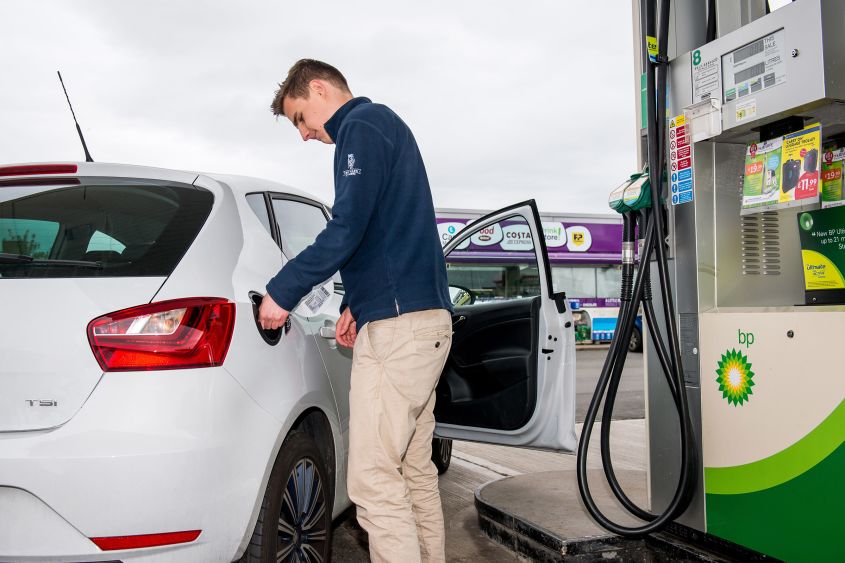
What Is Hypermiling and How Do You Do It?
With fuel prices continuing to put pressure on household budgets, drivers everywhere are looking for smarter ways to cut costs at the pump. Enter hypermiling — a discipline that takes fuel-efficient driving to its logical extreme. Whether you drive a petrol hatchback, a diesel estate, or a hybrid, hypermiling techniques can help you extract significantly more miles from every tank. Here's everything you need to know about what hypermiling is, why it works, and how you can start doing it today.
What Is Hypermiling?
The term "hypermiling" was coined in the early 2000s by Wayne Gerdes, an American driver who became famous for achieving extraordinary fuel economy figures far beyond a vehicle's official manufacturer ratings. At its core, hypermiling refers to a collection of advanced driving techniques and behavioural habits designed to maximise miles per gallon (MPG). While competitive hypermilers push these methods to extreme — sometimes dangerous — limits, most of the underlying principles are perfectly safe, legal, and highly practical for everyday drivers.
Hypermiling is not about driving so slowly that you become a hazard. It's about driving smarter: anticipating the road ahead, reducing unnecessary energy waste, and making deliberate choices behind the wheel that add up to real savings over time.
Why Does Fuel Economy Matter So Much?
Even a modest improvement in fuel efficiency can translate into meaningful savings. For example, improving your average MPG from 35 to 42 on a car that covers 12,000 miles a year could save you hundreds of pounds annually, depending on current fuel prices. Over the lifetime of a vehicle, those savings become substantial. Beyond the financial benefits, better fuel economy also means lower CO2 emissions, making hypermiling an environmentally responsible choice as well.
Core Hypermiling Techniques You Can Use Every Day
1. Anticipate the Road Ahead
One of the single most effective hypermiling habits is looking further ahead than most drivers typically do. By reading traffic flow, spotting red lights early, and anticipating junctions and roundabouts well in advance, you can begin coasting and decelerating smoothly rather than braking hard at the last moment. Every time you brake heavily, you convert kinetic energy — energy that took fuel to generate — into heat, which is wasted. The goal is to arrive at a stop naturally, using as little braking as possible.
2. Maintain a Steady, Appropriate Speed
Fuel consumption rises sharply at higher speeds. Most vehicles are most efficient somewhere between 45 and 60 mph. Driving at 70 mph uses roughly 9% more fuel than driving at 60 mph, and around 25% more than driving at 50 mph, according to data from the Department for Transport. On motorways and dual carriageways, using cruise control where safe to do so helps maintain a consistent speed and avoid the fuel-burning micro-accelerations that occur when driving manually.
3. Accelerate Gently and Smoothly
Aggressive acceleration is one of the biggest culprits of poor fuel economy. Flooring the throttle demands significantly more fuel from the engine in a short space of time. Instead, build your speed gradually and progressively. Think of the accelerator pedal as something to be used with patience rather than urgency. This single change in habit can improve your MPG noticeably within the first tank.
4. Use Engine Braking and Coasting
When you lift off the throttle in a modern petrol or diesel car, the fuel injectors cut off completely during overrun — meaning your engine is essentially running on nothing. This makes coasting in gear to a stop far more economical than you might expect. Some hypermilers also coast in neutral on long descents, though this removes the ability to engine brake and requires greater care. For most drivers, staying in gear and simply lifting off early is the safest and most effective approach.
5. Keep Your Tyres Properly Inflated
Under-inflated tyres increase rolling resistance, which forces your engine to work harder to maintain speed. Keeping your tyres inflated to the manufacturer's recommended pressure — found in your vehicle handbook or on a sticker inside the driver's door — is one of the simplest and cheapest fuel-saving measures available. Some hypermilers inflate their tyres slightly above the recommended maximum, though this should be done carefully and within safe limits.
6. Reduce Unnecessary Weight and Drag
Every extra kilogram your car carries requires more fuel to move. Clear out the boot of items you don't need on every journey. Remove roof racks, roof boxes, and cycle carriers when they're not in use, as these significantly increase aerodynamic drag at speed. Even keeping windows closed at higher speeds reduces drag and can improve efficiency by several percentage points.
7. Plan Your Journeys Wisely
Cold engines are far less efficient than warm ones, and short journeys — particularly those under two miles — never allow the engine to reach its optimal operating temperature. Combine multiple short errands into one longer trip where possible. Using navigation apps to avoid traffic congestion also pays dividends, since stop-start traffic is one of the worst conditions for fuel economy.
8. Switch Off When Stationary
Sitting in traffic or waiting with the engine idling burns fuel for zero forward progress. Most modern cars come equipped with stop-start technology that does this automatically, but if yours doesn't, switching the engine off manually during longer waits — at level crossings, for instance — is a worthwhile habit to adopt.
Hypermiling and Electric or Hybrid Vehicles
Hypermiling isn't exclusive to petrol and diesel drivers. Hybrid and electric vehicle owners can apply the same principles to extend their range. In an EV or hybrid, smooth acceleration and anticipatory braking maximise regenerative braking — the process by which the car recovers kinetic energy and converts it back into electricity. This means every smooth deceleration actively recharges the battery, making hypermiling techniques even more directly rewarding in these vehicles.
Is Hypermiling Safe?
The vast majority of hypermiling techniques are completely safe and encourage a more attentive, measured style of driving. Anticipating hazards earlier, maintaining appropriate following distances, and avoiding unnecessary acceleration are all characteristics of a considerate and competent driver. Where hypermiling can become unsafe is at its competitive extremes — such as drafting closely behind lorries to reduce drag, or inflating tyres to dangerously high pressures. These practices should be avoided. Stick to the sensible, everyday techniques outlined here and you'll be both safer and more economical on the road.
How Much Can You Actually Save?
Results vary depending on your vehicle, your typical routes, and how consistently you apply these techniques. However, studies and real-world testing consistently suggest that committed hypermiling can improve fuel economy by anywhere from 10% to 30% compared to typical driving habits. For a driver spending £2,000 a year on fuel, that represents a potential saving of between £200 and £600 annually — simply by changing how you drive.
Start Hypermiling Today
You don't need a special car, expensive gadgets, or months of training to start hypermiling. Begin with just two or three of the techniques above — smooth acceleration, early anticipation, and correct tyre pressures — and monitor your MPG over your next few tanks of fuel. The results may well surprise you. Small, consistent changes behind the wheel really do add up, and your wallet — and the environment — will thank you for it.