
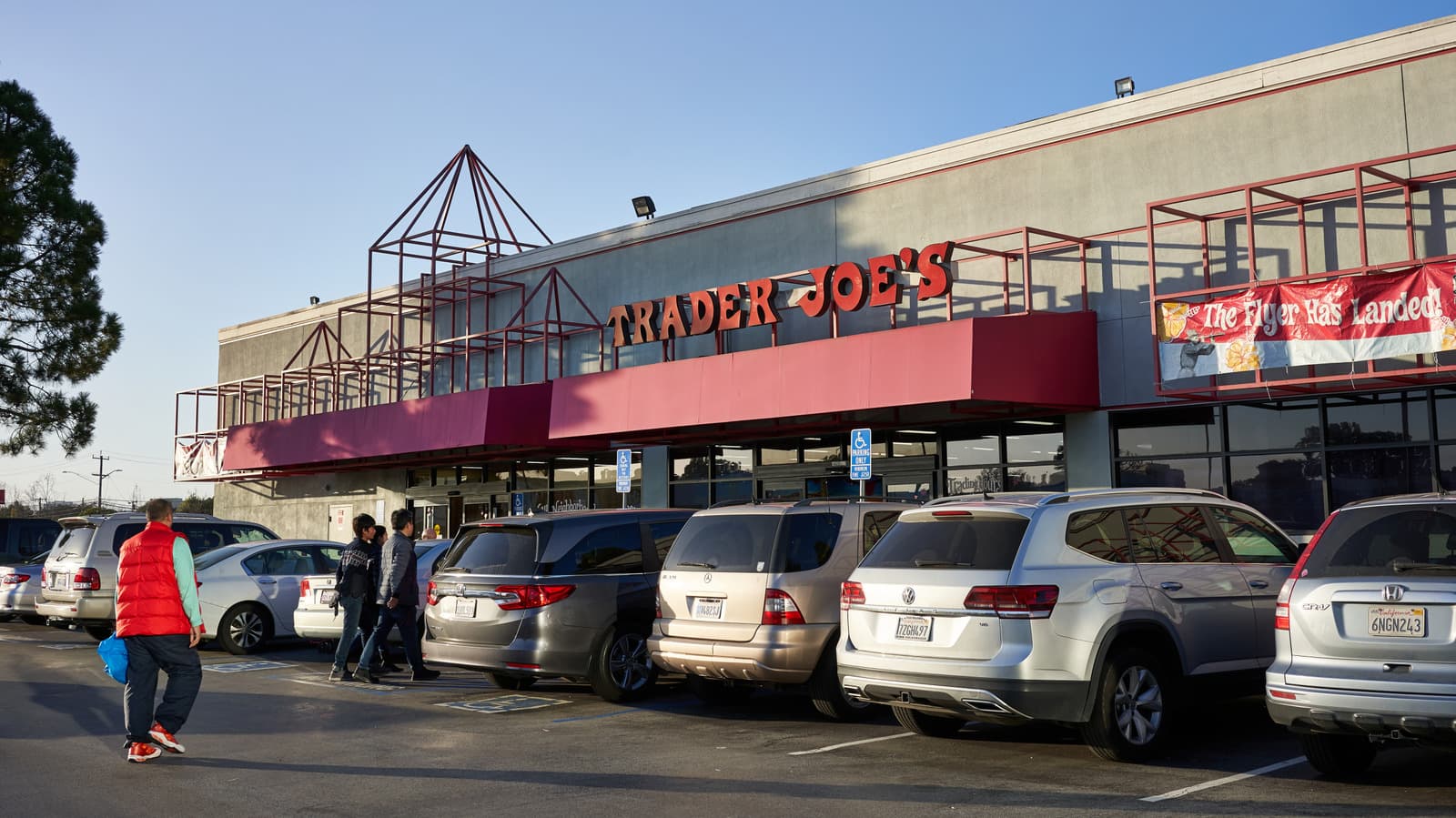
The Trader Joe's Parking Lot Problem Is Very Real — and Very Intentional
If you've ever pulled into a Trader Joe's parking lot on a Saturday afternoon, you already know the feeling. Cars circling endlessly, shopping carts blocking narrow lanes, pedestrians weaving between bumpers, and a line of vehicles stretching out onto the main road. It feels less like a grocery run and more like a minor civil emergency. But here's the thing: the chaos isn't accidental. There are very specific, structural reasons why every single Trader Joe's parking lot seems to be engineered for maximum frustration — and understanding those reasons makes the whole experience both more bearable and, somehow, even more maddening.
Small Stores, Massive Popularity: The Core Contradiction
At the heart of the Trader Joe's parking problem is a fundamental mismatch between the size of the store and the volume of customers it attracts. Trader Joe's locations are famously compact. The average Trader Joe's store sits at around 10,000 to 15,000 square feet, which is a fraction of the size of a conventional supermarket, which can easily run 40,000 to 60,000 square feet or more. Yet Trader Joe's draws foot traffic that would make a big-box retailer envious.
The chain has cultivated a fiercely loyal customer base drawn in by affordable prices, unique private-label products, and a carefully curated selection. People don't just stop by Trader Joe's — they make a dedicated trip. And when thousands of dedicated shoppers descend on a store barely big enough to hold a few hundred people at a time, the parking lot becomes a pressure cooker.
The Parking Lot Was Never Designed for This Much Demand
Trader Joe's frequently occupies existing retail spaces rather than building custom locations from the ground up. The brand has a well-known strategy of setting up shop in strip malls, repurposed storefronts, and urban retail corridors. This means the parking infrastructure was almost never designed with a high-traffic grocery destination in mind. A lot originally sized for a quiet clothing boutique or a modest hardware store is suddenly expected to accommodate the volume of a regional attraction.
Even when a location is purpose-built or heavily renovated, the square footage of the store itself takes priority over expansive parking. Trader Joe's real estate footprint is kept small by design, which keeps overhead costs down and rents manageable — a key part of how the chain keeps its prices low. But that cost-saving decision has a direct and painful consequence every time you need a parking space on a busy weekend.
Urban Locations Make Everything Worse
Many of the most notorious Trader Joe's parking disasters happen at urban and suburban locations where land is already at a premium. In dense cities, some locations have no surface parking at all, relying instead on shared garages or street parking that disappears the moment word gets out that the Two-Buck Chuck is back in stock. In tighter suburban corridors, lots are often shared with neighboring businesses, creating turf wars over spaces that spill out into the street.
The layout of these lots tends to compound the problem. Narrow lanes, awkward turn radii, poorly marked pedestrian paths, and limited entry and exit points all contribute to the gridlock. When you factor in the steady stream of shoppers loading groceries into their cars — often in the only available spot between two enormous SUVs — the whole system grinds to a near halt.
Shopping Behavior Inside the Store Spills Into the Lot
There's also a behavioral dimension worth considering. Because Trader Joe's stores are small and the aisles are tight, the checkout lines frequently wrap around the interior of the store. Shoppers often spend more time inside than they anticipate, which means cars sit in parking spaces far longer than the average grocery run would suggest. Turnover slows. The lot fills up. The queue of waiting cars grows. And the cycle repeats itself every fifteen minutes for the entire business day.
Add to this the popularity of cart corrals that are either too few, too far from the entrance, or perpetually overflowing, and you have an environment where even departing the lot requires patience and a certain philosophical acceptance of your circumstances.
Is There a Solution? Honestly, Not a Great One
Experts and frustrated shoppers alike have floated various fixes over the years. Better traffic flow design, dedicated parking attendants during peak hours, reservation-based shopping windows, and improved pedestrian infrastructure are all ideas that have been tried or proposed in various forms. Some urban Trader Joe's locations have even experimented with vertical parking structures or underground garages, with mixed results.
But the only solution that would truly fix the problem is also the one that's almost certainly never going to happen: building bigger stores. A larger Trader Joe's with more checkout lanes, wider aisles, and a proportionally sized parking facility would theoretically absorb the demand. The problem is that expanding store size runs counter to nearly everything Trader Joe's is built on — the cozy, curated, boutique grocery experience that makes customers love it in the first place. A 50,000-square-foot Trader Joe's might ease the parking crunch, but it would stop feeling like Trader Joe's entirely.
The Parking Lot Is the Price You Pay for Loving Trader Joe's
In a strange way, the parking lot chaos is almost a feature rather than a bug. It's a testament to just how popular and beloved the brand has become. The stores are small because the concept demands it. The lots are overwhelmed because the customers keep coming back. And until Trader Joe's fundamentally reimagines its retail model — which would be a seismic shift for a brand built on consistency and charm — the parking nightmare is simply part of the deal. Bring your patience, arrive early, and maybe consider a weekday morning if your schedule allows it. Your blood pressure will thank you.