
India-Oman CEPA: Why This Trade Deal Is More Than Just Tariffs
When India and Oman formally activated their Comprehensive Economic Partnership Agreement (CEPA) on June 1, it marked more than the signing of another bilateral trade deal. It represented the convergence of economic ambition and geographic fortune — a combination that rarely aligns so cleanly in international commerce. While CEPAs are increasingly common tools in India's trade diplomacy, the one struck with Oman carries a distinct strategic weight that sets it apart from the rest.
To understand why, you need to look at a map.
The Geography That Makes Oman Irreplaceable
Most countries in the Gulf Cooperation Council (GCC) owe their oil export access to a single, narrow chokepoint: the Strait of Hormuz. This waterway, barely 33 kilometers wide at its narrowest point, is the passage through which roughly 20 percent of the world's oil and a significant share of global liquefied natural gas (LNG) flows. Its vulnerability to geopolitical disruption — whether from regional conflict, sanctions, or naval standoffs — is well documented and deeply concerning to energy-importing nations like India.
Oman is different. A substantial portion of Oman's coastline, particularly around the Dhofar region and the port of Salalah, lies entirely outside the Strait of Hormuz, facing the Arabian Sea directly. This means that goods shipped from or through Oman's southern ports bypass the strait altogether. For India, which sits just across the Arabian Sea from Oman, this is not a minor logistical detail — it is a strategically significant feature that no other GCC country can offer to the same degree.
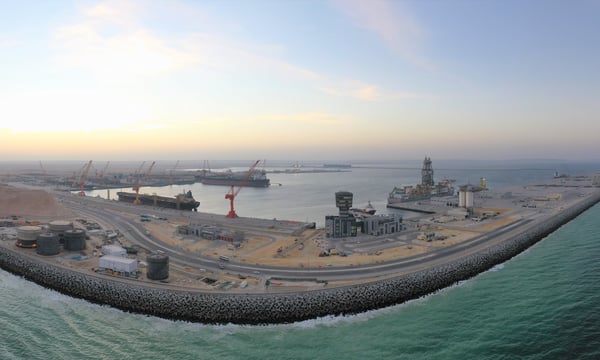
The port of Salalah, one of the largest transshipment hubs in the region, is already a critical node in global shipping lanes. Its location outside the strait means that trade routed through it remains insulated from the kind of disruptions that periodically threaten the Gulf's primary chokepoint. With the CEPA now in place, India is well-positioned to deepen its reliance on this route for both imports and exports.
What the India-Oman CEPA Actually Covers
The CEPA between India and Oman is a comprehensive agreement designed to liberalize trade in goods, reduce tariff barriers, and facilitate smoother movement of services and investments between the two countries. Under the deal, a large number of Indian export categories will benefit from reduced or eliminated duties in the Omani market, while Indian importers will gain preferential access to Omani goods and resources.
Key sectors expected to benefit on the Indian side include:
- Textiles and apparel, where Indian manufacturers have long sought better market access in the Gulf
- Engineering goods and machinery, an area in which India has been aggressively expanding its export footprint
- Pharmaceuticals, with India's generic drug industry well-positioned to serve Oman's healthcare sector
- Agricultural products, including processed food items and marine products from India's western coastal states
- Gems and jewelry, a perennial strength in India's export basket to Gulf markets
For Oman, the agreement opens up the enormous Indian market for its petrochemical products, fertilizers, and minerals, while also creating investment pathways for Omani sovereign and private capital into India's fast-growing economy.
Energy Security and the Hormuz Variable
India imports a substantial portion of its crude oil and natural gas from the Gulf region. As the country's energy appetite grows alongside its expanding economy, the reliability of these supply chains becomes ever more critical. The Strait of Hormuz, for all its importance, represents a single point of failure that Indian energy planners have long regarded with unease.
Oman's geography offers a partial but meaningful hedge against that risk. By building stronger energy trade ties with Oman — ties now backed by the legal and commercial framework of a CEPA — India gains access to supplies that can move via Arabian Sea routes without dependence on strait passage. This isn't a complete solution to the Hormuz problem, but it is a meaningful layer of diversification that India's energy security strategists will value.
Beyond crude oil, Oman has been developing its LNG export capacity and is also investing heavily in green hydrogen, a fuel that India has identified as central to its long-term energy transition. A robust CEPA framework creates the commercial environment in which joint ventures, long-term supply contracts, and investment in green energy infrastructure can be negotiated and executed with greater confidence on both sides.
A Partnership Built on Decades of People-to-People Ties
The India-Oman relationship is not a new one. The Indian diaspora in Oman is among the largest and most established in the Gulf, with hundreds of thousands of Indian nationals working across Oman's construction, healthcare, retail, and services sectors. Remittances flowing back to India from the Omani-based Indian community represent a steady and significant financial link between the two countries.
This deep human connection has always provided a foundation of goodwill and commercial familiarity that formal trade agreements can build upon. The CEPA formalizes and accelerates what has for decades been an organic and growing economic relationship, giving businesses on both sides clearer rules of engagement, reduced friction at customs, and greater confidence in long-term investment decisions.
India's Broader Gulf Trade Strategy
The Oman CEPA does not exist in isolation. It is part of a broader Indian effort to lock in preferential trade relationships with Gulf nations at a time when global supply chains are being restructured and regional alliances are in flux. India has already operationalized a CEPA with the UAE, and negotiations with other GCC members continue at varying speeds.
What distinguishes the Oman deal, however, is precisely that geographic dimension. Every CEPA India signs delivers tariff benefits. But not every partner sits astride an Arabian Sea coastline that offers meaningful logistical independence from the world's most tension-prone maritime chokepoint.
Conclusion: Geography as a Strategic Asset
The India-Oman CEPA is, at its core, a trade agreement — a framework of tariff schedules, rules of origin, and investment protections. But its true significance lies in what it enables beyond the spreadsheet. It anchors India more firmly to a partner whose geographic position provides resilience, whose energy resources matter to India's future, and whose ports offer alternatives when the world's most critical strait becomes a point of concern.
As India continues to grow into one of the world's largest and most consequential economies, the ability to secure trade and energy routes that are not entirely dependent on single chokepoints will only become more valuable. In that light, the Oman CEPA is not merely special — it may prove to be one of the most strategically farsighted trade agreements India has signed in recent years.