
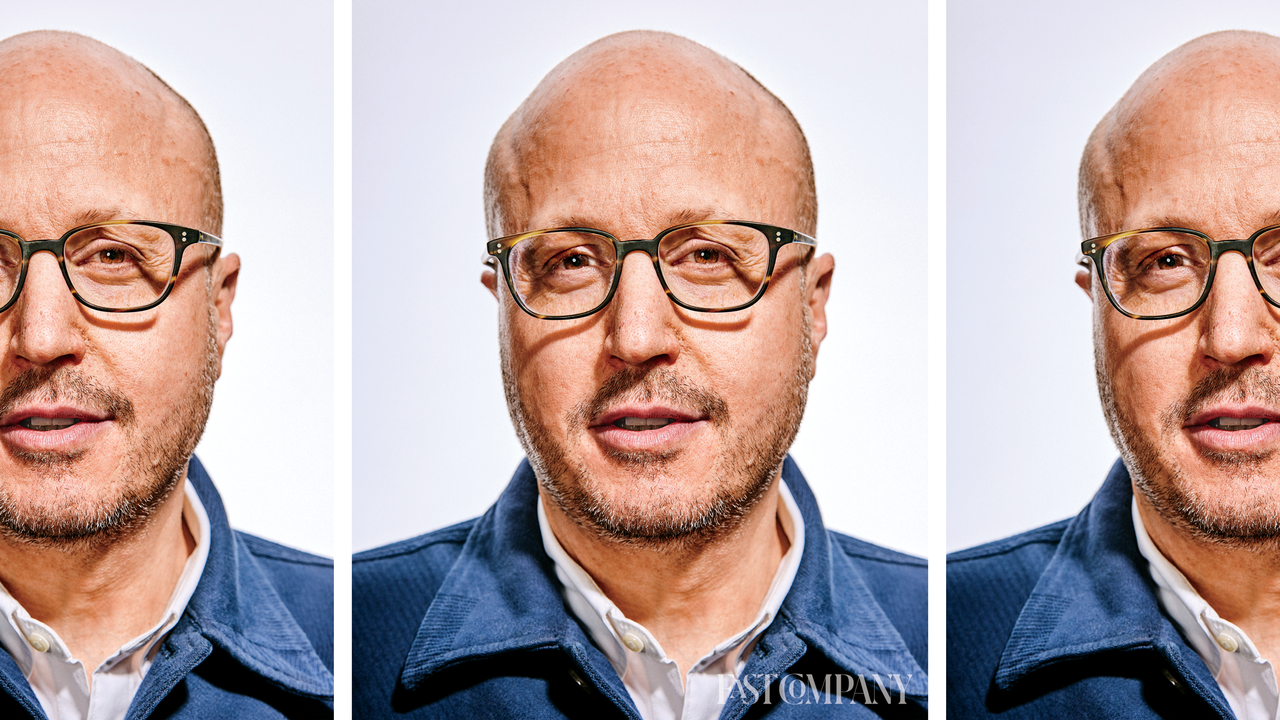
Roger Bennett and the Rise of American Soccer
If you were to design the perfect ambassador for soccer in America, you would be hard-pressed to improve on Roger Bennett. A Liverpudlian by birth, a lifelong Everton supporter by suffering, and an American by choice, Bennett has spent the better part of two decades building a bridge between the world's most popular sport and a country that is only now beginning to fully embrace it. With the 2026 FIFA World Cup set to unfold across 16 cities in North America, Bennett and his Men in Blazers media network are positioned at the center of what may well be a genuine cultural inflection point for soccer on American soil.
From Liverpool to the Epicenter of U.S. Soccer Culture
Bennett's story is, in many ways, the story of soccer's slow but inevitable conquest of the American sports landscape. Raised in Liverpool steeped in football culture, he grew up equally infatuated with American pop culture — a transatlantic sensibility that would later prove to be his greatest professional asset. After moving to the United States following college, he built a life here, eventually becoming a citizen and publishing a memoir titled (Re)born in the USA, a title that says everything you need to know about how completely he has embraced his adopted homeland.
That dual identity — fluent in both the language of the Premier League and the rhythms of American entertainment — gave Bennett a perspective almost no one else in U.S. sports media possessed when he launched the Men in Blazers podcast on ESPN in 2010. His diagnosis at the time was blunt and accurate: almost no one in American sports journalism understood soccer, particularly the elite club football of Europe. That gap was not just a missed opportunity — it was a gaping hole in the cultural fabric of a country with millions of soccer players, fans, and immigrants who lived and breathed the sport.
Building a Media Empire, One Blazer at a Time
What started as an eccentric little podcast — the name itself a self-aware wink at the blazer-wearing tradition of sports pundits and broadcasters — has grown into something far more substantial. Men in Blazers is today a full-scale independent media network, complete with a television show on NBC, original documentaries, live events staged across the country, 97 full-time employees, and a portfolio of 15 additional podcasts. It is a remarkable transformation, built on the premise that American soccer fans deserve sophisticated, knowledgeable, and genuinely passionate coverage of the game they love.
The network's growth has not gone unnoticed by major brands. Marriott, Michelob Ultra, Visa, Unilever, and others have all partnered with Men in Blazers, drawn by its highly engaged and demographically attractive audience. What makes the Men in Blazers approach to brand partnerships distinctive is the way it integrates commercial relationships into editorial content without sacrificing the authenticity that made the network compelling in the first place. In a media landscape littered with cynical sponsor integrations, that is no small feat.
A $15 Million Bet on the World Cup Moment
In 2025, Men in Blazers raised $15 million in a Series A funding round, capital earmarked specifically to expand coverage and production capabilities ahead of the 2026 FIFA World Cup. The timing is deliberate and the logic is sound. The World Cup, the single largest sporting event on the planet, is coming to North American cities — including New York, Los Angeles, Dallas, Atlanta, and others — for the first time since 1994. The cultural stakes could hardly be higher.
Bennett sat down with Fast Company in late March 2025, three months before the tournament's kickoff, on the eve of a Men in Blazers live event in Atlanta featuring Big Boi of OutKast. It was the kind of moment that illustrated exactly what he has built: a media brand that sits comfortably at the intersection of sports, music, culture, and entertainment, drawing audiences who might not have given soccer a second thought a decade ago.
The Tensions of Americanizing the World's Game
Bennett is thoughtful about the complexities embedded in this cultural moment. Soccer is not simply being adopted by America — it is being shaped by America, and that process carries real tension. The world's game has its own deep traditions, its own rhythms, its own relationship with passion, loyalty, and identity that do not always map neatly onto the American sports entertainment model. The question of how much soccer can be Americanized before it loses something essential is one Bennett takes seriously, even as he actively participates in that transformation.
His position is a nuanced one. He wants soccer to thrive in America. He has built his career on accelerating exactly that outcome. But he also understands that what makes soccer extraordinary is precisely its global, working-class, emotionally raw character — qualities that sit uneasily alongside luxury suites, multi-million dollar naming rights deals, and the relentless optimization of the fan experience that defines American professional sports.
Why This Moment Matters
The 2026 World Cup represents something genuinely new for American sports culture. Unlike 1994, when the tournament arrived in a country largely indifferent to the sport it was hosting, 2026 comes to a country where soccer has spent thirty years quietly taking root. MLS has expanded dramatically. American players compete at the highest levels of European club football. Youth participation remains among the highest in the world. And a generation of fans has grown up with Men in Blazers as their guide to the game.
Roger Bennett did not build that world alone. But he has been one of its most energetic and effective architects. As the World Cup approaches, the American century of soccer — the phrase is his, and it is not hyperbole — may finally be arriving on schedule.